

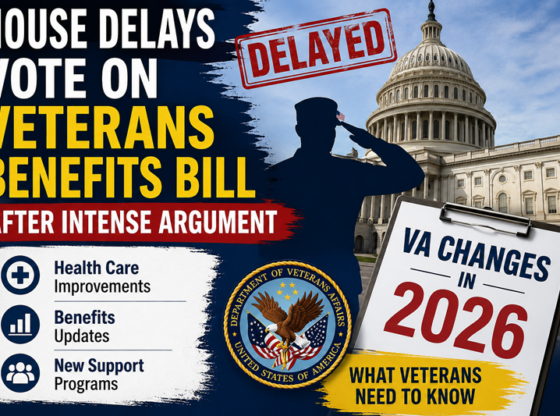

USA NEWSPAPER TODAY: In the latest US political news today headlines, the U.S. House of Representatives spent much time debating a final vote on the Take Care of America’s Veterans Act, a proposal that has divided lawmakers and veterans’ organisations across the country. The decision followed an intense debate on Capitol Hill and a razor-thin procedural vote that exposed deep disagreements over how the Department of Veterans Affairs (VA) should deliver healthcare and benefits.
For millions of veterans, the delay means more waiting. While supporters believe the bill would modernise VA (Veteran Affairs) services and improve efficiency, critics argue that several provisions deserve closer examination before Congress moves forward.
So, why was the bill pulled from the House floor, and what happens next? Here’s all the related important info you need to know.
Why Did the House Delay the Veterans Benefits Bill?
The House had planned to vote on the Take Care of America’s Veterans Act on Thursday. Instead, House leaders removed the bill from the voting schedule after lawmakers failed to reach a broad agreement.
Before the final vote could happen, representatives considered a procedural motion introduced by Rep. Chris DeLuzio (D-Pa.). He asked the House to return the legislation to the House Veterans’ Affairs Committee for additional review.
That motion narrowly failed by 210-211, one of the closest votes seen this session.
Even though lawmakers rejected the motion, House leadership decided not to continue with the final vote. Instead, they postponed consideration of the bill for several weeks.
The decision surprised many observers who expected the legislation to receive an up-or-down vote that day.
What Is the MANAGEMENT STYLE of America’s Veterans Act VA?
The legislation aims to update several aspects of how the Department of Veterans Affairs delivers healthcare and manages veterans’ benefits.
Likers and supporters say the bill would:
- Improve the delivery of VA healthcare services.
- Modernise administrative operations.
- Increase efficiency within the VA.
- Expand flexibility in managing veterans’ care.
- Help reduce delays in certain services.
Lawmakers backing the proposal argue that the VA must continue adapting to meet the needs of today’s veterans while improving access to quality healthcare.
However, not everyone agrees that the legislation strikes the right balance.
Why Is the Bill DEBATABLE?
The biggest disagreement centres on how some sections of the bill could affect veterans’ access to VA healthcare and related programs.
Critics—including several veterans advocacy organisations—say certain provisions may unintentionally change how veterans receive care or how the VA manages healthcare resources.
Some organisations worry the legislation could:
- Change existing healthcare delivery practices.
- Shift responsibilities within VA programs.
- Affect long-term access to certain veteran services.
- Require additional oversight before implementation.
Supporters strongly reject those ideas and opinions.
They argue that misinformation has fueled much of the opposition and insist the legislation simply gives the VA better tools to serve veterans.
Because of these conflicting interpretations, House leaders decided more discussions were necessary before asking lawmakers to cast a final vote.
Speaker Mike Johnson Explains How Delay Occurred
House Speaker Mike Johnson said lawmakers would revisit the legislation after several weeks. According to Johnson, confusion and what he described as misinformation surrounding the proposal contributed to the decision to postpone consideration.
Rather than force a close vote that could deepen divisions, House leaders chose to continue discussions with lawmakers and stakeholders.
No official date has been announced for the bill’s return to the House floor.
The Procedural Vote That Changed Everything
Sometimes the biggest stories in Congress involve votes that most people never hear about.
Before considering the actual legislation, lawmakers voted on whether the bill should return to committee for further review. The motion lost by just one vote (210-211).
One notable moment came when Rep. Victoria Spartz (R-Ind.) changed her position before the vote closed. Her switch proved significant because the final margin remained incredibly narrow.
Although House leaders won the procedural vote, they later concluded they still lacked enough consensus to move forward. In politics, winning one vote doesn’t always guarantee victory on the next one.
What Does This Mean for Veterans?
For veterans waiting to see changes in VA policy, the delay means uncertainty continues.
At this stage:
- Current VA benefits remain unchanged.
- Existing healthcare services continue under current law.
- No new provisions from the legislation take effect.
- Congress will continue negotiations before another vote.
Hello readers, we hope you like this content, and before you continue reading, take a look at our latest forum discussion on Veteran Benefits USA topics online. Join the conversation to share your ideas and opinions online.
Why Veterans Groups Are Split
Veterans organisations rarely agree on every piece of legislation, and this bill is no exception. Some groups support reforms that could make the VA more efficient and responsive. Others believe Congress should move cautiously whenever legislation could influence healthcare access or benefits administration. Their differing opinions reflect broader debates about balancing modern techniques with protecting existing services.
Understanding the Legislative Process
Congressional legislation often changes several times before becoming law.
Here’s what typically happens:
- A bill is introduced.
- A House committee reviews it.
- Lawmakers vote.
- The Senate considers the legislation.
- If both chambers approve identical versions, the President decides whether to sign it into law.
Political Challenges Facing the Bill
The procedural vote demonstrated just how closely divided the House remains. When major legislation depends on only one or two votes, leadership often delays action rather than risk defeat.
In this case, House leaders likely concluded that additional negotiations could improve the bill’s chances later.
Could the Bill Change Before Returning?
Yes.
Lawmakers frequently revise legislation after receiving feedback from committee members, advocacy organizations, federal agencies, and other stakeholders.
Whether those changes happen remains uncertain, but additional discussions are expected before another House vote.
Why This Matters Beyond Washington, DC
The Department of Veterans Affairs serves millions of veterans every year through healthcare, disability compensation, education benefits, home loans, mental health programs, and long-term care.
Any legislation affecting the VA naturally draws close attention because even small policy changes can have nationwide consequences.
While delays can frustrate supporters, they also give legislators another opportunity to examine concerns and refine the bill.
What’s Next?
For now, House leadership has indicated the legislation will remain on hold for several weeks.
During that time:
- Lawmakers are expected to continue negotiations.
- Veterans organisations will likely meet with congressional offices.
- Committee members may review disputed provisions.
- House leaders will determine whether enough support exists for another vote.
If consensus improves, the legislation could return to the House floor later this session.
If disagreements continue, lawmakers may amend the bill or postpone it further. Either outcome remains possible.
Final Thoughts
The decision to delay the Take Care of America’s Veterans Act reflects both the importance of veterans’ healthcare policy and the challenges of passing complex legislation in a narrowly divided House.
Although the procedural vote narrowly defeated an effort to return the bill to committee, House leaders ultimately concluded that additional discussions were necessary before moving ahead.
For veterans, nothing changes immediately. Existing VA programs and benefits remain in place while lawmakers continue negotiations.
As Congress revisits the proposal in the coming weeks, veterans and advocacy organizations will be watching closely to see whether lawmakers can find common ground on legislation that could shape the future of veterans’ services.
Frequently Asked Questions (FAQs)
Why did the House delay the veterans benefits bill?
The House postponed the final vote because lawmakers could not reach sufficient agreement after a heated debate. Leadership decided additional discussions were needed before moving forward.
What is the Take Care of America’s Veterans Act?
It is proposed legislation intended to modernise Department of Veterans Affairs operations and improve the delivery of services to veterans.
Has the bill become law?
No. The House has not passed the legislation, so it has not advanced to the Senate or reached the President.
Will current VA benefits change?
No. Existing veterans’ benefits and healthcare services remain unchanged while Congress continues considering the proposal.
When will the House vote again?
House Speaker Mike Johnson said lawmakers are unlikely to revisit the legislation for several weeks. No specific date has been announced.
Why are veterans organisations divided?
Some groups support efforts to modernise VA services, while others want stronger safeguards to ensure veterans’ access to healthcare and benefits remains protected.
Trusted Sources
- U.S. House of Representatives
- House Committee on Veterans’ Affairs
- Department of Veterans Affairs (VA)
- Military Times reporting by Patricia Kime
- Congressional voting records
For the latest USA news headlines every day, visit our Free US news today live portal to get pocket news online in any state of America.