

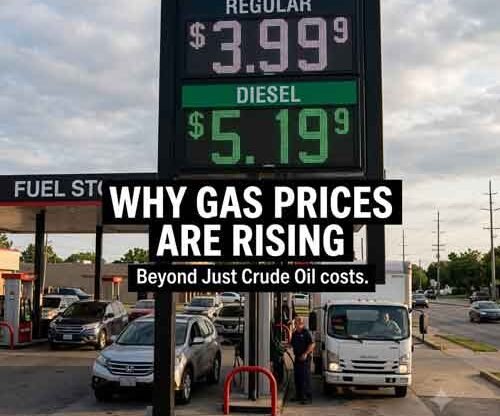

USA News: American drivers are once again feeling pressure at the fuel pump as gasoline prices move closer to the $4-per-gallon mark and diesel prices push beyond $5 in many markets. While crude oil prices remain one of the biggest factors influencing fuel costs, experts say today’s price increases are being driven by a much wider combination of supply chain problems, refinery constraints, geopolitical risks, and rising costs throughout the fuel production system.
For many consumers, the situation feels confusing. Oil prices do not always move in perfect alignment with what drivers see at gas stations. Even when crude oil prices stabilise, gasoline and diesel can remain expensive because fuel markets depend on more than just the cost of extracting oil from the ground.
The latest fuel increase highlights a key reality of the energy industry: a gallon of gasoline is not priced only by crude oil.
Refining capacity, transportation costs, seasonal demand, global disruptions, fuel regulations, and market conditions all influence the final price paid by consumers.
Why Gas Prices Are Moving Back Toward $4
Fuel markets have recently faced renewed pressure from international supply concerns and disruptions affecting global energy flows. Analysts have pointed to geopolitical instability, including tensions affecting major oil-producing regions, as one reason traders have become more cautious about future fuel availability.
The United States imports less crude oil than it did decades ago, but global oil markets remain interconnected. A disruption in one major producing region can quickly affect prices worldwide because oil is traded internationally.
When investors fear supply shortages, crude prices can rise quickly. However, gasoline prices may react differently because crude oil must still be processed into usable fuels before reaching consumers.
This creates a delay and sometimes causes gasoline prices to remain elevated even after crude oil prices stop climbing.
Crude Oil Is Only One Piece of the Fuel Price Puzzle
Many drivers assume crude oil represents almost the entire cost of gasoline. In reality, the final price at the pump includes several major components:
- Crude oil costs
- Refining expenses
- Transportation and distribution
- Taxes
- Retail operating costs
- Market margins
Crude oil typically represents the largest portion of gasoline costs, but the other components can become much more important during periods of market stress.
For example, if refineries experience problems or available fuel supplies become limited, gasoline prices can increase even without a major jump in crude oil.
This explains why consumers sometimes see expensive gasoline despite relatively stable oil markets.
Refinery Problems Are Pushing Fuel Costs Higher
One of the biggest reasons behind rising gasoline and diesel prices is the pressure on refining capacity.
Refineries convert crude oil into gasoline, diesel, jet fuel, and other petroleum products. If refinery operations are disrupted, the amount of available fuel can decline.
Recent market conditions have shown that refining margins — the difference between the cost of crude oil and the selling price of refined fuel — can significantly influence pump prices. Some analysts say refiners have captured a larger share of the final fuel price because limited capacity has tightened supply.
Several factors can reduce refinery output:
- Maintenance shutdowns
- Unexpected equipment failures
- Weather-related disruptions
- Lower global refining capacity
- Regional fuel shortages
Even a small reduction in refinery production can create significant price pressure because fuel demand remains high.
Why Diesel Prices Are Rising Faster Than Gasoline
Diesel fuel plays a different role in the economy compared with gasoline.
While gasoline mainly affects passenger vehicles, diesel powers much of the transportation and industrial economy.
Diesel is heavily used by:
- Trucking companies
- Agricultural equipment
- Construction machinery
- Shipping operations
- Freight transportation
When diesel prices increase, the impact spreads beyond drivers. Higher diesel costs can raise expenses for moving goods across the country.
Companies often pass these additional transportation costs through the supply chain, which can eventually affect prices for:
- Food
- Consumer goods
- Building materials
- Online deliveries
Diesel prices can also react strongly to global supply conditions because diesel production depends on refinery output and international fuel demand.
The Hidden Role of Global Fuel Supply Chains
Modern fuel markets depend on a complicated global network.
Crude oil may come from one country, get refined in another region, transported through pipelines or ships, and finally delivered to local gas stations.
Any disruption along that chain can increase costs.
Energy analysts have highlighted concerns about shipping routes, refinery availability, and geopolitical risks affecting fuel markets. Disruptions around important energy transportation routes can create uncertainty even when actual oil production remains available.
Markets often react not only to current shortages but also to fears about future supply problems.
Why Gas Prices Can Stay High Even After Oil Prices Fall
One of the biggest frustrations for consumers is that fuel prices often rise quickly but fall slowly.
This happens because different parts of the fuel supply chain move at different speeds.
When crude oil prices increase:
- Oil producers react quickly.
- Traders adjust expectations.
- Refiners pay more for crude.
- Fuel prices rise.
But when crude prices decline:
- Existing expensive crude may still be in the system.
- Refinery costs may remain high.
- Transportation expenses may not immediately change.
- Retailers adjust prices gradually.
Inflation Impact, Future Fuel Outlook, and What Drivers Can Expect
Higher Fuel Prices Could Push Inflation Higher Again
Rising gasoline and diesel prices do not only affect drivers. Fuel costs influence almost every part of the economy because energy is required to produce, transport, and sell goods.
When diesel prices move above $5 per gallon, transportation companies face higher operating costs. Trucking companies, delivery services, airlines, farmers, and manufacturers all depend heavily on fuel.
These higher expenses often move through the supply chain.
For consumers, this can mean increased prices for:
- Grocery products
- Online purchases
- Restaurant meals
- Construction materials
- Household goods
Transportation is one of the hidden costs behind everyday products. A truck carrying food from farms to supermarkets needs diesel. A delivery vehicle bringing packages to homes also needs fuel.
When fuel prices rise, businesses must decide whether to absorb the extra costs or pass them on to customers.
This is why energy prices are closely monitored by economists and policymakers. A sharp increase in fuel costs can slow consumer spending and create additional inflation pressure.
Summer Driving Season Adds More Pressure to Gasoline Prices
Seasonal demand also plays an important role in gasoline prices.
During the summer months, millions of Americans travel for vacations, road trips, and family visits. Higher demand places additional pressure on gasoline supplies.
At the same time, refineries must produce summer-grade gasoline, which is designed to reduce emissions during warmer weather.
However, producing this fuel blend can increase costs because it requires different refining processes.
The combination of:
- Higher travel demand
- More expensive summer fuel production
- Limited refinery capacity
can push gasoline prices higher during peak driving months.
Even if crude oil prices remain stable, seasonal demand can still create upward pressure at the pump.
Fuel Taxes Influence Pump Prices
Taxes are another major factor affecting what drivers pay.
Every gallon of gasoline includes federal, state, and sometimes local fuel taxes. These taxes vary significantly depending on location.
A driver in one state may pay considerably more than someone in another state, even when both markets receive fuel from similar supply sources.
State fuel taxes are often used to fund:
- Highway maintenance
- Transportation projects
- Infrastructure improvements
However, when gasoline prices rise sharply, fuel taxes become a bigger concern for consumers already dealing with higher living expenses.
Some policymakers have proposed temporary tax reductions during periods of extreme price increases, while others argue that transportation funding must remain stable.
Electric Vehicles and Energy Impact
The growth of electric vehicles has changed the long-term energy discussion, but it has not eliminated traditional fuel price pressures.
Electric vehicles continue to gain market share, especially in passenger transportation. However, millions of gasoline and diesel vehicles remain on American roads.
Heavy industries such as:
- Long-haul trucking
- Agriculture
- Shipping
- Construction
still rely heavily on diesel fuel.
Because of this, diesel prices remain a critical economic issue.
The transition toward cleaner energy sources may gradually reduce oil demand in some areas, but the global economy continues to depend heavily on petroleum products.
What Is Driving Diesel Prices Above $5?
Diesel prices often respond differently than gasoline because diesel markets are closely connected to global industrial activity.
Several factors can push diesel higher:
Strong Global Demand
When economies grow, factories, shipping companies, and transportation networks consume more diesel.
Higher demand can tighten available supplies.
Refinery Competition
Refineries must balance production between gasoline, diesel, jet fuel, and other products.
If gasoline demand rises sharply, diesel availability can be affected.
International Market Pressure
Diesel is a globally traded commodity. Supply problems in one region can affect prices worldwide.
Transportation Costs
Diesel itself is needed to transport fuel. Higher fuel costs throughout the supply chain can increase final prices.
Could Gas Prices Rise Even Further?
The future direction of fuel prices depends on several uncertain factors.
Key issues to watch include:
Global Oil Production
If major oil-producing countries increase output, supply pressure could ease. However, production cuts or disruptions could push prices higher.
Geopolitical Conflicts
Energy markets closely watch conflicts and tensions in oil-producing regions. Any threat to production or transportation routes can quickly affect prices.
Refinery Performance
Strong refinery operations can help stabilise fuel prices, while outages may create shortages.
Consumer Demand
If economic conditions weaken, fuel demand may decline. Strong economic activity could keep demand elevated.
How Drivers Can Save Money as Fuel Costs Rise
Although consumers cannot control global energy markets, they can reduce fuel expenses through smarter driving habits.
Improve Fuel Efficiency
Simple actions can help reduce gasoline consumption:
- Avoid aggressive acceleration
- Maintain steady speeds
- Keep tyres properly inflated
- Remove unnecessary weight from vehicles
Compare Local Fuel Prices
Gas station prices can vary significantly within the same area. Checking prices before filling up can save money over time.
Maintain Vehicles Regularly
Regular maintenance helps engines operate more efficiently.
Important checks include:
- Oil changes
- Air filters
- Tire pressure
- Engine performance
Consider Fuel Rewards Programs
Many gas stations and retailers offer discounts, loyalty programs, or cashback options that can reduce fuel expenses.
The Bigger Picture: Fuel Prices Reflect a Changing Energy Market
The recent increase in gasoline and diesel prices shows how complex modern energy markets have become.
Crude oil prices remain important, but they are only one part of a much larger system.
Fuel costs are influenced by:
- Global supply and demand
- Refinery capacity
- Transportation networks
- Government policies
- Seasonal trends
- International events
For consumers, the result is a frustrating reality: even when crude oil prices appear manageable, gasoline and diesel prices can remain elevated.
Energy markets are constantly balancing supply, demand, and uncertainty. Until those pressures ease, drivers may continue facing higher costs at the pump.
Frequently Asked Questions (FAQs)
Why are gas prices near $4 again?
Gas prices are rising because of a combination of factors, including refinery constraints, higher seasonal demand, supply concerns, and global energy market uncertainty. Crude oil prices are only one factor affecting gasoline costs.
Why is diesel more expensive than gasoline?
Diesel often costs more because it is heavily used for transportation and industry. Strong demand, refinery limitations, and global supply conditions can push diesel prices higher.
Do crude oil prices directly determine gas prices?
Crude oil is a major factor, but gasoline prices also depend on refining costs, taxes, transportation expenses, and market conditions.
Will gas prices go down soon?
Fuel prices depend on global supply, demand, refinery operations, and geopolitical developments. A decline is possible if supply improves and market pressures decrease.
How can consumers reduce fuel costs?
Drivers can save money by improving fuel efficiency, comparing gas prices, maintaining vehicles, and using fuel reward programs.
Final Thoughts
The return of higher gasoline and diesel prices highlights a key lesson about the energy market: fuel costs are shaped by far more than crude oil alone.
From refinery challenges to global supply risks, multiple forces determine what Americans pay at the pump.
As diesel prices climb above $5 and gasoline approaches $4 per gallon in many areas, consumers and businesses will continue watching energy markets closely. The coming months will depend on whether supply improves, demand changes, and global uncertainties begin to ease.
For now, drivers should prepare for continued fuel market volatility and understand that the price displayed at the gas station reflects a complex global energy system.