
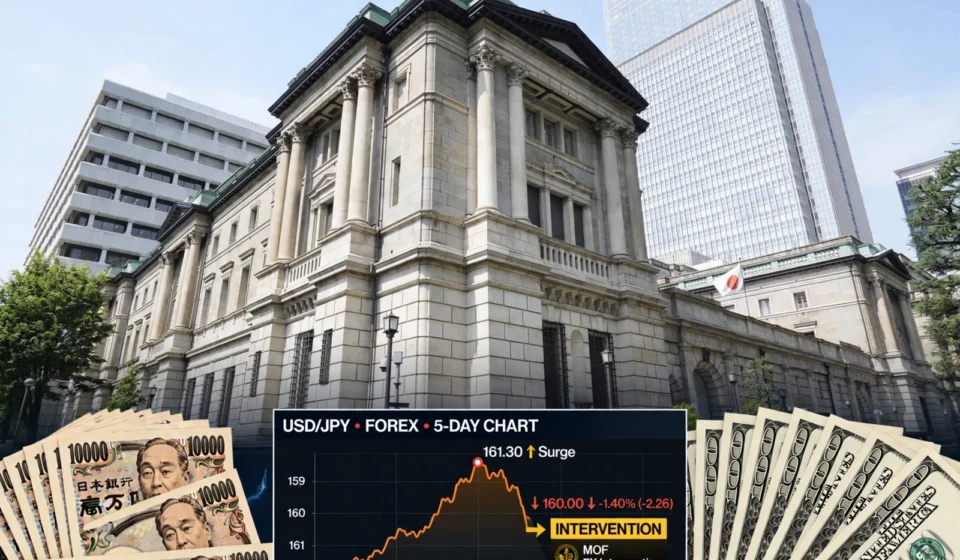
USD to YEN surges: Japanese Yen Weakens Following Intervention-Led Rally Ahead of BOJ Policy Decision

US News today latest Updates: The foreign exchange market experienced dramatic volatility as the Japanese yen came under renewed selling pressure on Friday. This shift followed a massive, intervention-led surge in the previous session, where Japanese financial authorities acted aggressively to pull the currency back from near four-decade lows.
In early Asian trading on Friday, the U.S. dollar rebounded by as much as 0.45% to reach 160.175 yen. This erased part of Thursday’s steep decline, where the greenback plunged 2.4% against the yen, marking its largest single-day drop since January 2023. The dramatic price swings occurred as global currency markets positioned themselves ahead of the Bank of Japan’s (BOJ) impending monetary policy decision.
  Yen Volatility & Market Dynamics (July 30–31)
  ┌───────────────────────────────────────────────────────────┐
  │ July 30 (New York Session)                                │
  │ • Japan MOF conducts unannounced yen-buying intervention  │
  │ • USD/JPY plunges 2.4% (biggest 1-day drop since Jan 2023)│
  │ • Rate drops from near 163.99 to intraday low ~157.80    │
  ├───────────────────────────────────────────────────────────┤
  │ July 31 (Early Asia Session)                              │
  │ • Dollar rebounds 0.45% back above 160.17                 │
  │ • Markets position for BOJ rate decision & guidance        │
  └───────────────────────────────────────────────────────────┘
Overnight Intervention news of USD to yen
Market sources confirmed that Japan’s Ministry of Finance (MOF) conducted an unannounced foreign exchange intervention during Thursday’s New York trading session. The operation involved selling U.S. dollars and purchasing massive quantities of yen to arrest a slide that had carried the Japanese currency to 40-year lows near 163.99 per dollar.
Reports indicate that the move was part of a coordinated effort, with South Korea’s foreign exchange authorities simultaneously intervening to support the Korean won. The joint action sent immediate shockwaves across major trading desks:
-
Massive One-Day Rally: The intervention propelled the yen upwards by more than 3%, touching an intraday high of 157.80 per dollar on July 30.
-
Testing Tokyo’s Resolve: By Friday morning, foreign exchange traders resumed testing the limits of Japan’s intervention strategy, pushing the USD to YEN rate back above the psychologically significant 160.00 threshold.
-
Follow-up to Historic Spending: This action follows a record-breaking April–May intervention campaign where Japan’s Ministry of Finance deployed 11.7 trillion yen ($72.52 billion) to defend the currency.
Bank of Japan Policy Decision: Balancing Rate Hikes and Inflation Pressures
All eyes remain on the Bank of Japan as Governor Kazuo Ueda and the policy board conclude their latest rate-setting meeting. Having already raised short-term benchmark rates to 1.00% in June, the BOJ is widely expected to hold borrowing costs steady at its July meeting while delivering a hawkish policy outlook.
  [Rising Domestic Price Pressures] ──► [BOJ Benchmark Rate: 1.00%]
                                                      │
                                                      ▼
  [Federal Reserve Rate Hold]      ──► [Yield Differential Widens]
                                                      │
                                                      ▼
  [Market Pressure on JPY]         ──► [MOF Currency Intervention]
Market analysts note that while the BOJ is taking a cautious, gradual approach to tightening monetary policy, persistent domestic price pressures are forcing policymakers to keep further rate hikes on the table. Reuters polling indicates a majority of economists expect the central bank to execute another 25-basis-point rate hike, raising the policy benchmark to 1.25% before the end of the year.
Federal Reserve Fallout and the Yield Gap Constraint
A fundamental driver of ongoing yen weakness remains the persistent yield differential between the United States and Japan.
Earlier in the week, the U.S. Federal Reserve decided to leave interest rates unchanged. That decision initially weighed on the greenback, as foreign exchange traders questioned the Fed’s timeline for containing inflation. However, the relatively slow pace of monetary tightening by the BOJ has prevented the yield gap from narrowing significantly, keeping structural pressure on the yen.
Strategists emphasise that currency intervention alone rarely alters long-term exchange rate trends unless accompanied by fundamental changes in monetary policy:
“If you want to intervene… it’s probably quite a good time,” noted Rodrigo Catril, senior FX strategist at National Australia Bank. He highlighted the temporary softening in the U.S. dollar and positive global risk sentiment as ideal tactical conditions for intervention. “It also helps set the stage especially ahead of the BOJ, where there is a risk that they may disappoint by not sounding hawkish enough, which could be a negative for the yen.”
Global Foreign Exchange Snapshot of performances
As currency traders digested the overnight intervention and awaited the BOJ announcement, the broader U.S. dollar index ($DXY)—which tracks the greenback against a basket of six major foreign currencies—stabilised around 100.6. Despite Friday’s mild recovery, the dollar remained on track for a 1.5% weekly loss and a 1.2% overall decline for the month.
| Currency Pair | Latest Exchange Rate | Session Change | Weekly / Monthly Context |
| USD / JPY | 160.175 | +0.45% | Bounced from 157.80 low after $70B+ intervention threat |
| EUR / USD | $1.1523 | -0.04% | Consolidating near 6-week highs reached on Thursday |
| GBP / USD | $1.3460 | Flat | Holding firm following Bank of England policy updates |
| AUD / USD | $0.7024 | -0.10% | Slightly softer amid broader Asia-Pacific currency trading |
| NZD / USD | $0.5875 | -0.10% | Trading within a tight range due to broader market anxiety |
Technical Outlook for USD to YEN
From a technical perspective, currency analysts point to key Fibonacci retracement levels and structural support zones following the intervention spike:
  USD/JPY Technical Support Levels
  ┌───────────────────────────────────────────────────────────┐
  │ Resistance : 160.80 – 161.50 (Recent Overhead Supply)     │
  ├───────────────────────────────────────────────────────────┤
  │ Support 1  : 160.28 (38.2% Fibonacci Retracement Level)   │
  │ Support 2  : 159.41 (23.6% Fibonacci Retracement Level)   │
  │ Key Pivot  : 158.00 (Structural Swing Low / Intervention Area)│
  └───────────────────────────────────────────────────────────┘
A sustained breach below the 158.00 structural support area would signal that Tokyo’s intervention campaign has successfully altered short-term momentum, opening the door for a deeper corrective decline toward 155.00. Conversely, if the BOJ fails to provide clear hawkish guidance, market participants could push the USD to the YEN exchange rate back toward recent 40-year highs near 164.00.
In the Conclusion
As the Bank of Japan releases its policy statement and Governor Ueda addresses the media, foreign exchange markets remain on high alert. With Japanese authorities demonstrating a willingness to conduct aggressive, unannounced dollar-selling interventions, traders in the USD to YEN pair must prepare for heightened volatility over the coming sessions.