
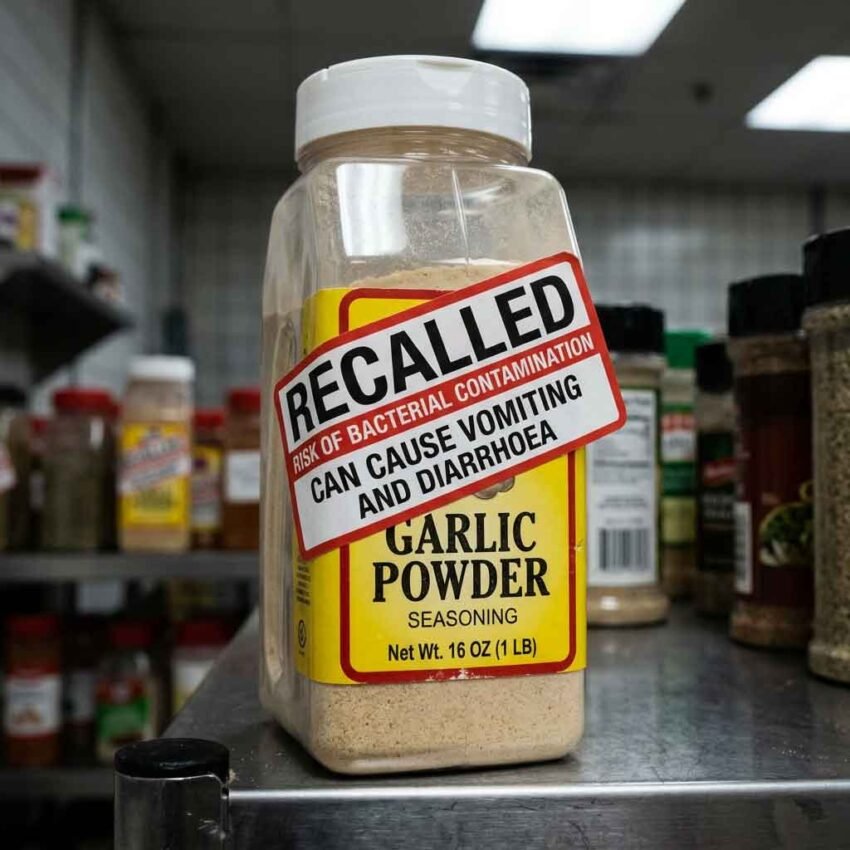
USA : If you recently stocked up on budget-friendly kitchen spices, you might want to pause before seasoning your dinner tonight. A nationwide recall has officially hit store shelves after food safety inspectors flagged a popular garlic powder contaminated with a troublesome bacteria capable of ruining your week.
The Canadian Food Inspection Agency (CFIA) issued an urgent alert warning consumers, retailers, and restaurants to immediately stop using, selling, or distributing Heavenly Spices brand Garlic Powder. The culprit behind the warning is Bacillus cereus, a spore-forming bacterium infamous for causing acute gastrointestinal distress—namely severe vomiting, stomach cramps, and diarrhea.
While garlic usually gets credit for boosting immune systems and repelling vampires, this particular batch brings unwanted health risks to the pantry. Here is everything you need to know about the recall, the hidden risks of Bacillus cereus, and what you should do if you suspect you have the affected bottle in your spice rack.
Recall Breakdown: Is Your Spice Cabinet Affected?
The national food safety alert applies to 70-gram jars of Heavenly Spices Garlic Powder. Distributed primarily through Dollarama discount stores across Canada and online retailers, thousands of home cooks may have purchased the product without realizing the potential hazard.
To determine whether your bottle is part of the nationwide recall, check the label details below:
| Feature | Recalled Product Specification |
|---|---|
| Product Name | Heavenly Spices Garlic Powder |
| Package Size | 70 grams |
| UPC Code | 6 67888 50634 7 |
| Best-Before Code | 2029 JAN 30 GP 30ZV PIT |
| Recall Reference Number | RA-82337 |
| Recalling Firm | Dollarama L.P. |
| Classification | Class 2 Food Safety Recall |
The CFIA classifies this event as a Class 2 food recall. In regulatory terms, a Class 2 rating means that consuming the product carries a moderate risk of short-term or non-life-threatening health problems. However, even short-term food poisoning can cause significant misery, making quick pantry checks essential.
Understanding Bacillus Cereus: The Uninvited Kitchen Guest
Most people associate foodborne illness with raw chicken or undercooked eggs. Bacteria hiding inside a dry jar of garlic powder might sound counterintuitive. However, Bacillus cereus is a unique organism that excels at surviving in harsh, dry environments.
According to medical resources like the Cleveland Clinic, Bacillus cereus is a soil-dwelling bacterium. Because root vegetables like garlic grow directly in the earth, raw garlic crops can pick up bacterial spores during harvesting.
When conditions become favorable—such as inside the human digestive tract or when added to moist, warm dishes—these dormant spores wake up, multiply, and release toxins that irritate the stomach and intestines.
Symptoms and Health Risks: What Happens If You Eat It?
Eating food contaminated with Bacillus cereus generally triggers one of two types of food poisoning syndromes: emetic (vomiting) or diarrheal.
In many cases, symptoms begin rapidly after consumption. Health authorities note that the exact response depends on whether you ingested pre-formed toxins in the food or living bacteria that produced toxins inside your gut.
1. The Emetic (Vomiting) Syndrome
- Onset: Extremely quick, usually within 30 minutes to 5 hours.
- Primary Symptoms: Severe nausea, sudden vomiting, and abdominal cramps.
- Typical Duration: Most symptoms subside naturally within 6 to 24 hours.
2. The Diarrheal Syndrome
- Onset: Slightly delayed, usually developing 8 to 16 hours after ingestion.
- Primary Symptoms: Watery diarrhea, persistent stomach cramps, and general malaise.
- Typical Duration: Resolves on its own within 12 to 24 hours for most healthy individuals.
Expert Medical Note: While Bacillus cereus food poisoning usually resolves within a couple of days, severe vomiting or diarrhea can cause dehydration. In rare cases—particularly among individuals with weakened immune systems, young children, or older adults—the bacteria can spread into bloodstream tissues, leading to serious systemic complications.
Why Spices and Dry Foods Get Recalled
It is easy to assume that dry pantry items last forever and stay sterile naturally. In reality, dried herbs, spices, and flours represent raw agricultural goods processed on a massive scale.
Spices originate in agricultural fields exposed to rain, wind, soil, and wild animals. Manufacturers clean and treat raw spices using steam, irradiation, or gas treatments to eliminate microbial threats. However, if a batch skips adequate pasteurization or encounters post-processing moisture, dormant bacterial spores can persist.
The CFIA regularly conducts random sampling and routine industry testing to catch these safety gaps before widespread illness occurs. In the case of the Heavenly Spices recall, testing detected potential contamination, prompting swift regulatory intervention before official consumer illness reports emerged.
Step-by-Step Action Plan: What Should You Do Now?
If you suspect you have the recalled Heavenly Spices Garlic Powder sitting on your spice rack, follow this clear action plan to protect yourself and your household.
- Check the Label: Look closely at the UPC code (
6 67888 50634 7) and best-before code (2029 JAN 30 GP 30ZV PIT) on the 70g jar. - Do Not Taste Test: Never taste food to check if it contains Bacillus cereus. Contaminated spices look, smell, and taste completely normal.
- Safe Disposal or Return: Throw the product directly into a sealed garbage bag so pets or wildlife cannot access it. Alternatively, return the item to the store where you bought it.
- Claim Your Refund: Dollarama confirmed that customers who bought the affected garlic powder can receive a refund or digital gift card compensation upon request.
- Sanitize Pantry Surfaces: If the jar leaked powder onto your pantry shelves or counter, wipe down the area with warm soap and water to prevent cross-contamination.
When to Seek Medical Attention
For most healthy adults, a mild case of Bacillus cereus food poisoning requires simple rest and plenty of fluids to prevent dehydration. Because toxins cause the primary symptoms rather than an active spreading infection, doctors rarely prescribe antibiotics for standard cases.
However, you should contact a healthcare provider or visit an emergency room if you or a family member experience any of the following warning signs:
- Inability to keep liquids down for more than 24 hours.
- Signs of severe dehydration, such as extreme dizziness, confusion, or dark urine.
- High fever accompanying gastrointestinal distress.
- Persistent severe stomach pain that does not ease after vomiting.
- Symptoms occurring in high-risk individuals, including infants, pregnant women, elderly adults, or immunocompromised individuals.
The Takeaway: Smart Kitchen Vigilance Pays Off
Food recalls can feel alarming, but they demonstrate that oversight systems work as intended to intercept hazards. Taking two minutes today to audit your spice rack ensures your home-cooked meals remain both delicious and safe.
When in doubt, throw it out! No pinch of garlic powder is worth a two-day date with your bathroom floor.
Frequently Asked Questions (FAQ)
What brand of garlic powder was recalled?
The Canadian Food Inspection Agency recalled Heavenly Spices brand Garlic Powder in 70-gram jars. The recalling firm is Dollarama L.P., and the recall reference code is RA-82337.
Can cooking kill Bacillus cereus in garlic powder?
Not reliably. While high heat can destroy active bacteria, Bacillus cereus produces heat-resistant spores and toxins that survive standard cooking temperatures. You should discard recalled products immediately regardless of how you plan to cook them.
How long do symptoms of Bacillus cereus poisoning last?
In most people, symptoms like nausea, vomiting, or diarrhea start within 0.5 to 16 hours after eating and resolve naturally within 12 to 48 hours.
