
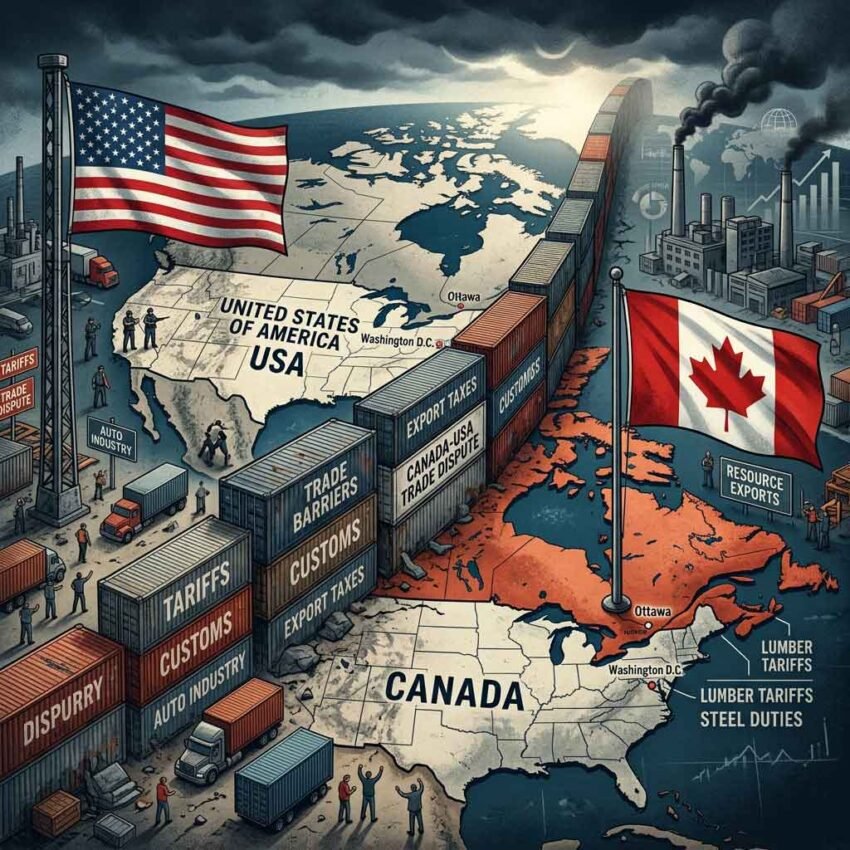
Trade tensions across the 49th parallel just hit a boiling point. In a major economic escalation, the White House announced plans to impose a steep 50% tariff on a wide array of Canadian goods. The target list ranges from everyday grocery staples like wine and dairy to industrial materials and even ice hockey equipment.
If you thought cross-border trade spats were reserved for steel foundries and auto assembly lines, think again. American rec-league hockey players and wine enthusiasts might soon feel the burn right alongside commercial builders.
The new measures, set to take effect on August 19, are designed to offset what Washington calls “discriminatory treatment” against American exports. While the news sent shockwaves through supply chains on both sides of the border, the legal tool used to enact these levies is raising just as many eyebrows as the tariffs themselves.
The Core Trigger: Why Is the US Levying 50% Tariffs?
According to official White House statements, the new tariffs respond to ongoing trade barriers imposed by Ottawa. Washington claims Canadian policies unfairly disadvantage key American sectors, particularly automobiles, alcohol, and dairy products.
1. Automotive Disagreements
The White House pointed to a significant drop in Canadian imports of American motor vehicles. Between April 2025 and March 2026, U.S. vehicle exports to Canada fell by roughly 22%, representing a $5.6 billion decline. U.S. officials argue that Canadian quotas incentivise auto manufacturers to move production across the border rather than maintaining facilities in the United States.
2. The Great Alcohol Boycott
Friction over alcoholic beverages has brewed for months. After earlier U.S. tariff actions, several Canadian provincial liquor boards pulled American wines, spirits, and beers from store shelves. The administration noted an 81% plunge—amounting to $582 million—in U.S. alcohol sales to Canada from March 2025 through February 2026.
3. Dairy System Friction
Canada’s longstanding dairy supply-management system remains a permanent thorn in the side of U.S. negotiators. Washington asserts that Ottawa enforces strict tariff-rate quotas on American cheese while offering far better market access to European Union producers under separate trade deals.
What Products Are Covered (and What Got Spared)?
The reach of these Section 338 tariffs is exceptionally broad. The levies hit nearly $20 billion in imports, representing about 5.2% of total U.S. purchases from Canada.
| Category | Status | Specific Products Affected / Exempted |
|---|---|---|
| Consumer Goods | 🔴 Subject to 50% Tariff | Canadian wine, spirits, processed foods, paper products |
| Sports Equipment | 🔴 Subject to 50% Tariff | Ice hockey sticks, protective gear, general sporting goods |
| Industrial Materials | 🔴 Subject to 50% Tariff | Commercial cement, specialty paper, manufacturing supplies |
| Energy Sector | 🟢 Exempted | Crude oil, natural gas, refined petroleum products |
| Raw Agriculture & Mining | 🟢 Exempted | Potash, fresh fish, critical minerals |
| Metals & Lumber | 🟡 Existing Tariffs Apply | Steel, aluminum, copper, and softwood lumber (governed by prior Section 232 orders) |
Crucially, these duties apply even to items previously protected under the United States-Mexico-Canada Agreement (USMCA). By stripping away those exemptions, the order effectively resets trading terms for affected categories.
At the same time, the administration carefully excluded vital energy supplies, fertiliser inputs like potash, and critical minerals. Sparing energy prevents immediate price spikes at American gas pumps, keeping key industrial supply chains running.
What Is Section 338 of the Tariff Act of 1930?
To enact the levies, the administration bypassed standard trade dispute mechanisms and tapped a dormant statutory provision: Section 338 of the Tariff Act of 1930.
               THE EVOLUTION OF U.S. TARIFF AUTHORITIES

   1930 Tariff Act                Emergency Powers              Supreme Court Ruling
    (Section 338)                  (IEEPA Tariffs)                 (Limits Executive
  Enacted to retaliate          Used for sweeping global         Emergency Tariff Power)
  against discriminatory              tariffs.                              │
      trade practices.                       │                              ▼
           │                                 ▼                   White House Revives
           │                       Struck Down in Court          Section 338 Strategy
           │                                 │                   (Discrimination Basis)
           └─────────────────────────────────┴──────────────────────────────┘
Trade historians note that Section 338 sat unused for nearly a century. Congress originally wrote the provision during the Smoot-Hawley era to empower the U.S. president to penalise foreign nations that treat American commerce worse than that of other countries.
Unlike emergency-powers legislation, Section 338 does not require a declared national emergency. Instead, it hinges specifically on proving foreign discrimination against U.S. exports.
Why Use an Untested Legal Authority?
Earlier executive attempts to impose broad international tariffs faced major judicial hurdles. After federal courts struck down prior emergency tariff declarations, administration lawyers sought alternate statutory tools.
Trade experts at the Cato Institute and King & Spalding emphasise that Section 338 carries substantial litigation risk. Because courts have never tested the limits of Section 338 in modern international trade, business groups expect legal challenges. However, court cases take time, giving Washington immediate leverage in talks.
How Canada and Business Leaders Are Responding
The announcement triggered immediate pushback from Canadian leaders and international industry organisations.
Canadian Prime Minister Mark Carney issued a firm response, pointing out that Ottawa has already submitted comprehensive proposals to resolve trade friction.
“This trade dispute has raised costs for families, particularly in the US. Canada stands ready to engage intensively to address outstanding issues with the US to the mutual benefit of our citizens.”
Provincial leaders took a sharper tone. Ontario Premier Doug Ford argued that Canada must stand its ground if Washington moves forward on August 19.
“If these tariffs proceed, Canada should respond tariff for tariff, dollar for dollar.”
Meanwhile, American business groups expressed worry over potential supply chain shocks. Representatives from the hospitality and distilled spirits industries cautioned that new duties could trigger further retaliation, hurting domestic bars, restaurants, and retailers.
Economic Impacts: Who Pays for Higher Tariffs?
Economic logic reveals a simple truth: import tariffs are paid by the importing companies inside the destination country, not the foreign seller. When an American distributor imports Canadian wine or building products, they pay the 50% tax directly to U.S. Customs.
                 HOW TARIFF COSTS PASS TO CONSUMERS

  [ Canadian Manufacturer ]
            │
            ▼
   [ US Importer / Distributor ] ──► Pays +50% Section 338 Duty to US Customs
            │
            ▼
   [ US Retailer / Contractor ]  ──► Absorbs portion or increases wholesale cost
            │
            ▼
   [ American Consumer ]         ──► Pays higher retail prices at stores
This dynamic creates three distinct ripple effects across the consumer landscape:
- Higher Retail Prices: Importers usually pass tariff costs down the line. Store shelf prices for affected products—from Canadian cheddar to hockey equipment—will likely rise.
- Supply Chain Friction: U.S. builders reliant on Canadian commercial cement may see job site costs jump, potentially slowing commercial real estate development.
- Inflation Risks: Layering new 50% levies onto existing tariffs threatens to heat consumer price indexes right before critical economic reporting periods.
Is Negotiation Possible Before August 19?
While a 50% tariff rate sounds final, the implementation timeline leaves room for tactical manoeuvring. The administration built a 30-day window into the order.
Trade analysts view the one-month buffer as a classic bargaining strategy. By delaying the start date, Washington creates maximum leverage to push Ottawa back to the negotiating table.
If Canadian negotiators agree to ease restrictions on U.S. auto shipments, adjust dairy import quotas, or lift provincial alcohol bans, the White House could modify or pause the order before August 19. If talks stall, the new tariffs will go live, ushering in a new chapter in North American trade relations.
Summary & What to Watch Next
The U.S. trade order marks a historic revival of a 1930 trade law to counter perceived discrimination in auto, dairy, and alcohol markets.
As the August 19 deadline approaches, keep an eye on three key indicators:
- Bilateral Meetings: Watch for emergency trade summits between U.S. Trade Representative Jamieson Greer and Canadian officials.
- Provincial Action: See if Canadian provinces offer to restock American spirits to head off the duties.
- Legal Filings: Monitor trade groups for early court challenges questioning Section 338’s scope.
Both nations share one of the largest economic partnerships in world history. Whether this dispute ends in a negotiated compromise or a protracted tariff battle, consumers and businesses across North America will be watching closely.