
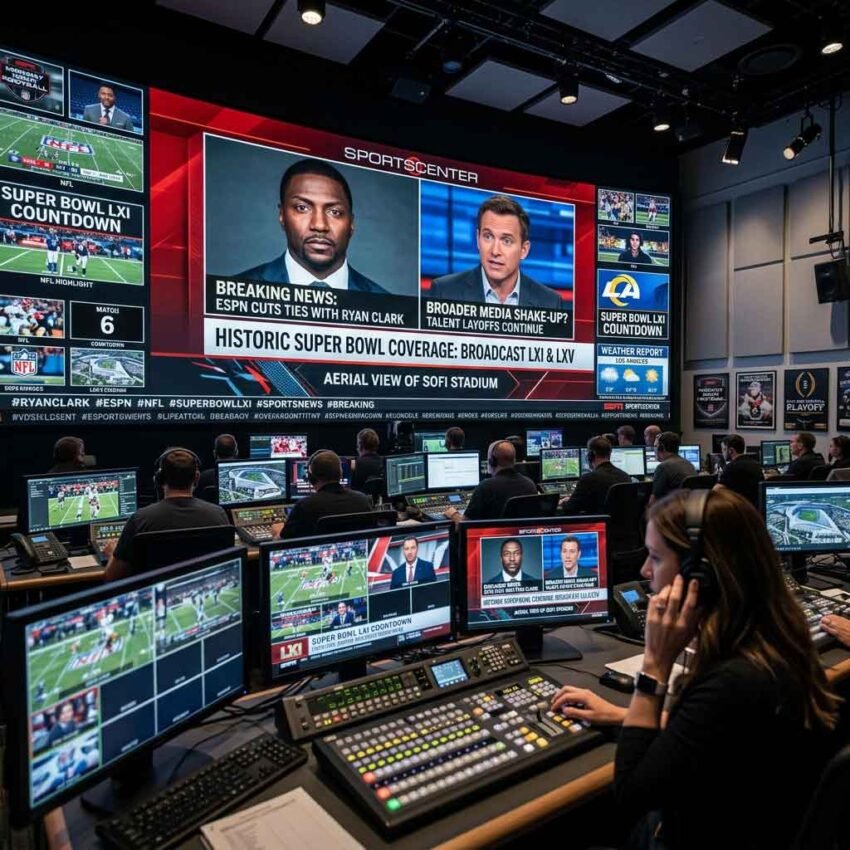
Media shake-ups happen all the time in sports broadcasting, but every now and then, a move hits the wire that stops the entire industry in its tracks. ESPN cutting ties with veteran NFL analyst Ryan Clark is precisely one of those moments.
Clark has been a staple of ESPN’s football coverage for over a decade. His sharp analysis, vocal personality, and strong presence on flagship shows like NFL Live and Get Up made him one of the network’s highest-profile personalities. Yet, on a routine broadcast, his long-standing tenure came to an abrupt and unexpected end.
This departure isn’t just about a single analyst leaving a desk, though. It offers a fascinating, behind-the-scenes look at how major sports media networks manage high-stakes talent, navigate corporate restructuring, and prepare for massive media rights events like Super Bowl LXI.
The Mid-Show Exit: How Ryan Clark’s Time at ESPN Ended
The details surrounding Clark’s departure feel almost like a script from a television drama. On what seemed like a standard Monday edition of NFL Live, Clark was actively appearing on air when the network delivered the news.
According to industry reporting from Andrew Marchand of The Athletic, sources confirmed that Clark was informed of ESPN’s decision mid-show. Following the meeting, he did not return to finish the broadcast.
Why would a legacy sports network inform a prominent analyst of their release right in the middle of a live show?
The Threat of Media Leaks
In today’s digital media ecosystem, news travels fast—often faster than corporate HR departments can process paperwork. ESPN executives had originally planned to officially inform Clark of his release on Tuesday morning. However, as news outlets began reaching out with inquiries regarding his job status, network leadership panicked.
Fearing that Clark would read about his own firing on social media or in news headlines before management could speak with him directly, executives made the abrupt call to break the news while he was still on set.
While the execution was undoubtedly awkward, it highlights the intense pressure modern media companies face when trying to manage sensitive personnel changes in real time.
Behind the Scenes: Salary, Friction, and Internal Tension
On the surface, losing a top-tier analyst who reportedly earned over $2 million annually right before ESPN’s biggest NFL season in history seems counterintuitive. However, sources indicate that tension had been building behind the scenes for months.
High Expectations and High Dollar Contracts
Clark was originally slated to play a massive role in ESPN’s upcoming coverage of Super Bowl LXI—a monumental broadcast event for the network. Retaining top talent for major events is standard procedure, but high-dollar contracts also come with intense scrutiny from executive leadership.
The On-Air Clash That Shifted the Dynamic
Trouble had been brewing since the end of the previous football season. Sources revealed that internal discussions about Clark’s long-term future with the network began as early as February.
A primary catalyst for this shift in executive sentiment was a notable incident on the morning show Get Up. During a heated debate regarding Dallas Cowboys wide receiver CeeDee Lamb, colleague Peter Schrager defended the receiver’s performance following an opening-night loss.
Clark pushed back strongly, dismissing Schrager’s perspective with a blunt remark:
“That’s the non-player in you.”
While heated banter is a selling point for morning debate shows, the exchange reportedly sparked tension both on and off the air. Over time, executive frustration with these dynamics grew, eventually leading leadership to conclude that a contract extension or continued partnership was no longer viable.
The Broader Context: Disney Restructuring and Corporate Cuts
While internal friction played a role in Clark’s exit, his departure is also part of a much larger corporate story. ESPN’s parent company, Disney, has been executing broad, company-wide cost reductions aimed at streamlining operations and optimizing sports media assets.
| Fact / Event | Details & Context |
|---|---|
| Network Cuts | On-air talent in Bristol, CT, and staff at NFL Network affected |
| Acquisition Value | ESPN acquired NFL Network assets in a deal valued around $3 Billion |
| NFL Equity Stake | The deal gave the NFL a 10% equity stake in ESPN |
| Primary Goal | Streamlining operations across merged broadcasting entities |
The Impact of the $3 Billion NFL Network Deal
Earlier in the year, ESPN completed a landmark deal to acquire NFL Network assets, giving the National Football League an estimated 10 percent equity stake in ESPN. While this strategic partnership solidified ESPN’s dominance in football media, it also created significant overlap in operations, talent, and production staff.
When two massive media entities combine assets, redundancies are inevitable. The layoffs following Clark’s departure are expected to impact:
- On-air talent based out of ESPN’s headquarters in Bristol, Connecticut.
- Production staff and analysts operating under the NFL Network umbrella.
- Off-air operational crew across both platforms.
In short, Clark’s exit represents the visible tip of a very large corporate iceberg.
What This Means for the Future of Sports Broadcasting
The restructuring at ESPN and NFL Network reflects a broader transition happening across the entire sports media landscape. Modern broadcasting networks are balancing three major pressures:
- Escalating Rights Fees: Securing broadcast rights for events like the Super Bowl costs billions, forcing networks to find operational savings elsewhere.
- Streamlining Overlap: As legacy cable channels merge operations with digital streaming platforms, consolidated talent rosters are becoming the norm.
- Culture and Brand Safety: Networks are placing a premium on smooth, collaborative panel dynamics, particularly as production teams prepare for global showcase broadcasts.
Ryan Clark will undoubtedly remain a sought-after voice in football analysis. Given his track record, strong social following, and proven ability to lead podcasts and independent media projects, he won’t be off the airwaves for long.
However, his sudden departure from ESPN serves as a clear reminder that in the modern sports media industry, no contract is untouchable, and big-picture corporate strategy will always dictate who sits at the desk.
Frequently Asked Questions
Why was Ryan Clark cut from ESPN?
Ryan Clark’s departure was driven by a combination of internal network tensions, high salary considerations, and broader corporate cost-cutting measures across Disney and ESPN properties.
Did Ryan Clark leave during a live broadcast?
Yes. Clark was informed of the decision during a Monday taping of NFL Live after news inquiries threatened to leak the story before management could tell him in person. He did not complete the remainder of the show.
Are there more layoffs coming to ESPN and NFL Network?
Yes. Additional layoffs affecting both on-air personalities and off-air operational staff at ESPN’s Bristol headquarters and NFL Network are expected as part of ongoing corporate restructuring.
