
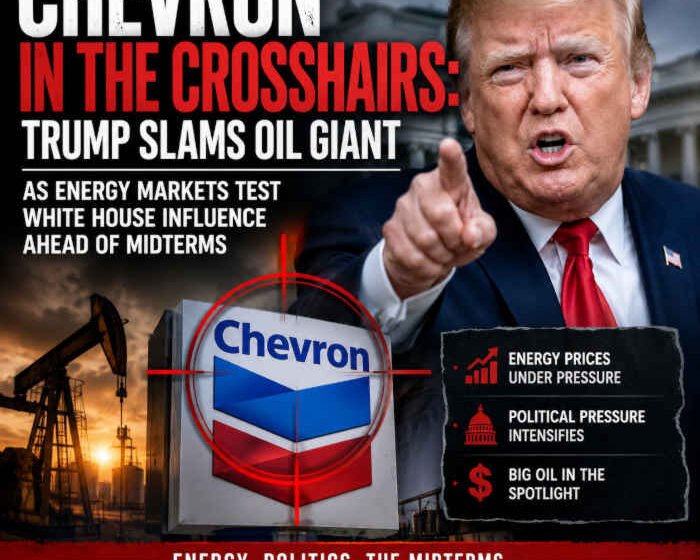
Chevron in the Crosshairs: Trump Slams Oil Giant as Energy Markets Test White House Influence Ahead of Midterms

WASHINGTON: President Donald Trump’s long-standing ability to influence global energy markets and talk down crude oil prices faces its toughest challenge yet. As conflict in the Middle East continues to roil energy supply chains, major oil producers like Chevron and ExxonMobil have reported record-breaking quarterly windfall profits, drawing sharp, public rebukes from the Oval Office.
Speaking to reporters in the Oval Office and taking to social media, President Trump expressed deep frustration over soaring retail fuel costs, directly calling out Chevron and demanding that oil majors immediately cut prices at the pump for American consumers.
“Chevron, too much money. ExxonMobil, too much money,” President Trump declared. “They’re making too much money based on a shortage. I don’t like it… They’re going to give some of that back to the public, and they better cut the retail price, the consumer price.”
With national gasoline prices averaging around $4.10 per gallon—a steep rise from pre-conflict levels—and crucial congressional midterm elections approaching, the political and economic stakes surrounding energy prices could not be higher.
Middle East Whiplash and Crude Oil Volatility
The friction between the White House and corporate energy executives stems from the volatile geopolitical situation involving Iran. Following a series of military exchanges between the U.S., Israel, and Iran that disrupted shipping routes through the critical Strait of Hormuz, crude oil futures surged.
However, over the weekend, President Trump abruptly called off a planned escalation of strikes against Tehran in favour of diplomatic negotiations. While energy markets initially responded with temporary price drops—West Texas Intermediate (WTI) and Brent crude futures pulled back noticeably—retail gasoline prices at local gas stations have adjusted far more slowly.
Industry analysts emphasise that while crude benchmark prices can drop rapidly on diplomatic headlines, retail fuel pricing depends heavily on global refining capacity, regional distribution bottlenecks, and inventory management.
Chevron and Exxon Earnings during Blockbuster Q2 Windfalls
The presidential criticism follows second-quarter earnings statements that delighted Wall Street investors but sparked intense political backlash in Washington. Driven by high crude prices and tight refining margins, major U.S. oil companies posted extraordinary financial returns:
-
Chevron’s Record Quarter: Chevron posted a staggering $12.2 billion in net income for the second quarter—nearly a 400% surge compared to $2.5 billion in the same quarter of the previous year.
-
ExxonMobil Profits Double: ExxonMobil reported $14.5 billion in quarterly net profit, more than doubling its earnings from the prior year period.
-
Refining Availability Deficit: Executives noted that while crude oil prices remained within historic ranges, a global deficit in refining capacity severely constrained the supply of refined gasoline and diesel, driving up refining margins.
Q2 Energy Industry Windfall Profits Breakdown
┌──────────────────┬─────────────────┬─────────────────┬──────────────┐
│ Energy Company   │ Q2 Net Income   │ Prior Year Q2   │ YoY Growth   │
├──────────────────┼─────────────────┼─────────────────┼──────────────┤
│ ExxonMobil       │ $14.5 Billion   │ $7.1 Billion    │ +104%        │
│ Chevron          │ $12.2 Billion   │ $2.5 Billion    │ +388%        │
│ Combined Total   │ $26.7 Billion   │ $9.6 Billion    │ +178%        │
└──────────────────┴─────────────────┴─────────────────┴──────────────┘
Despite these massive earnings, research firms like Wood Mackenzie report that major oil producers remain hesitant to reinvest windfall profits into immediate new drilling capacity. Industry leaders fear that if the conflict with Iran resolves quickly, global oil prices could drop sharply, leaving newly drilled wells unprofitable.
Midterm Political Stakes and Department of Justice Scrutiny
Rising energy costs pose a formidable political challenge for Republicans defending tight congressional majorities in the upcoming midterm elections. Cost-of-living concerns and inflation at the pump remain top of mind for voters across swing districts.
In response to consumer pressure, President Trump previously instructed the Department of Justice to investigate whether major integrated energy companies are engaging in anti-competitive price gouging. While trade groups like the American Petroleum Institute (API) maintain that energy markets are highly transparent and driven strictly by global supply and demand dynamics, political pressure on oil majors continues to mount from both sides of the aisle.
For corporate leaders like Chevron CEO Mike Wirth, navigating the dual demands of Wall Street shareholders and White House price mandates presents a complex strategic tightrope.
Frequently Asked Questions (FAQs)
Why is President Trump specifically targeting Chevron and ExxonMobil?
President Trump publicly criticised Chevron and ExxonMobil after both companies reported massive second-quarter profits totaling over $26 billion. Trump argued that energy companies are benefiting excessively from war-related supply shortages and urged them to pass cost savings directly to consumers at retail gas stations.
How do global conflicts with Iran impact domestic gas prices in the U.S.?
Military disruptions in the Middle East—particularly near the Strait of Hormuz, through which roughly one-fifth of the world’s petroleum flows—threaten global crude oil transit and regional refining capacity. Reduced global supply elevates crude prices, which quickly increases refining costs and retail pump prices for drivers.
Why don’t retail gasoline prices drop immediately when crude oil prices fall?
Retail fuel prices lag behind raw crude futures due to existing inventory cycles, refining operational costs, distribution expenses, and local retail market competition. While crude oil futures can react instantly to geopolitical headlines, gas stations typically adjust prices more gradually as new, lower-cost inventory arrives.
What steps is the White House taking to lower fuel prices?
The administration has utilised several policy tools, including releases from the Strategic Petroleum Reserve (SPR), temporary shipping waivers, diplomatic negotiations to de-escalate Middle East tensions, and instructing the Department of Justice to review energy industry pricing practices.