
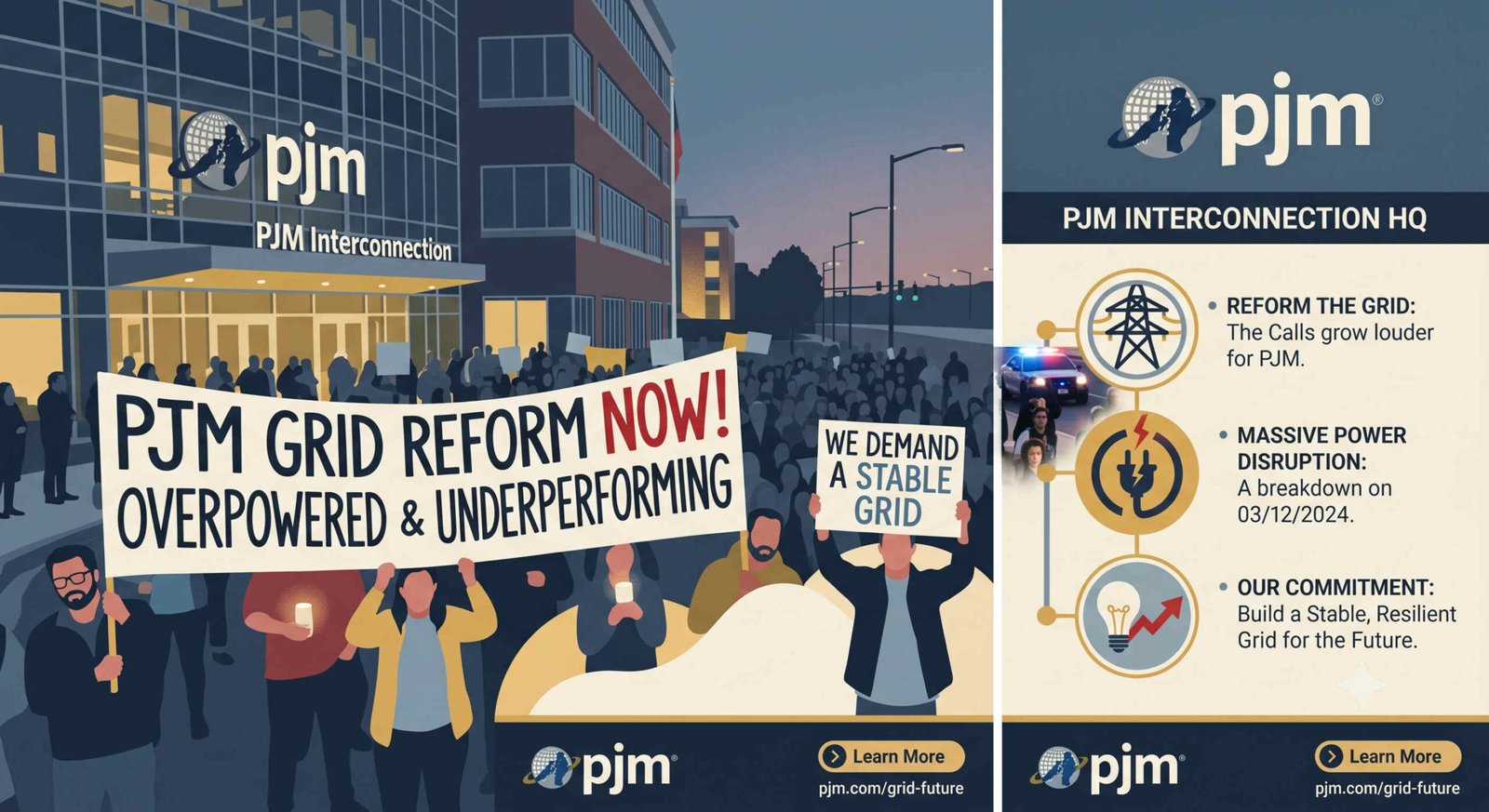
Data Centre Disconnect in Northern Virginia Sparks Urgent Calls for PJM Grid Reform
WASHINGTON — Federal energy officials are ratcheting up pressure on the Federal Energy Regulatory Commission (FERC) to fundamentally restructure the leadership and oversight of PJM Interconnection, the massive power grid operator serving 67 million Americans. The push for reform follows a significant July 22 power disruption that exposed critical vulnerabilities in the regional energy infrastructure.
The incident, which saw approximately 3 gigawatts (GW) of demand abruptly vanish from the grid in Northern Virginia, caused widespread flickering lights and raised urgent alarms regarding the reliability of the system. The failure highlighted the intensifying strain caused by hyper-scale data centres and cryptocurrency mining operations, which have created massive, sudden power draws that the current grid architecture is struggling to manage.
A Call for New Oversight

In response to the outage, officials are advocating for a legislative and regulatory shake-up of PJM’s governance. The proposed reforms are designed to force more accountability onto the organisation, which has faced mounting criticism over its handling of supply shortages and rising energy costs.
Key recommendations currently under review include:
- Extended Governance: Extending board member terms to six to nine years to foster greater independence and long-term strategic continuity.
- Radical Transparency: Requiring that board decisions and internal processes be made public, shifting away from the historically closed-door nature of RTO (Regional Transmission Organisation) governance.
- Regional Empowerment: Granting state governors within the PJM footprint greater authority over regional pricing and operational strategies, ensuring that the states footing the bill have a larger seat at the table.
Balancing Growth and Reliability
PJM, which manages power across the Mid-Atlantic and Midwest, sits at the epicentre of a national debate regarding the “AI boom” and its hunger for electricity. As data centres proliferate across the region, the utility has struggled to keep up with the record-breaking demand, leading to concerns about both grid stability and the affordability of electricity for residential consumers.
In an effort to preemptively address these challenges, PJM leadership has recently outlined a series of internal measures aimed at streamlining the interconnection process for new power generation. The grid operator claims these steps will help clear backlogs and bring much-needed capacity onto the system faster.
However, critics argue that internal measures are insufficient without a broader restructuring of the board. With the memory of the July 22 power drop still fresh, the pressure on FERC to implement structural changes is expected to intensify, setting the stage for a potential showdown over how the nation’s largest power market will be governed in the coming decade.
Is PJM doing anything to fix the supply shortage?
Yes. PJM has stated it is working on its own internal initiatives to streamline the process for connecting new power generation to the grid and is developing strategies to better manage the influx of high-demand data centre connections
Why does the PJM board need to be more “independent and transparent”?
Critics argue that the current board operates with too much secrecy and may not be sufficiently accountable to the states and citizens it serves. By making the board more transparent and giving states a seat at the table, officials hope to ensure that the grid is managed in the best interest of the public rather than just utility interests
What specific reforms are being proposed for PJM Interconnection
The proposed reforms focus on governance and transparency. They include extending board member terms (from six to nine years), mandating that board decisions be made public, and granting state governors within the PJM region more influence over pricing and grid operations.
Who does PJM serve?
PJM Interconnection is the regional transmission organization (RTO) that manages the electrical grid for 67 million people across the Mid-Atlantic and Midwest regions of the United States.
Why are data centers and crypto miners being blamed for the outage?
hese facilities are high-energy consumers that create massive, rapid power draws. If these facilities experience a sudden “disconnect” or technical failure, the resulting shift in demand can destabilize the surrounding regional grid, which is already under heavy pressure from rising energy needs.
What happened in Northern Virginia on July 22?
A massive power disruption occurred where roughly 3 gigawatts (GW) of demand abruptly vanished from the grid. This caused flickering lights for customers and highlighted significant vulnerabilities in the local power supply