
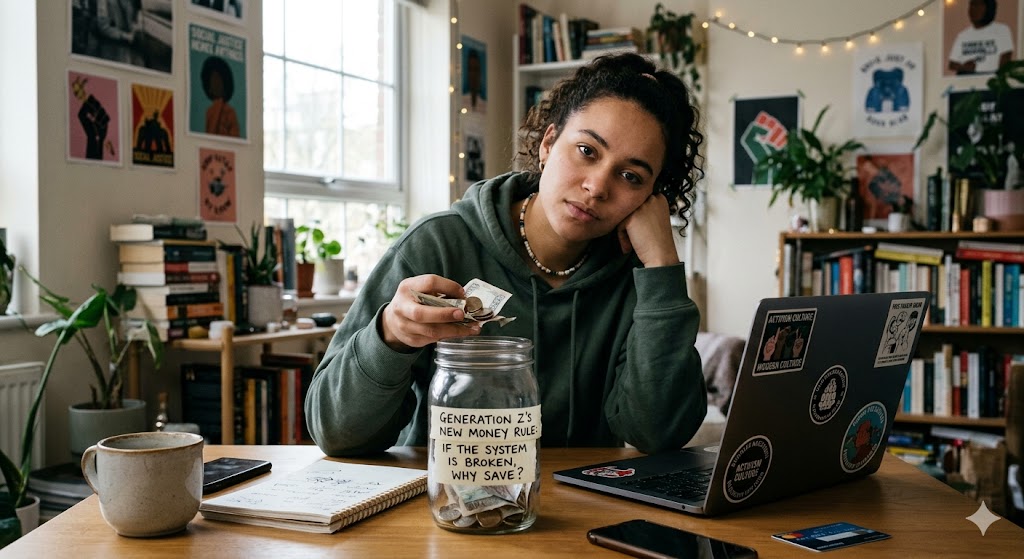
Breaking USA news: Gen Z is reinventing how they handle money because they no longer believe in the “American Dream” their parents grew up with.
With personal debt hitting a staggering average of $94,101—significantly higher than Millennials or Gen X—this generation is moving away from traditional saving and toward a trend called “disillusionomics.”
What is Disillusionomics?
Coined by economist Alice Lassman, the term describes a specific brand of financial rebellion. Unlike Millennials, who entered a crashing economy in 2008 as adults, Gen Z has lived in a “perpetual crisis” since childhood. This has created a deep skepticism toward institutions like banks, the government, and the housing market.
The Two Sides of the Trend
Gen Z’s financial behavior seems like a contradiction, but it all stems from the same lack of faith in the future:
- Doom Spending: Since milestones like homeownership or comfortable retirement feel impossible, many choose to spend their money now on travel and concerts—the “YOLO” (You Only Live Once) economy.
- Extreme Hustling: To manage their high debt, they are commodifying every part of their lives. This includes:
- House Hacking: Renting large spaces and subletting every corner to cover costs.
- Content Creation: Treating social media as a necessary stream of “passive income.”
- Multiple Income Streams: Moving away from the 9-to-5 model in favor of several different gigs.
Why the Rules Changed
The stats explain the frustration. Last year, unemployment for young adults (ages 16-24) was 10.8%, more than double the national average. With a third of the generation believing they will never own a home, Gen Z is stopping “playing by the rules” because they feel the game is rigged against them.
Instead of waiting for a stable future that may never come, they are choosing to live—and earn—entirely in the present.
