
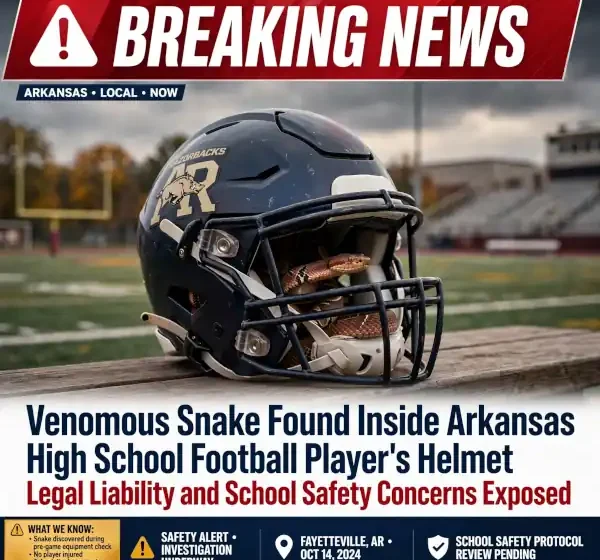
Venomous Snake Found Inside Arkansas High School Football Player’s Helmet: Legal Liability and School Safety Concerns Exposed

MAUMELLE, Ark. : A routine preseason football practice turned into a harrowing emergency at Maumelle High School in Central Arkansas when a student-athlete made a horrifying discovery: a two-foot-long venomous cottonmouth snake was coiled under the padding inside his football helmet.
Even more alarming, reports indicate the high school athlete had potentially been wearing the helmet for nearly an hour during practice drills before noticing movement inside the headgear. While the player miraculously avoided a venomous bite, the shocking incident has ignited severe scrutiny regarding school district premises liability, athletic department negligence, student safety protocols, and the legal duties educational institutions owe to student-athletes.
The Incident: How a Cottonmouth Entered High School Athletic Gear
The extraordinary event occurred during a afternoon practice session as the Maumelle High School Hornets were breaking into position groups. According to school officials and local media reports, the athlete began feeling an unusual crawling sensation against his head during equipment adjustments.
Initially assuming the sensation was sweat or shifted padding, the player eventually removed the helmet to inspect the interior. Tucked beneath the protective foam lining was a live, two-foot pit viper, later identified by Maumelle Animal Services as a venomous cottonmouth (Agkistrodon piscivorus).
+-------------------------------------------------------------------------+
|                      INCIDENT SUMMARY TIMELINE                          |
+-------------------------------------------------------------------------+
| 1. GEAR STORAGE: Equipment stored in locker room / outdoor fieldhouse.  |
| 2. PRACTICE DRILLS: Player equips helmet unaware of hidden pit viper.   |
| 3. DISCOVERY: Movement felt under helmet padding after ~45-60 minutes.  |
| 4. CONTAINMENT: Coaching staff isolates helmet inside plastic tote.      |
| 5. REMOVAL: Animal control floods padding & relocates live cottonmouth.  |
+-------------------------------------------------------------------------+
Coaching staff immediately isolated the helmet inside a plastic tote container to contain the threat while emergency animal control officers were dispatched. Responding animal services personnel had to flood the helmet padding with water to safely extract the reptile before relocating it away from school grounds.
Maumelle Athletic Director Kirk Horton described the event as a statistical anomaly, stating, “It really was just shock and disbelief… I’ve got a better shot at winning the lottery than seeing this in my ten years.”
Legal Implications: Premises Liability, Duty of Care, and School District Negligence
While the student emerged uninjured, legal analysts and personal injury attorneys emphasize that this near-miss highlights substantial legal exposure for public school districts under premises liability law and institutional duty of care standards.
1. The Standard of Duty of Care in School Athletics
Public and private school districts are legally required to maintain a safe environment for students, particularly during school-sanctioned athletic programs. This includes maintaining facilities, locker rooms, storage sheds, and equipment free from known hazards—including hazardous wildlife infestation.
┌────────────────────────────────────────────────────────────────────────┐
│                   SCHOOL DISTRICT LIABILITY FRAMEWORK                  │
├────────────────────────────────────────────────────────────────────────┤
│ • Duty of Care: Obligation to inspect & maintain athletic equipment.   │
│ • Breach of Duty: Failure to implement pest & wildlife controls.       │
│ • Causation & Damages: Exposure to hazardous venomous species.        │
│ • Sovereign Immunity Limits: Arkansas Tort Claims Act exceptions.      │
└────────────────────────────────────────────────────────────────────────┘
If a student-athlete sustains a venomous snakebite while on school property due to unmaintained facilities or lack of equipment inspection protocols, the school district could face substantial personal injury lawsuits alleging:
-
Failure to Inspect Equipment: Inadequate pre-practice equipment check procedures.
-
Inadequate Pest Control & Wildlife Management: Negligent maintenance of fieldhouses, equipment storage lockers, or damp outdoor storage areas where pit vipers thrive.
-
Gross Negligence: Allowing dangerous environmental conditions to persist despite known regional wildlife risks.
2. Medical Expenses and Personal Injury Coverage
In venomous snakebite incidents involving high school athletes, financial damages can escalate rapidly. Emergency treatment for a cottonmouth bite typically requires multiple vials of CroFab antivenom, ICU hospitalization, specialized surgical consultations, and long-term physical therapy for tissue necrosis. Medical bills alone frequently exceed $100,000 to $250,000.
If negligence is proven, a premises liability attorney could seek compensation for:
-
Past and future medical expenses
-
Pain and suffering / emotional distress
-
Long-term nerve or muscular tissue damage
-
Punitive damages in cases of severe institutional oversight
Cottonmouth Risk Profile vs. Other Venomous Snakes in Arkansas
Arkansas is home to six venomous snake species, but cottonmouths (also known as water moccasins) pose distinct risks due to their semi-aquatic habitats and tendency to seek cool, damp shelters during hot summer months.
| Snake Species | Venom Type | Typical Habitat | Defensive Behavior | Medical Severity |
| Cottonmouth (Agkistrodon piscivorus) | Cytotoxic / Hemotoxic | Damp areas, fieldhouses, ponds | Mouth-gaping, coil defense | High (Tissue necrosis, swelling) |
| Copperhead (Agkistrodon contortrix) | Mild Cytotoxic | Woodpiles, leaf litter, sheds | Freeze response, strike | Moderate (Pain, local swelling) |
| Timber Rattlesnake (Crotalus horridus) | Powerful Hemotoxic | Woodlands, rocky hillsides | Loud rattle warning | Critical (Systemic toxicity) |
| Texas Coral Snake (Micrurus tener) | Neurotoxic | Leaf litter, subterranean | Elusive, rare bites | Severe (Respiratory paralysis) |
Essential Risk Management Protocols for School Athletic Departments
To mitigate legal claims, prevent bodily injury, and safeguard student-athletes, high school athletic directors and risk management administrators are advised to institute strict safety procedures immediately:
┌────────────────────────────────────────────────────────────────────────┐
│                  ATHLETIC EQUIPMENT SAFETY CHECKLIST                   │
├────────────────────────────────────────────────────────────────────────┤
│ [✓] DAILY VISUAL INSPECTIONS: Shake & inspect helmets before use.       │
│ [✓] ELEVATED STORAGE: Keep gear totes off damp ground surfaces.        │
│ [✓] COMMERCIAL PEST CONTROL: Enforce monthly wildlife exclusion.        │
│ [✓] SEAL FIELDHOUSE ACCESS: Repair gaps in doors, walls & vents.       │
│ [✓] EMERGENCY RESPONSE PLAN: Train staff on antivenom protocols.      │
└────────────────────────────────────────────────────────────────────────┘
-
Mandatory Pre-Use Gear Checks: Instruct players and coaching staff to thoroughly shake out helmets, shoulder pads, and cleat bags before putting on equipment.
-
Elevated Equipment Storage: Store football gear on elevated racks or sealed climate-controlled lockers rather than ground-level bins or outdoor storage sheds.
-
Commercial Pest Control Contracts: Partner with licensed commercial pest control and wildlife removal services to audit locker rooms, press boxes, and equipment facilities monthly.
-
Emergency First Aid Readiness: Ensure athletic trainers carry clear venomous bite response plans, including immediate 911 dispatch, limb immobilization techniques, and direct routing to hospital facilities stocked with antivenom.
Conclusion: Balancing Prep Sports and Environmental Safety
The Maumelle High School incident ended without medical injury, serving as a stark warning to school administrators across the country. As high school football teams begin fall camps in warm climates, ensuring proper equipment storage and facility maintenance is not just a operational detail—it is a critical legal and safety mandate that protects student-athletes from severe injury and insulates school districts from catastrophic liability claims.