
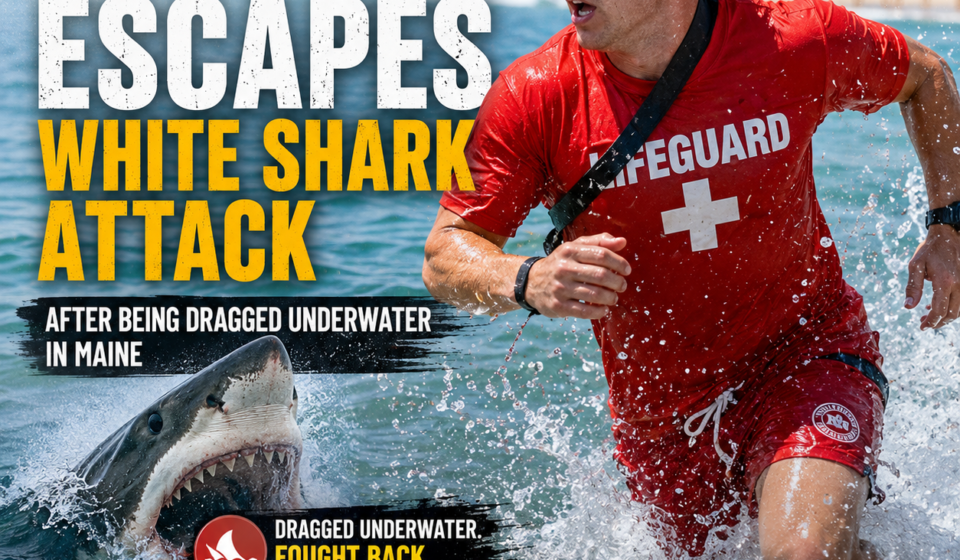
Scarborough Lifeguard Escapes White Shark Attack After Being Dragged Underwater in Maine

SCARBOROUGH, Maine : A routine swim turned into a heart-pounding struggle for survival at Scarborough Beach State Park on Saturday afternoon when a white shark grabbed a lifeguard’s floating rescue torpedo and pulled him 5 to 6 feet beneath the ocean surface.
The dramatic encounter unfolded around 1:00 p.m. as the lifeguard was swimming offshore equipped with a standard bright-red rescue torpedo—a buoyancy device attached to a chest strap. Officials report that an estimated 6-to-12-foot juvenile white shark bit down on the floating rescue canister, mistaking it for prey or testing the unfamiliar object, and violently dragged both the device and the attached guard underwater.
A Seconds-Long Struggle 6 Feet Below the Surface
The life-or-death situation demanded split-second decision-making. As the apex predator yanked the rescue torpedo downward, the lifeguard was suddenly submerged into the dark Atlantic waters. Realizing his flotation harness was tethered directly to the shark’s mouth, the guard unclipped the shoulder strap attached to the torpedo, freeing himself from the pull of the ocean predator.
Once released from the tether, the lifeguard kicked frantically back toward the shoreline, safely reaching the beach.
Bystanders on the beach witnessed the final moments of the terrifying encounter. A witness reported seeing the red rescue torpedo suddenly rocket 6 to 8 feet straight out of the water after the shark released it, launching into the air near the sandbar where the lifeguard had been swimming moments earlier.
While the lifeguard suffered no physical injuries, local public safety officials noted that he was understandably “shaken up” by the close call. Emergency responders temporarily closed Scarborough Beach to all swimming for approximately one hour while lifeguards and local police assessed the water and monitored the surrounding area.
Surge in White Shark Activity Across Maine’s Coast
Saturday’s incident comes amid an unprecedented spike in white shark sightings along the Maine coastline this summer. Over a recent 48-hour period, beachgoers and aerial observers captured multiple videos showing over half a dozen white sharks swimming in shallow waters near popular swimming areas off Scarborough Beach and nearby Higgins Beach.
Biologists tracking local marine life estimate that the number of white sharks lingering in the Saco Bay area has grown to more than a dozen. John Chisholm, an adjunct scientist and shark expert with the New England Aquarium, corroborated the reported encounter and noted that current shark density in Southern Maine resembles numbers typically seen further south.
| Location | Recent Shark Activity & Status |
| Scarborough Beach State Park | Lifeguard torpedo strike; beach temporarily closed for 1 hour; multiple sightings. |
| Higgins Beach | Multiple juvenile white sharks observed moving along nearshore sandbars. |
| Reid State Park (Georgetown) | Beaches closed to swimmers following confirmed sightings on consecutive days. |
Experts attribute the rise in coastal shark activity to warming Gulf of Maine water temperatures and a booming local seal population—the primary food source for growing white sharks.
Public Safety Guidance for Maine Beachgoers
Following Saturday’s close call, the Scarborough Police Department and public safety officials issued urgent safety guidelines for swimmers:
-
Follow Lifeguard Instructions: Obey posted flags and immediately exit the water when instructed by beach staff.
-
Avoid Feeding Zones: Stay away from areas where seals are present, where birds are diving, or where large schools of fish are visible.
-
Swim in Groups: Avoid swimming alone or venturing out into deep water far from the shoreline.
-
Limit Excessive Splashing: Unnecessary splashing can mimic struggling prey and attract inquisitive juvenile sharks in shallow water.
While Scarborough Beach has since reopened to visitors, public safety officials continue to monitor nearshore waters daily to protect beachgoers during peak summer shark season.