
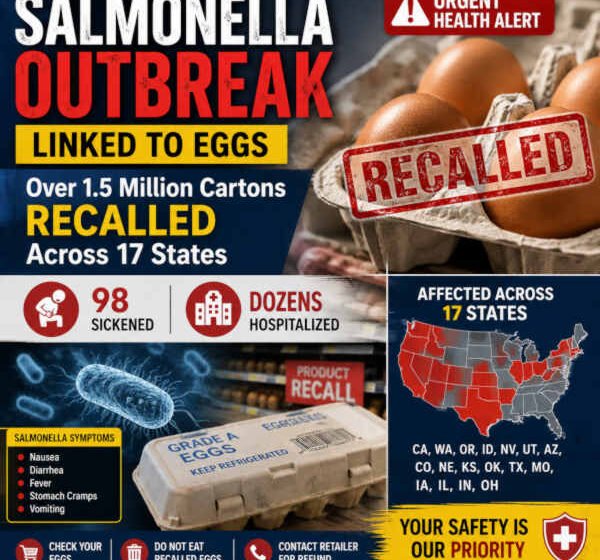
Salmonella Outbreak Linked to Eggs: Over 1.5 Million Cartons Recalled Across 17 States After 98 Sickened and Dozens Hospitalized

Washington, D.C. — Public health officials, including the Centers for Disease Control and Prevention (CDC) and the U.S. Food and Drug Administration (FDA), are urging consumers to inspect their refrigerators immediately following a major nationwide health alert. A widespread multistate Salmonella Enteritidis outbreak has officially been traced back to shell eggs produced in Texas by Midwest Poultry Services, L.P.
The massive recall involves more than 1.5 million dozen (18+ million individual) shell eggs distributed across retail store chains, grocery markets, and commercial foodservice operations. As of August 2026, health authorities have confirmed at least 98 illnesses and 26 hospitalizations across 17 states. Because many mild cases of foodborne illness go unreported, public health experts emphasize that the actual number of affected individuals is likely significantly higher.
For households, grocery shoppers, and victims suffering from severe food poisoning, understanding the details of this recall—including product identifiers, medical symptoms, health risks, and legal rights—is critical for safeguarding health and pursuing potential legal compensation.
Key Recall Details: How to Identify Recalled Eggs in Your Fridge
The recalled white and brown cage-free shell eggs were produced between June 6 and July 3, 2026, and distributed to major grocery retailers and food suppliers. The affected products were distributed across Texas, Louisiana, Oklahoma, Arkansas, Mississippi, and New Mexico, with potential nationwide retail reach through secondary distribution networks.
Consumers should carefully check egg cartons in their home refrigerators for the following identifying details:
-
Brand Names: Kroger, Simple Truth, Brookshire’s, Cal-Maine Sunups, and Country Morning.
-
Carton Sizes: Retail and bulk sizes including 6-count, 12-count (1 dozen), 18-count, 24-count, 30-count, 36-count, and 60-count packages.
-
Plant Code Numbers: Look on the side or top of the egg carton for code P-1950 or 0840962 printed in date-coding ink.
-
Julian Dates: Julian date codes ranging from 157 to 184.
-
Best-By / Sell-By Dates: Dates ranging between July 20, 2026, and August 17, 2026.
If you find recalled eggs in your refrigerator, do not consume, cook, or serve them. Either discard them in a sealed trash bag or return them to the point of purchase for a full refund. If you stored eggs in a reusable container without the original carton packaging and cannot verify their source, health authorities recommend throwing them away immediately out of an abundance of caution.
Affected States and Geographical Scope
Epidemiological and traceback data from state health departments, the CDC, and the FDA have linked laboratory-confirmed Salmonella cases to patients in 17 states:
-
Primary Distribution States: Texas, Louisiana, Oklahoma, Arkansas, Mississippi, and New Mexico.
-
States with Reported Illnesses: Arizona, California, Colorado, Georgia, Illinois, Louisiana, Michigan, Missouri, Mississippi, North Carolina, New Mexico, Nevada, New York, Oklahoma, South Carolina, Texas, and West Virginia.
What Is Salmonella and What Are the Symptoms?
Salmonella is a genus of pathogenic bacteria that causes salmonellosis, one of the most common foodborne bacterial illnesses in the United States. Infection occurs when a person ingests food or water contaminated with bacterial fecal matter. In the case of shell eggs, contamination can occur on the exterior shell surface or internally during egg formation inside infected laying hens.
Common Symptoms of Salmonella Food Poisoning
Symptoms typically develop between 12 to 72 hours after consuming contaminated food and can last anywhere from four to seven days. Common signs include:
-
Severe abdominal cramps and stomach pain
-
Persistent watery or bloody diarrhea
-
High fever and chills
-
Nausea and repeated vomiting
-
Headaches and muscle aches
High-Risk Populations and Severe Complications
While healthy adults may recover from salmonellosis without specific medical treatment beyond oral rehydration, certain vulnerable groups face elevated risks of severe disease, hospitalization, and life-threatening complications:
-
Infants and young children under 5 years old
-
Adults aged 65 and older
-
Individuals with compromised immune systems (e.g., cancer patients, organ transplant recipients, HIV/AIDS patients)
In severe cases, Salmonella bacteria can escape the intestinal tract and enter the bloodstream (bacteremia), spreading to distant organs, joints, or spinal fluid. This can cause septic shock, endocarditis, or reactive arthritis (a painful long-term joint condition).
Medical and Legal Action: What to Do If You Fall Ill
If you or a family member experienced severe gastrointestinal symptoms after eating eggs during the affected timeframe, taking systematic medical and legal steps is essential.
1. Seek Immediate Medical Attention
If you experience high fever (above 102°F), bloody stool, persistent vomiting, or signs of dehydration (dizziness, dry mouth, reduced urination), see a healthcare provider or go to an urgent care facility immediately. Ask your doctor to perform a stool culture test (stool panel) to confirm the presence of Salmonella Enteritidis. Official medical testing is essential for both your physical recovery and documenting your case for public health tracking.
2. Preserve Physical Evidence
-
Keep the Packaging: Retain the egg carton showing the brand, plant code (P-1950 or 0840962), and expiration date. Place the carton inside a sealed plastic bag labeled “DO NOT EAT” in your refrigerator if requested by health authorities or a food safety lawyer.
-
Save Receipts: Keep store receipts, credit card statements, or online grocery delivery records showing where and when you bought the eggs.
-
Document Medical Records: Keep all hospital discharge summaries, laboratory test results, doctor visits, and pharmacy receipts for prescriptions or over-the-counter medications.
3. Consult a Food Poisoning Attorney
Food producers and distributors have a strict legal duty under product liability laws to ensure that their products are safe for consumer consumption. When a commercial poultry operation distributes contaminated eggs resulting in severe illness or hospitalization, victims may be entitled to substantial financial compensation.
An experienced food safety lawyer or personal injury attorney can help you file a product liability lawsuit to recover damages, including:
-
Medical Expenses: Coverage for emergency room visits, hospital stays, doctor consultations, lab work, and prescription drugs.
-
Lost Wages: Reimbursement for missed work hours and diminished future earning capacity due to extended illness.
-
Pain and Suffering: Compensation for physical pain, emotional distress, and loss of quality of life caused by severe infection.
-
Out-of-Pocket Expenses: Coverage for home care, medical transportation, and related costs.
Kitchen Hygiene and Safe Handling Practices
To prevent cross-contamination in your kitchen when handling eggs or raw poultry, public health agencies recommend following these core food safety principles:
-
Sanitize Surfaces: Wash countertops, cutting boards, utensils, and refrigerator shelves that came into contact with recalled egg cartons using hot, soapy water or a disinfectant spray.
-
Wash Hands Thoroughly: Scrub hands with warm water and soap for at least 20 seconds before and after handling raw eggs.
-
Cook Eggs Thoroughly: Cook eggs until both the yolk and white are firm. Dishes containing eggs should reach an internal temperature of at least 160°F (71°C) measured with a food thermometer to kill harmful bacteria.
-
Refrigerate Promptly: Keep fresh eggs stored at 40°F (4°C) or colder at all times. Do not leave eggs at room temperature for more than two hours.
Conclusion and Summary
The 1.5 million carton egg recall linked to Midwest Poultry Services represents a major food safety event in 2026. Consumers across the United States—especially in Texas, Louisiana, Oklahoma, Arkansas, Mississippi, and New Mexico—must inspect their refrigerators immediately for Kroger, Simple Truth, Brookshire’s, Cal-Maine, or Country Morning eggs marked with plant code P-1950 or 0840962.
If you or a loved one suffered severe illness after eating recalled eggs, prioritize medical treatment, document your symptoms, preserve the product packaging, and consult a qualified personal injury attorney to explore your legal rights for financial compensation.