
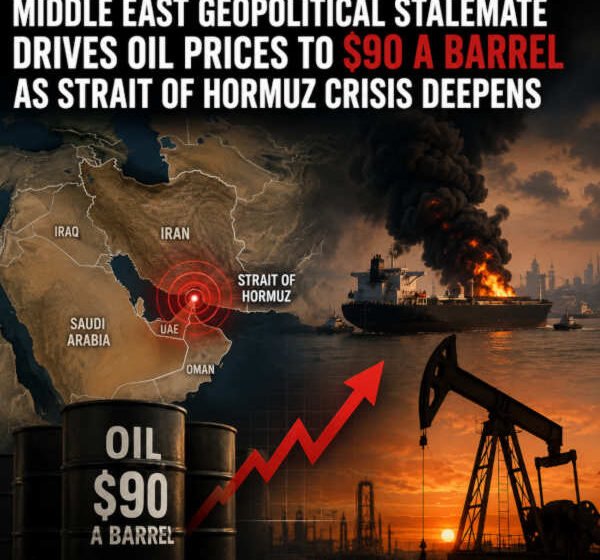
Middle East Geopolitical Stalemate Drives Oil Prices to $90 a Barrel as Strait of Hormuz Crisis Deepens

Crude oil futures surged on Tuesday, August 11, 2026, touching $90 a barrel for the first time in two weeks. The price rally follows a deepening political impasse between Washington and Tehran, which has drastically slowed commercial shipping through the Strait of Hormuz and sparked renewed global inflation risks.
Market Reaction and Energy Benchmark Snapshot
International benchmark Brent crude jumped as much as 1.6 percent to hit $90 a barrel before settling near $88. Meanwhile, domestic U.S. benchmark West Texas Intermediate (WTI) climbed 1.8 percent to clear $83 per barrel, extending gains after a sharp 5 percent rally on Monday.
| Energy Commodity / Economic Metric | Current Trading Level | Recent Movement / Impact |
| Brent Crude Futures | ~$88.00 / barrel | Touched intraday high of $90.00 (+1.6%) |
| West Texas Intermediate (WTI) | ~$82.50 / barrel | Ticked up +1.8% to highest level since July 31 |
| U.S. Average Retail Gasoline | $4.11 / gallon | Flat on Tuesday; +38% since start of Middle East conflict |
| Daily Strait of Hormuz Tanker Traffic | Handful per day | Down from pre-war average of ~130 vessels daily |
| U.S. Strategic Petroleum Reserve (SPR) | Below 300 Million barrels | Lowest recorded reserves level since 1983 |
Escalating Middle East Tensions Stall Peace Negotiations
The latest surge in energy market volatility follows a series of conflicting diplomatic demands made by both nations:
-
Naval Blockade Demands: Tehran signaled on Monday that the Strait of Hormuz—which historically handles nearly 20% of global crude petroleum supplies—will remain restricted until the United States fully lifts its naval presence in the region.
-
Reparations Demands: U.S. President Donald Trump countered on social media, insisting that Iran pay financial compensation for casualties caused by Iranian-backed militia conflicts before any deal can be finalized.
-
Alternative Route Threats: Iranian-backed Houthi forces in Yemen have escalated threats against Saudi Arabian oil tankers navigating the Red Sea, adding risk to alternative export corridors through the Bab al-Mandab Strait.
Macroeconomic Impact: Inflation Risks & Central Bank Outlook
The disruption in energy commodity trading is directly affecting consumer markets and monetary policy forecasts:
-
Rising Retail Gas Prices: U.S. retail gasoline prices held firm at $4.11 per gallon on Tuesday, representing a 38 percent increase since hostilities escalated six months ago.
-
Federal Reserve Rate Hike Odds: Rising energy costs raise the stakes for upcoming U.S. Consumer Price Index (CPI) inflation reports. Sustained fuel price increases could push the Federal Reserve toward higher interest rates or delay anticipated rate cuts to curb stagflation.
-
Asset Class Volatility: Foreign exchange markets experienced ripples, with the U.S. dollar strengthening while Asian equity indices drifted as institutional investors recalibrated risk exposure in energy stocks and commodity portfolios.