
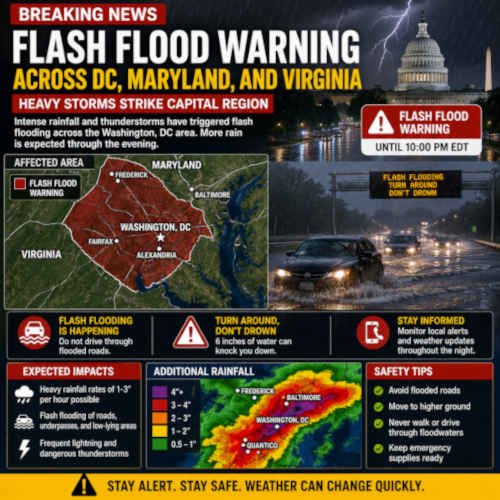
Flash Flood Warning USA Issued Across DC, Maryland, and Virginia: Heavy Storms Strike Capital Region:

WASHINGTON WEATHER REPORTS NEWS: Severe thunderstorms swept across the Washington, D.C. metropolitan area, bringing heavy rainfall, severe weather alerts, and significant travel disruptions to D.C., Maryland, and Northern Virginia.
The National Weather Service (NWS) issued widespread Flash Flood Warnings alongside flood watches, urging residents across the DMV region to seek higher ground and exercise extreme caution.
Flash Flood Warnings NEWS USA Issued across states
As radar indicated intense rainfall moving into the region from the mountains, the NWS officially issued Flash Flood Warnings through Sunday evening. Radar estimates showed between 1.5 to 3 inches of rainfall quickly accumulating in affected zones, with additional localised downpours threatening low-lying roads, urban drainage systems, and small streams.
Primary Areas Placed Under Flash Flood Warnings
-
Washington, D.C.: Northwestern D.C.
-
Maryland: Southeastern Montgomery County
-
Northern Virginia: Arlington County, Eastern Fairfax County, Eastern Prince William County, and the cities of Alexandria, Fairfax, and Falls Church
Regional flood watches remained in effect until midnight for both the D.C. and Baltimore metro areas as storm waves continued overnight.
Airport Ground Halt Disrupts Regional Air Travel
The storm system severely impacted regional transportation. The Federal Aviation Administration (FAA) issued ground stops at two major regional hubs due to lightning and low visibility caused by the downpours:
-
Ronald Reagan Washington National Airport (DCA)
-
Baltimore/Washington International Thurgood Marshall Airport (BWI)
Flights bound for both DCA and BWI were held on the ground, resulting in cascading flight delays and schedule adjustments throughout the evening.
Frequently Asked Questions (FAQs)
What should I do immediately during a flash flood warning?
Move to higher ground immediately. Avoid walking, swimming, or driving through floodwaters. Keep track of emergency broadcasts and stay clear of storm drains, creeks, and low-lying roadways. You need to take a picture and send it to the flood repair executives or to the department for the relief fund. It takes lots of money to repair flood-damaged goods and furnitures, so be also aware to hire the best repairer nearby
Does standard homeowners’ insurance cover flash flood damage?
Standard homeowners’ insurance policies typically do not cover flood damage caused by external rising waters or flash floods. Coverage usually requires a separate flood insurance policy through the National Flood Insurance Program (NFIP) or private insurers. Water damage from broken pipes or internal plumbing is generally handled under standard property policies.
How quickly should water extraction and cleanup begin after a flood?
Water extraction should begin within 24 to 48 hours to prevent structural weakness and microbial growth (mould remediation). Professional restoration teams utilise industrial dehumidifiers and water pumps to thoroughly dry out affected areas.
What is the difference between a Flood Watch and a Flash Flood Warning?
-
Flood Watch: Conditions are favourable for flooding in or near the watch area. Stay alert and monitor local news.
-
Flash Flood Warning: A flash flood is occurring or imminent. Take immediate protective action and move to higher ground.
How can I report storm damage or flooded roads in the DMV area?
In emergencies, dial 911. For non-emergency road hazards, flooded drains, or fallen tree limbs blocking public streets, contact your local municipal services (e.g., 311 in Washington D.C., or county emergency management offices in Maryland and Virginia).