
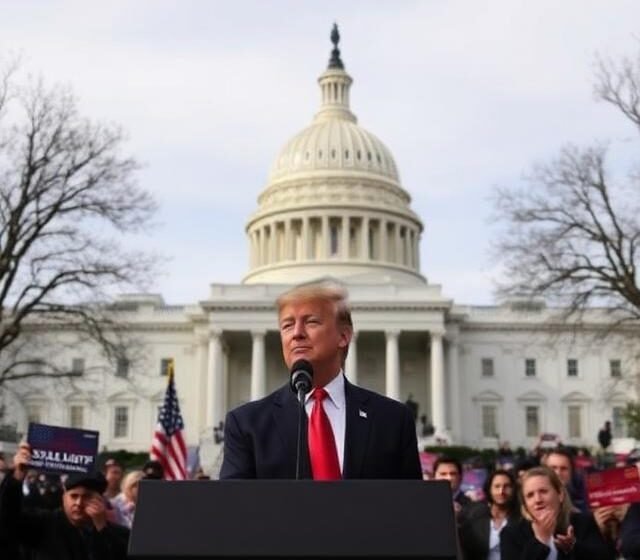
United States Midterm Election Impact: Senate Republicans See Trump as Growing Political Liability Ahead of Midterms

WASHINGTON: Senate Republicans are voicing heightened anxiety over President Donald Trump’s potential impact on the upcoming 2026 United States midterm election. With declining approval ratings, contentious foreign policy stances, and recurring public clashes between the White House and Capitol Hill, senior GOP strategists fear the president could become a major “political yoke” for vulnerable candidates.
According to reports from The Hill and congressional insiders, private discussions within the Republican Senate conference reveal a growing consensus that national headwinds could complicate efforts to defend vulnerable Senate seats and maintain the party’s narrow majority.
Declining Ratings and Swing-Voter Alienation
The core of Republican anxiety stems from President Trump’s weakening standing among key voter demographics, specifically suburban independents, moderate Republicans, and swing voters. Recent polling indicates that escalating international tensions—particularly regarding the administration’s foreign policy handling and conflict in the Middle East—have weighed heavily on public sentiment.
While Trump maintains a robust approval baseline among the Republican base, political campaign strategists warn that base support alone is insufficient in high-stakes Senate battlegrounds.
“That’s the perception in the room,” stated one Republican senator who spoke on the condition of anonymity, referring to internal discussions regarding how the White House’s public messaging impacts down-ballot congressional races.
Senate Battlegrounds Under Pressure
The shifting electoral map has expanded the competitive landscape. Internal GOP polling shows Democratic challengers closing gaps or leading in key battleground and traditionally Republican-leaning states, including North Carolina, Ohio, Iowa, and Texas.
                2026 U.S. MIDTERM SENATE ELECTORAL MAP

     +-----------------------------------------------------------+
     | Total Senate Seats Up for Election: 35                    |
     | Republican-Held Seats: 22  |  Democratic-Held Seats: 13  |
     +-----------------------------------------------------------+
                                   |
            +----------------------+----------------------+
            |                                             |
            v                                             v
  +-------------------+                         +-------------------+
  | Competitive GOP   |                         |  Democratic Net   |
  | Defense Battlegrounds|                       | Gain Target       |
  | • North Carolina   |                         | • Needs +4 seats  |
  | • Ohio             |                         |   for majority    |
  | • Iowa             |                         +-------------------+
  | • Texas            |
  +-------------------+
With 22 Republican-held seats on the ballot compared to just 13 Democratic-held seats, the GOP faces a defensive map where any loss of independent voters could swing control of the chamber.
Key Midterm Election Metrics & Battleground Analysis
| Key Electoral Metric | Current GOP Status | Democratic Benchmark | Midterm Strategic Outlook |
| Senate Chamber Balance | 53 Seats (Majority) | 47 Seats (45 D + 2 Ind) | Democrats need net +4 gain for majority |
| Seats Up for Election | 22 Republican-Held | 13 Democratic-Held | GOP defends wider geographic surface area |
| Primary Risk Factor | Declining suburban swing support | Base mobilization focus | Independent voter retention in key suburbs |
| Key Battleground States | NC, OH, IA, TX, ME | GA, MI, MN, NH | Heavy political advertising ad spend expected |
Strategy Dilemma: Distance or Align?
Republican campaign managers face a delicate balancing act when designing candidate platform positioning and political advertising spending:
-
Embracing the Base: Candidates in conservative states risk depressing turnout among MAGA loyalists if they distance themselves too openly from the White House.
-
Winning Moderates: Candidates in suburban-heavy battlegrounds face intense scrutiny from independent voters who express frustration over policy friction, cost-of-living concerns, and international entanglements.
The conflict has led several incumbent Republican senators to adopt localized campaign strategies, emphasizing state-level economic achievements and distance from White House disputes.
What Lies Ahead for Congressional Campaign Strategy
As election season progresses, political action committees (PACs) and party committees are reallocating campaign fundraising reserves toward defensive advertising in states previously considered safe. The debate over whether President Trump serves as an asset or a liability will shape campaign messaging, debate performance, and candidate fundraising strategies.
Frequently Asked Questions (FAQ)
Why are Senate Republicans concerned about President Trump’s ratings?
Senators fear that President Trump’s lower approval ratings among suburban independent voters could drag down down-ballot Republican candidates in competitive battleground states.
Which Senate seats are most at risk in the midterms?
Key battleground states attracting major campaign advertising spend include North Carolina, Ohio, Iowa, Texas, Georgia, and Maine.
How many seats do Democrats need to win the Senate majority?
Democrats need a net gain of four seats to flip the Senate majority, while Republicans can afford to lose no more than two seats to retain control.