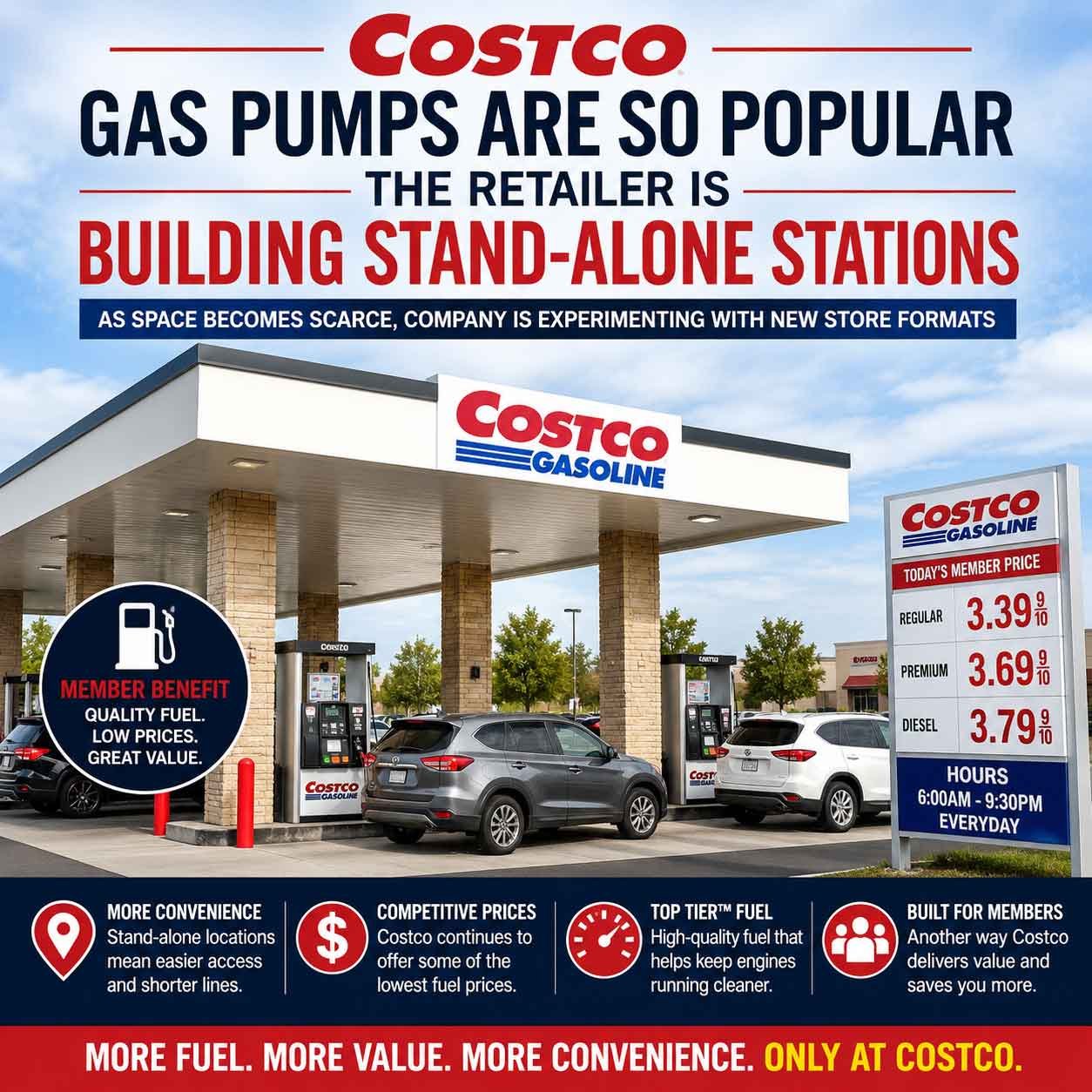
Costco Gas Pumps Are So Popular the Retailer Is Building Stand-Alone Stations
As fuel demand grows and warehouse parking lots become increasingly crowded, Costco is testing a new approach by expanding its fuel business with stand-alone gas stations. Here’s why the retail giant is investing in dedicated fuel locations and what it could mean for members across the United States.
Costco Is Expanding
Costco has built a loyal customer base by offering competitive fuel prices alongside its warehouse shopping experience. For many members, filling up the gas tank before or after shopping has become part of every Costco trip.
Now, as demand for its gasoline continues to increase and available space around existing warehouses becomes more limited, Costco is experimenting with stand-alone gas stations—locations that operate independently from its traditional warehouse clubs.
The move reflects changing consumer habits, increasing fuel demand, and the company’s long-term strategy to serve members more efficiently.
Why they Have Become So Popular
Costco gas stations regularly attract long lines, especially during weekends and holidays.
Several factors contribute to their popularity.
Competitive Fuel Prices overview
One of Costco’s biggest advantages is pricing.
The company often sells gasoline at prices that are lower than many nearby competitors. Although price differences vary by market, members frequently report noticeable savings over time.
For drivers who commute daily or own multiple vehicles, even small savings per gallon can add up throughout the year.
Top-Tier Fuel Quality details
Costco sells Top Tier™ gasoline, which meets fuel performance standards established by several major automakers.
Top Tier fuel contains detergent additives designed to help reduce engine deposits and maintain fuel system cleanliness.
Many manufacturers recommend using Top Tier gasoline as part of routine vehicle maintenance.
High Customer Trust
Costco has built a reputation for consistent pricing, reliable service, and quality products. That trust extends to its fuel operations.
Members often choose Costco fuel because they believe they receive both competitive prices and high-quality gasoline.
Why Costco Is Testing Stand-Alone Gas Stations
Traditional Costco warehouses require large parcels of land.
In many urban and suburban markets, suitable properties have become increasingly difficult—and expensive—to acquire.
Building a separate fuel station offers several advantages.
More Flexible Locations
A stand-alone gas station requires far less land than a full warehouse club.
This flexibility allows Costco to enter markets where constructing a traditional warehouse would be difficult.
Reduced Traffic Congestion
Busy Costco fuel stations often create long vehicle queues that extend into parking lots.
Dedicated gas stations may reduce congestion by separating fuel customers from warehouse shoppers.
Members can fill their vehicles without navigating crowded retail parking areas.
Faster Fuel Access
Many customers simply want affordable gasoline without spending time inside the warehouse.
Standalone stations could provide quicker access while maintaining Costco’s member-focused pricing model.
How Stand-Alone Fuel Stations Could Benefit Members
The new format offers several potential advantages.
Shorter Wait Times
Long lines remain one of the most common complaints at Costco gas stations.
Additional fuel locations could spread demand across multiple sites, reducing average waiting times.
Greater Convenience
Drivers may gain access to Costco fuel closer to residential neighborhoods or major commuter routes instead of traveling exclusively to warehouse locations.
This convenience could make Costco fuel an even more attractive option for members.
Better Traffic Flow
Removing some fuel traffic from busy warehouse parking lots could improve the overall shopping experience.
Customers entering the warehouse may encounter less congestion during peak hours.
Will Membership Still Be Required?
Costco’s fuel business has traditionally operated as a membership benefit.
Members typically scan their Costco membership card before purchasing gasoline.
If the company expands stand-alone fuel locations, industry observers expect membership requirements to remain in place unless Costco announces changes in the future.
Membership continues to be one of the company’s primary business models.
Costco Continues Investing in Fuel Operations
Fuel has become an increasingly important part of Costco’s overall business.
The retailer has expanded operating hours at many fuel stations and continues installing additional pumps at existing warehouse locations where space allows.
These improvements help serve growing customer demand while reducing wait times.
The introduction of stand-alone stations represents another step in that broader investment strategy.
Fuel Remains an Important Customer Attraction
Gasoline helps attract shoppers to Costco locations.
Many members combine fuel purchases with grocery shopping, pharmacy visits, optical services, and other warehouse purchases.
Affordable fuel strengthens customer loyalty while increasing overall visits to Costco properties.
Although gasoline itself often operates on relatively small profit margins, it supports the company’s broader retail ecosystem.
Competition in the Warehouse Fuel Market
Costco competes with several national retailers offering discounted gasoline.
These include warehouse clubs and large retail chains that combine fuel stations with membership or rewards programs.
Consumers increasingly compare:
- Fuel prices
- Membership benefits
- Convenience
- Fuel quality
- Wait times
- Payment options
Expanding stand-alone stations could help Costco remain competitive as demand continues growing.
Why Fuel Prices Matter to Consumers
Fuel remains one of the largest recurring transportation expenses for many American households.
Price differences of just a few cents per gallon may seem small during a single visit, but they become meaningful over months of driving.
Drivers often use fuel price apps and warehouse memberships to reduce transportation costs.
Retailers that consistently offer competitive prices can build long-term customer loyalty.
Could More Stand-Alone Stations Open?
Costco has not announced nationwide plans for stand-alone gas stations.
However, industry analysts believe the concept could expand if early locations prove successful.
Factors influencing future expansion may include:
- Available real estate
- Local demand
- Traffic patterns
- Construction costs
- Member usage
- Municipal zoning approvals
Large metropolitan areas with limited warehouse space may become natural candidates for future fuel-only locations.
Technology Is Improving the Fuel Experience
Costco continues modernizing many of its fuel stations.
Recent improvements across various locations include:
- Additional fuel pumps
- Extended operating hours
- Faster payment systems
- Improved traffic flow
- Enhanced station layouts
Technology helps reduce waiting times while improving customer convenience.
Future stand-alone stations may incorporate these features from the beginning.
Environmental Considerations
As electric vehicles continue gaining popularity, gasoline demand will gradually evolve over the coming decades.
Nevertheless, millions of Americans still rely on gasoline-powered vehicles for commuting, business, and travel.
Industry analysts expect fuel stations to remain an essential service for many years while retailers monitor changing transportation trends.
Some retailers have also begun evaluating future charging infrastructure alongside traditional fueling operations.
What Members Should Expect
For Costco members, the expansion signals continued investment in convenience.
If stand-alone fuel stations become more common, drivers could benefit from:
- More fueling locations
- Shorter lines
- Easier access
- Reduced warehouse congestion
- Continued competitive pricing
While shopping inside the warehouse will remain central to Costco’s business, expanding fuel operations demonstrates how valuable gasoline has become as part of the membership experience.
Final Thoughts
Costco’s decision to explore stand-alone gas stations reflects changing consumer behavior and growing demand for affordable fuel. As warehouse parking lots become busier and suitable retail space becomes harder to find, dedicated fuel locations offer a practical solution that could improve convenience for millions of members.
Although the concept is still developing, the strategy aligns with Costco’s long-standing focus on value, efficiency, and customer satisfaction. By making fuel easier to access while maintaining competitive pricing and Top Tier gasoline standards, the retailer aims to strengthen one of its most popular member benefits.
Whether members stop by for groceries, household essentials, or simply a full tank of gas, Costco’s continued investment in its fuel business shows that convenience and value remain at the heart of its long-term growth strategy.
Sources
This article is based on publicly available information from Costco Wholesale, Top Tier™ Fuel Program, and reporting from reputable U.S. business and retail news organizations covering Costco’s retail expansion and fuel operations. The information reflects currently available announcements and industry analysis at the time of writing.