


Texas: Read the latest US business news on the latest JPMorgan Shipbuilding Investment: The Blue-Collar Renaissance Rebuilding America’s Fleet
Finding a career that offers a six-figure salary without the burden of a mountain of student loan debt feels like a relic of the past. Today, the conversation around the future of work usually revolves around software engineers, data analysts, or how artificial intelligence might replace white-collar office jobs altogether.
However, one of the most significant and lucrative opportunities in the modern economy is emerging far away from Silicon Valley. It sits right on the waterfronts of America’s historic ports.
During a recent visit to the Philadelphia Navy Yard, JPMorgan Chase CEO Jamie Dimon sounded the alarm on a critical national issue: the United States has fallen dangerously behind in global shipbuilding. The industry faces a massive shortage of skilled labor, creating an urgent demand for domestic manufacturing talent.
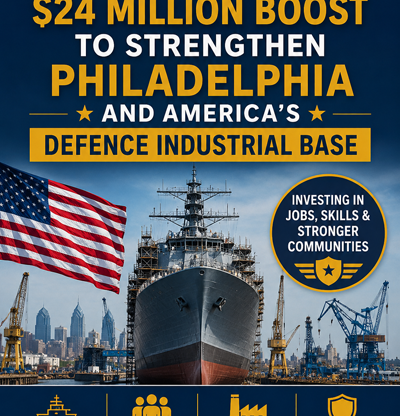
To help solve this crisis, JPMorgan Chase announced a major $24 million investment combining strategic loans and philanthropic grants. The capital will directly fund a new submarine manufacturing facility and heavily expand specialised trade apprenticeship programs.
For young Americans looking for stable, high-paying, and completely AI-proof careers, this manufacturing crunch is a massive opportunity. Let’s break down the details of JPMorgan’s maritime investment, examine the vast scale of the labour shortage, and look at how the U.S. plans to bridge the competitive gap with global rivals.
The 300,000-Worker Shortage: What Jamie Dimon Warned
The core issue facing American industrial infrastructure is not a lack of advanced technology, but a shortage of specialised human talent. The scale of the deficit is staggering.
“We need 300,000 electricians, welders, etc. to build ships in the next five or 10 years,” Dimon stated clearly during an interview with CNBC. The executive team chose the Philadelphia Navy Yard as the backdrop for the announcement to highlight a facility that currently employs roughly 16,000 workers. Experts predict that this regional workforce could easily double over the next five years as domestic shipbuilding operations accelerate to meet defence demands.
This sudden labour crunch stems from decades of cultural pressure pushing high school graduates toward traditional four-year college tracks, leaving the industrial trades neglected. The current workforce is rapidly reaching retirement age just as geopolitical needs require a major upgrade in domestic maritime capability.
The defense sector, commercial trade lines, and naval logistics networks are all competing for the same pool of qualified pipefitters, heavy-machinery mechanics, and structural welders.
JPMorgan Shipbuilding Investment as High Salaries Without College Debt
The most compelling aspect of this industrial push is the financial reality for workers entering the field. For years, the standard narrative promised that a college degree was the only reliable path to an upper-middle-class life. The maritime trades are completely upending that assumption.
Unlike traditional higher education—where students pay tens of thousands of dollars a year in tuition while earning nothing—skilled trades apprenticeships use an “earn while you learn” model. Trainees receive a steady paycheck and full benefits from day one while mastering their craft under the supervision of experienced journeymen.
“It fits what we call the American dream: getting kids skills or all workers’ skills that they have jobs that could pay 80-, 90-, $100,000 a year after you know a year or two of training,” Dimon explained. “This lifts up America. It helps build the defence industry.”
Furthermore, these hands-on roles provide excellent long-term job security. You cannot outsource the physical assembly of a massive naval submarine to an overseas call centre, and you cannot automate the precise, variable welding of deep-sea hulls to a digital AI model. The skills learned on a shipyard floor remain highly valuable, physical assets that anchor workers directly to the domestic economy.
Inside JPMorgan’s $24 Million Maritime Investment
Wall Street firms rarely invest millions of dollars out of pure sentimentality. JPMorgan’s $24 million financial package is a calculated strategic move designed to stimulate a vital industrial ecosystem.
The investment uses a dual-funding structure to address both immediate infrastructure needs and long-term labour pipeline challenges:
1. Hard Infrastructure Expansion
A significant portion of the capital acts as direct funding to construct a brand-new, state-of-the-art submarine manufacturing and assembly facility. This physical expansion will create 450 permanent, high-wage manufacturing jobs right at the Philadelphia Navy Yard. The facility will focus entirely on high-priority naval defense contracts, directly strengthening the domestic military industrial base.
2. Workforce Development Pipelines
The remaining funds operate as philanthropic grants aimed at expanding local trade academies and apprenticeship systems. This capital injection allows training centres to purchase advanced simulation equipment, hire more instructors, and scale up recruitment efforts. The program aims to train thousands of incoming welders, industrial electricians, and specialized pipefitters over the coming years.
By focusing on both physical factories and human education simultaneously, the investment ensures that the new assembly bays will have a steady supply of qualified personnel ready to work the day construction finishes.
Comparing the U.S. to South Korea
To understand exactly why this massive investment is necessary, you have to look at the massive competitive gap between American shipyards and global leaders. The operational contrast is stark.
Pennsylvania Senator David McCormick joined Dimon in Philadelphia to highlight the strategic importance of the project. He emphasised that while artificial intelligence causes anxiety for office-bound workers, demand for physical trade talent has never been higher. “If you’re an experienced welder or electrician, we can’t get enough of you,” McCormick noted. “We have to have [a] workforce that meets this incredible demand.”
The true scale of the challenge becomes clear when you compare Philadelphia’s output to global manufacturing hubs:
| Manufacturing Metric | Philadelphia Navy Yard (Hanwha Philly) | South Korean Facilities (Hanwha Base) |
|---|---|---|
| Annual Ship Delivery Rate | 1 to 1.5 ships per year | Roughly 1 ship per week |
| Simultaneous Apprentice Capacity | ~20 trainees at a time | ~400 trainees simultaneously |
| Primary Facility Owner | Hanwha (Acquired in 2024 for $100M) | Hanwha Global Parent Operations |
South Korea’s David Kim, who serves as the CEO of the Hanwha Philly Shipyard, points out that the foreign advantage relies heavily on workforce scale. The training pipeline in South Korea accommodates 20 times the number of simultaneous apprentices as the current Philadelphia setup.
American shipyards do not lag behind because of a lack of will; they lag behind because they simply do not have the sheer volume of trained professionals needed to run continuous, multi-shift assembly operations at peak efficiency.
Pathway for Entering the Maritime Trades
If you want to pivot away from retail, hospitality, or unstable corporate office roles to capture these six-figure trade salaries, navigating the entry process requires a clear, practical plan:
- Locate Registered Apprenticeship Programs: Research Local Opportunities.
Identify industrial training facilities certified by the Department of Labour. In the Northeast region, look directly into the Philadelphia Shipyard Apprentice Program or neighbouring maritime training centres. These groups handle direct placements for major shipyard operations. - Choose a Specialised Technical Path: Select Your Focus Area.
Evaluate which core discipline fits your natural skills. Industrial electricians focus on complex power distribution and automated control systems. Structural welders master advanced metal joining techniques like TIG, MIG, and flux-core welding. Pipefitters specialise in high-pressure fluid delivery systems. - Complete the Initial On-site Training: Earn While You Learn.
Commit to the structured educational timeline. Most comprehensive programs require a mix of classroom technical theory and thousands of hours of paid, hands-on field experience under master tradespeople. - Secure Advanced Industry Credentials: Maximise Your Value.
As you progress, earn specialised certifications from organisations like the American Welding Society (AWS) or regional maritime safety groups. Holding niche credentials increases your hourly earning power and opens up leadership paths to foreman or inspector roles.
The Big scnario of Re-Shoring American Industrial Strength
JPMorgan’s $24 million investment into the Philadelphia Navy Yard is more than a simple corporate expansion; it represents a foundational shift in how the U.S. views industrial strength. For decades, the dominant economic strategy favored outsourcing heavy production overseas while focusing the domestic workforce almost entirely on digital and service sectors.
Today’s shifting global supply chains and geopolitical realities have exposed the vulnerabilities of that approach. True economic resilience requires domestic manufacturing capability. Building cargo ships, naval vessels, and high-tech submarines locally ensures that the nation preserves its supply lines and independent defence capabilities during global crises.
By rebuilding the skilled labour pipeline, initiatives like this do more than just build ships; they revitalise local communities. When a young adult earns a high wage without college debt, that money goes right back into the local economy through home purchases, small business spending, and community investments.
A conclusion for future leaders
The changing job market sends a clear message to the next generation of workers: do not overlook the power of physical craftsmanship. While the digital landscape deals with shifting AI trends and corporate restructuring, the physical world still needs to be built, maintained, and repaired by human hands.
If you want a stable career that pays well, teaches you valuable technical skills, and lets you build a strong financial future without heavy debt, look toward the coast. The maritime industry is ready to hire, the funding is flowing, and the shipyard doors are open.
JPMorgan Shipbuilding Investment: Read More Here