
Lunar Scar Revealed: South Korea’s Orbiter Captures First Images of SpaceX Rocket Crash Site

Tesas News : An artificial mark has been left on the lunar surface, and scientists finally have visual proof.
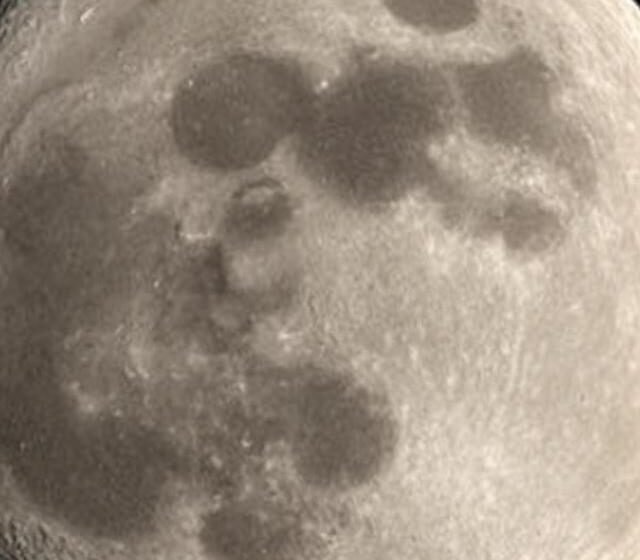
Following months of orbital tracking, a spent SpaceX Falcon 9 upper stage collided with the moon at a blistering speed of roughly 5,400 miles per hour (8,700 kilometers per hour). Shortly after the impact near the lunar near-side/far-side boundary close to Einstein Crater, South Korea’s Danuri lunar orbiter passed overhead and captured the first orbital images of the fresh crash site.
The photographs, released by the Korea Aerospace Research Institute (KARI), provide a rare before-and-after view of human-made space hardware impacting a celestial body.
High-Speed Orbital Spotting
Orbiting approximately 62 miles (100 kilometers) above the lunar terrain, the Danuri spacecraft—officially known as the Korean Pathfinder Lunar Orbiter (KPLO)—adjusted its trajectory in advance of the crash. Danuri began watching the target zone about 30 minutes before the collision and made eight separate imaging passes using its high-resolution Lunar Terrain Imager (LUTI) camera.
The resulting before-and-after imagery reveals a distinct dark smudge accompanied by scattered material thrown outward during the collision.
While the impact created a crater dozens of feet wide and roughly 12 feet (3.6 meters) deep, the mark appears almost microscopic against the moon’s vast 2,160-mile diameter surface.
“Danuri secured both pre-collision and immediate post-collision footage, enabling analysis of changes caused solely by the collision and providing important research data,” stated officials from the Korea Aerospace Research Institute via X.
Beyond orbital photography, ground-based observatories also tracked the collision. Astronomers utilizing the European Southern Observatory’s Very Large Telescope (VLT) in Chile detected rising vapor plumes containing sodium and lithium—elemental signatures characteristic of rocket components and battery materials vaporized upon impact.
Why Did the Falcon 9 Rocket Hit the Moon?
The story behind this lunar crash began in January 2025, when SpaceX launched a Falcon 9 rocket carrying two private robotic lunar landers: Firefly Aerospace’s Blue Ghost and ispace’s Resilience.
After successfully accelerating both payloads into a high-energy lunar transfer orbit, the rocket’s second stage exhausted nearly all its onboard propellant. Unlike typical low-Earth orbit missions where rocket stages perform a controlled retro-burn to safely re-enter and burn up over Earth’s oceans, deep-space launches leave upper stages in chaotic, high-altitude trajectories.
For over a year, the roughly 4,000-kilogram (8,800-pound) piece of hardware drifted through space. The complex gravitational tug-of-war between Earth, the moon, and the sun—combined with solar radiation pressure—gradually nudged the spent stage onto an unavoidable collision course.
In a public statement regarding the event, SpaceX addressed the complexities of high-energy mission disposals:
“For most of our missions, we plan for a controlled deorbiting of the Falcon second stage so that it re-enters safely over the ocean. In higher-energy missions, such as those heading to a lunar transfer orbit, nearly all of the vehicle’s performance is dedicated to successfully placing the payload into the intended orbit, and a controlled deorbiting maneuver is not always possible.”“We are actively working to be as responsible as possible with the hardware left in space and to ensure space safety, even on more complex missions. In this case, over time, solar activity and gravity deflected the second stage toward the Moon. Impacts like this are rare, but they can occur with objects in these types of orbits, and we are collaborating with NASA to find the optimal disposal solution.”
Coincidentally, the Danuri orbiter itself was launched on a SpaceX Falcon 9 rocket in August 2022.
Scientific Value of Space Hardware Impacts
While unintentional, planetary scientists view such high-speed impacts as valuable natural experiments.
Because the mass, trajectory, velocity, and composition of the Falcon 9 upper stage are precisely documented, the resulting crater provides researchers with a controlled baseline to model lunar geology. Studying how dust and rock (ejecta) spread across the regolith helps geologists better understand natural meteoroid impacts that continuously reshape the lunar landscape.
NASA’s Lunar Reconnaissance Orbiter (LRO) is also scheduled to perform flyovers of the impact site near Einstein Crater in the coming days. Combining Danuri’s immediate post-impact images with higher-resolution, multi-spectral data from NASA will allow scientists to map the crater’s depth profile and analyze the displaced subsurface soil.
Managing Lunar Space Debris
The event highlights growing discussions within the international space community regarding orbital debris management beyond Earth orbit.
As commercial and national space programs accelerate missions under NASA’s Artemis program and competing international initiatives, traffic in cislunar space is reaching historic highs. Spent rocket stages, dead satellites, and discarded hardware remaining in chaotic lunar transfer orbits present increasing tracking challenges for space situational awareness networks.
While this particular impact posed no danger to operational surface missions or Earth, space agencies are working toward clearer standards for end-of-life disposal in deep space. Potential solutions being evaluated by aerospace engineers include:
-
Solar Sail Trajectory Deflection: Equipping upper stages with lightweight sails to use solar pressure for controlled heliocentric disposal.
-
Dedicated Reserve Propellant: Reserving a small percentage of fuel specifically to drive spent stages into designated disposal orbits far from Earth and the moon.
-
Targeted Lunar Impact Zones: Intentionally guiding spent hardware to crash into designated, non-scientific lunar regions to prevent accidental collisions with active landers or historic heritage sites.
As human activity around the moon grows from sporadic scientific endeavors into a sustained presence, understanding—and managing—every scar we leave on the lunar surface becomes essential.