As millions of Americans mark Easter Sunday on April 5, 2026, a common question is shaping shopping plans across the country: which stores are open, and which are closed? While Easter is not a federal holiday, its consistent placement on a Sunday means that many businesses either shut their doors entirely or operate on reduced hours, affecting everything from grocery runs to last-minute essentials.
Easter remains one of the most widely observed Christian holidays, celebrating the resurrection of Jesus Christ. Even for those who do not celebrate, the ripple effect is significant, as major retail chains, grocery stores, and logistics services adjust operations nationwide.
Walmart Remains Open With Adjusted Hours
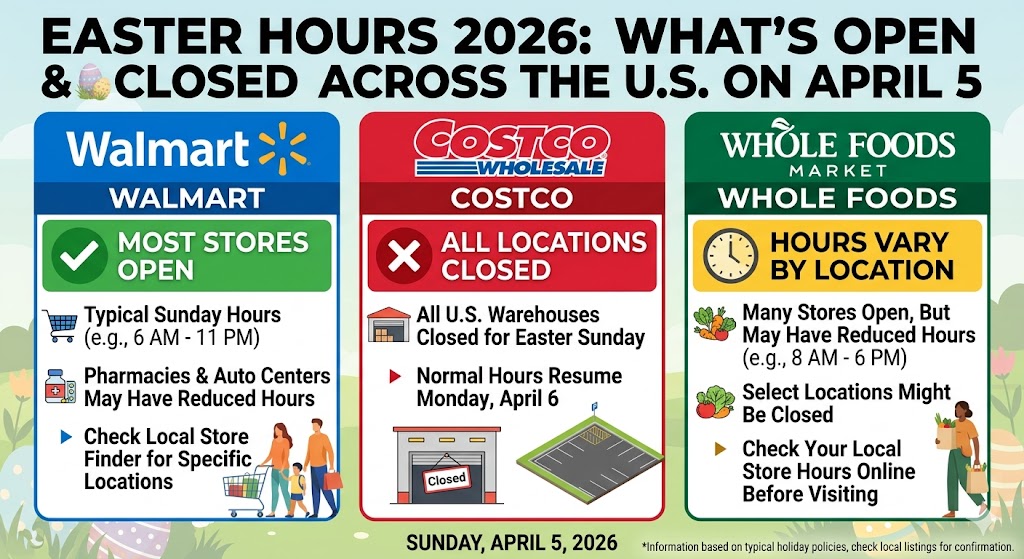
Shoppers looking for convenience will find that Walmart is among the major retailers staying open on Easter Sunday. Most Walmart locations are operating during regular or slightly reduced hours, making it one of the most accessible options for last-minute shopping needs.
From groceries and household essentials to seasonal items, Walmart’s decision to remain open reflects its broader strategy of maintaining availability during key holidays when demand remains high. However, customers are advised to check with their local store, as hours may vary depending on location.
Costco Closes Its Doors for the Holiday
In contrast, Costco Wholesale is closed on Easter Sunday, continuing its long-standing tradition of observing major holidays. Costco is known for shutting down operations on select days throughout the year, including Easter, Thanksgiving, and Christmas.
For regular Costco shoppers, this closure means planning ahead is essential, especially for bulk grocery purchases or holiday meals. The company’s approach emphasizes employee time off during major holidays, a policy that has remained consistent over the years.
Whole Foods and Grocery Store Variations
Whole Foods Market stores are generally open on Easter Sunday, although many locations operate with reduced hours. As a premium grocery chain, Whole Foods often sees increased holiday traffic, particularly for fresh produce, bakery items, and prepared meals.
Other grocery chains across the U.S. show a mixed approach:
- Some regional supermarkets remain open with limited hours
- Others close entirely to observe the holiday
- Independent stores may vary widely depending on ownership
Consumers are encouraged to verify store timings locally, as there is no universal standard across the grocery sector.
Shipping and Delivery Services Pause Operations
Holiday closures extend beyond retail into logistics and delivery services. The United States Postal Service does not deliver regular mail on Sundays, including Easter. The only exception remains Priority Mail Express, which continues to operate.
Private carriers such as UPS and FedEx also scale back operations significantly. Most standard deliveries are paused, though specialized services like UPS Express Critical and FedEx Custom Critical continue for urgent shipments.
Physical retail locations for these shipping companies are either closed or operating with modified hours, limiting in-person services.
Financial Markets and Schools
Financial institutions follow their usual weekend schedule. Both the New York Stock Exchange and the Nasdaq remain closed on Sunday, with trading resuming on Monday, April 6.
Schools across the country are also unaffected in terms of scheduling, as Easter falls on a weekend. However, many districts align spring break with the holiday, extending closures into the following week.
Why Businesses Close on Easter
Although Easter is not a federally mandated holiday, its cultural and religious significance leads many private businesses to close voluntarily. For companies like Costco, the decision reflects a commitment to giving employees time off for major observances.
For others, especially large-scale retailers like Walmart, staying open is a response to consumer demand. Easter often involves family gatherings, meals, and celebrations, which can drive last-minute shopping activity.
This split approach highlights a broader trend in retail: balancing operational efficiency with employee welfare and customer convenience.
Impact on Consumers
For consumers, Easter Sunday closures can be both an inconvenience and an opportunity. Those who plan ahead typically avoid disruptions, while last-minute shoppers rely heavily on stores that remain open.
Key impacts include:
- Limited grocery options in certain areas
- Reduced availability of delivery services
- Fewer in-person retail experiences
- Increased foot traffic in open stores
In urban areas, shoppers may have more choices due to higher store density. In smaller towns, however, closures can significantly limit access to essentials.
The Role of E-Commerce
While physical stores may close, online shopping continues uninterrupted. Retailers, including Walmart and Amazon-owned Whole Foods, maintain active digital platforms, allowing customers to place orders even on holidays.
However, delivery timelines may be affected due to reduced logistics operations. Customers ordering on Easter Sunday may experience delays, with fulfillment resuming fully on the next business day.
A Broader Retail Trend
Easter store hours reflect a larger pattern seen across the retail industry. Unlike holidays such as Black Friday or Christmas Eve, Easter does not drive aggressive sales campaigns or extended hours. Instead, it is often treated as a quieter day focused on family and community.
Retailers increasingly tailor their approach based on brand identity:
- Value-driven chains prioritize accessibility
- Membership-based retailers emphasize employee benefits
- Premium grocers balance limited hours with high demand
This diversity in strategy underscores the evolving nature of consumer expectations and corporate responsibility.
Planning Ahead for Holiday Shopping
Experts recommend that consumers prepare for holiday closures by:
- Shopping in advance for essential items
- Checking local store hours online
- Considering alternative retailers
- Using digital platforms for convenience
With Easter falling early in April this year, seasonal demand for groceries, decorations, and gifts has remained steady, making preparation especially important.
Looking Ahead
As retail continues to adapt to changing consumer habits, holiday operations are likely to remain flexible. Companies may increasingly rely on data to determine whether staying open or closing aligns better with customer needs and business goals.
For now, Easter Sunday remains one of the few days when many major retailers step back, offering a pause in the otherwise fast-paced retail calendar.
In 2026, the contrast is clear: while Walmart keeps its doors open to serve last-minute shoppers, Costco closes in observance of the holiday, and Whole Foods strikes a balance with reduced hours. For consumers, understanding these differences is key to navigating the day smoothly.
Whether celebrating Easter or simply managing a weekend routine, knowing what’s open and closed can make all the difference.
About the Author