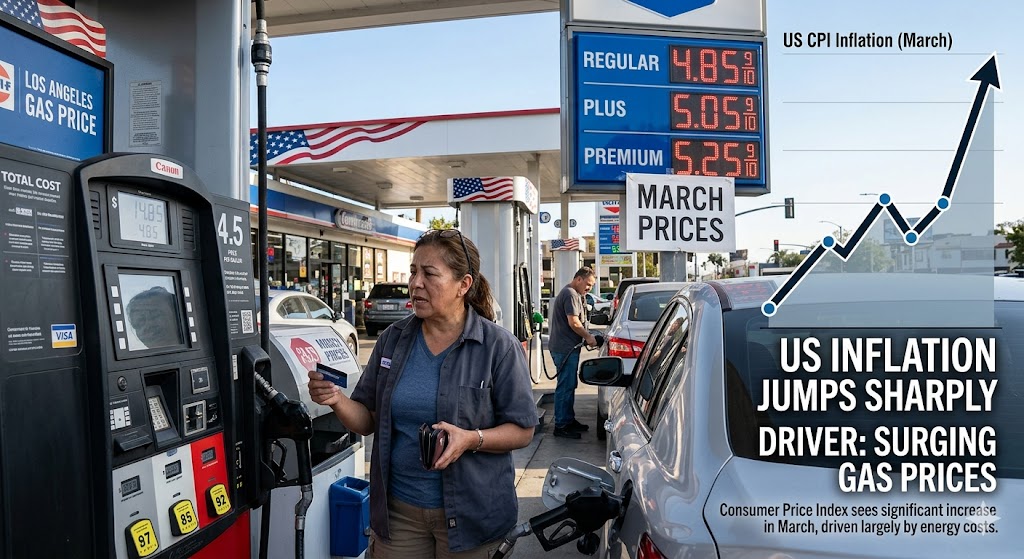
The United States recorded a sharp rise in inflation in March, driven primarily by a massive spike in gasoline prices amid escalating geopolitical tensions involving Iran. The latest Consumer Price Index (CPI) report released by the Bureau of Labor Statistics shows that inflation increased far more rapidly than expected, raising concerns among economists, policymakers, and consumers.
Annual inflation rose to 3.3% in March, compared to 2.4% in February, marking a significant acceleration. On a monthly basis, prices climbed by 0.9%, one of the fastest increases in recent periods. The sudden jump highlights how quickly external shocks, particularly in energy markets, can impact the broader economy.
Energy Costs Behind the Surge
The main driver of the inflation spike was a dramatic rise in energy prices. Gasoline prices surged by 21.2% in March, marking a record monthly increase. This surge is closely linked to disruptions in global oil supply caused by tensions involving Iran, a key player in the global energy market.
Higher fuel costs tend to have a ripple effect throughout the economy. Transportation becomes more expensive, businesses face higher operating costs, and consumers ultimately pay more for goods and services. This chain reaction has contributed significantly to the overall increase in inflation.
The surge in energy prices also reflects tighter global supply conditions. Any disruption in oil production or distribution can quickly lead to price volatility, and the current geopolitical climate has amplified those risks.
Geopolitical Tensions Add to Market Pressure
The ongoing conflict involving Iran has injected uncertainty into global markets. As oil supply becomes constrained, prices rise, affecting economies worldwide. The United States, despite being a major energy producer, is still influenced by global oil price movements.
This situation has drawn comparisons to past energy crises, including those in the 1970s, when geopolitical events triggered sharp increases in oil prices and inflation. While today’s economy is more diversified, the immediate impact on fuel costs and inflation remains significant.
Investors are closely watching developments in the region, as any escalation could further disrupt supply and keep prices elevated.
Consumer Sentiment Falls to Historic Lows
Rising inflation has taken a toll on consumer confidence. Surveys indicate that consumer sentiment has dropped to historic lows, even below levels seen during the Great Recession and the Covid-19 pandemic.
Higher prices for fuel, food, and housing are straining household budgets. Many consumers are cutting back on discretionary spending as they struggle to keep up with rising costs. This decline in spending could slow economic growth and create additional challenges for businesses.
Consumer sentiment is a crucial factor in economic performance. When confidence declines, it often leads to reduced spending, which can weaken overall economic activity.
Stagflation Concerns Resurface
The combination of rising inflation and potential slowing growth has led to renewed concerns about stagflation. This economic condition, characterized by high inflation and weak growth, is particularly difficult to manage.
Some economists see parallels between the current situation and the stagflation period of the 1970s. However, Federal Reserve Chair Jerome Powell has stated that the current conditions do not yet meet the definition of stagflation. He emphasized that the labor market remains relatively strong, which is a key difference from past scenarios.
Despite this reassurance, the risk of stagflation remains a concern if inflation continues to rise while economic growth slows.
Federal Reserve Faces Tough Decisions
The latest inflation data presents a complex challenge for the Federal Reserve. Policymakers must decide whether to raise interest rates to control inflation or maintain a more supportive stance to protect economic growth.
Higher interest rates can help reduce inflation by slowing demand, but they can also increase borrowing costs and potentially slow the economy. On the other hand, keeping rates low could allow inflation to remain elevated, eroding purchasing power.
The Federal Reserve is expected to take a cautious approach, closely monitoring economic data before making policy decisions.
Financial Markets React
Financial markets have responded with increased volatility following the inflation report. Stock markets have shown mixed performance, with some sectors declining while energy-related stocks have benefited from higher oil prices.
Bond yields have also risen, reflecting expectations of potential rate hikes. Higher yields can increase borrowing costs and influence investment decisions, adding another layer of complexity to the economic outlook.
Currency markets have reacted as well, with the US dollar strengthening amid expectations of tighter monetary policy.
Outlook Remains Uncertain
The future path of inflation will largely depend on how geopolitical tensions evolve. If the situation stabilizes and energy prices decline, inflation could ease in the coming months. However, continued disruptions in oil supply could keep prices elevated.
Economists remain divided on the outlook. Some expect inflation to moderate later in the year, while others warn that risks remain tilted to the upside.
Conclusion
The sharp rise in US inflation in March underscores the powerful impact of energy prices and geopolitical tensions on the economy. With gasoline prices surging at a record pace and consumer sentiment falling to historic lows, the challenges facing both policymakers and consumers are intensifying.
While the Federal Reserve maintains that the economy remains stable, uncertainty continues to dominate the outlook. The coming months will be critical in determining whether inflation stabilizes or remains a persistent challenge for the US economy.