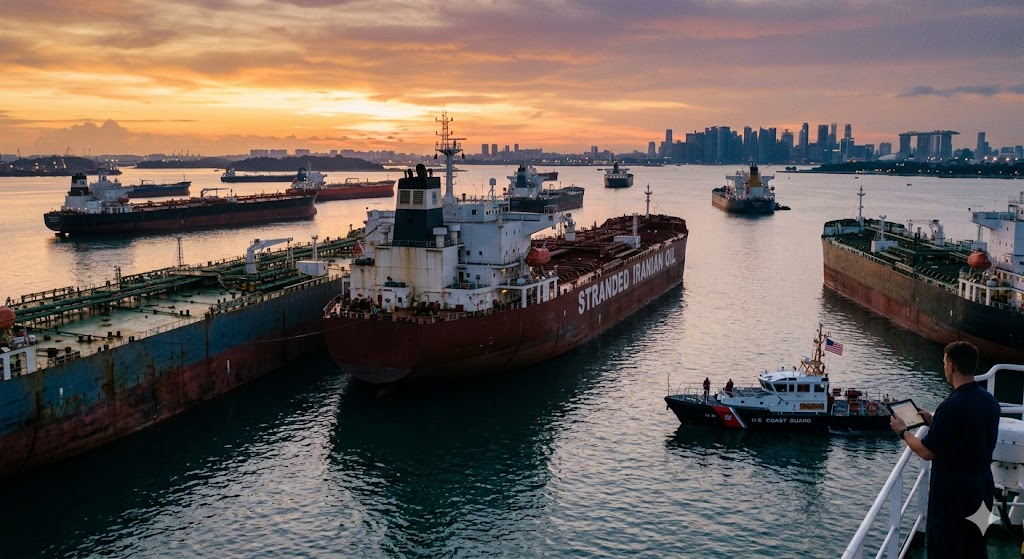
WASHINGTON D.C. / SINGAPORE — In a dramatic pivot aimed at stabilising a global energy market rocked by the ongoing Middle East conflict, the United States Department of the Treasury has issued an emergency general license allowing the sale of Iranian oil and petrochemical products currently “stranded” on tankers at sea.
The move, announced early Saturday, March 21, 2026, represents the most significant tactical shift in the Biden-Trump transition era’s foreign policy since the outbreak of hostilities 21 days ago. By authorizing the purchase of oil already loaded onto vessels as of Friday, the U.S. hopes to inject an immediate supply of crude into a market that saw Brent prices settle at a staggering $112.19 a barrel yesterday.
A Tactical Retreat to Battle Inflation
The Department of the Treasury’s Office of Foreign Assets Control (OFAC) issued the general license with a strict expiration date of April 19, 2026. This “wind-down” period is specifically designed to clear the “oil on the water”—cargoes that were already in transit or loaded but had become legally toxic to buyers due to the tightening web of war-related sanctions.
“This is not a lifting of the maximum pressure campaign against the Iranian regime’s nuclear and military infrastructure,” a senior Treasury official stated. “This is a surgical intervention to ensure that American families and our global allies are not held hostage by an unprecedented fuel supply crunch.”
The strategy mirrors the “oil on the water” exceptions used for Russian crude during the early stages of the Ukraine conflict. By allowing this specific volume of oil—estimated at nearly 140 million barrels—to reach its destination, the U.S. aims to cap fuel-price rises that threaten to tip the global economy into a deep recession.
The Impact on Global Markets
Market analysts were quick to react to the news. While the volume of oil being released is significant, the temporary nature of the license has created a “bifurcated market” sentiment.
“The release of 140 million barrels provides a psychological floor for the market, but it doesn’t solve the long-term deficit caused by the war,” said Beth Sanner, former deputy director of national intelligence. “We are seeing a desperate attempt to bridge the gap until domestic production or alternative sources can scale up.”
Brent crude, which had been on a relentless upward trajectory, showed signs of cooling in after-hours trading following the announcement, though experts at Goldman Sachs warned that structural shortages could keep prices elevated through 2027.
Tensions at the UN Town Hall
The announcement coincided with a high-stakes CNN Town Hall featuring U.S. Ambassador to the UN Mike Waltz. Facing questions from a public increasingly concerned about the “war tax” at the pump, Waltz defended the decision as a necessary evil.
“We have to defeat the Iranian strategy of driving energy prices so high that they break the will of the international community,” Waltz argued. He emphasized that the revenue from these specific sales remains subject to strict monitoring to ensure funds are not diverted to further military escalation, though he admitted the process is “complex.”
Geopolitical Risks and Allied Reactions
The decision has met with a mixed reception globally. While energy-importing nations in Europe and Asia have quietly welcomed the reprieve, the move has caused friction with some regional allies who favor a total embargo.
In Tehran, the reaction remains one of deep skepticism. A senior Iranian source suggested that the U.S. is “trying to have it both ways”—maintaining a military surge while relying on Iranian resources to keep its own economy afloat. This comes as the U.S. continues to deploy thousands more troops to the region despite President Trump’s recent social media posts suggesting a “winding down” of the conflict.
Frequently Asked Questions (FAQs)
Q: Does this mean sanctions on Iran have been lifted?
A: No. This is a temporary “General License” (General License 140) that only applies to oil and petrochemicals already loaded onto tankers as of March 20, 2026. New loading or long-term contracts remain prohibited.
Q: How much oil is actually being released?
A: Industry estimates suggest there are approximately 140 million barrels of Iranian crude and condensates currently “on the water” or in floating storage that qualify under this license.
Q: When does this authorization expire?
A: The license is active through April 19, 2026. All transactions must be completed and vessels must reach their destination by this date.
Q: Will this lower gas prices at the pump?
A: While it is expected to prevent further immediate spikes, many analysts believe the “war premium” will keep prices higher than pre-conflict levels for the foreseeable future.
Q: Why is the U.S. doing this now?
A: Brent crude hit a record war-time high of $112.19. The U.S. is moving to prevent an “energy shock” that could stall the domestic economy and weaken public support for the military campaign.
Reference Links & Sources
- Official Treasury Statement: home.treasury.gov/policy-issues/financial-sanctions/recent-actions
- Energy Information Administration (EIA) Price Tracking: eia.gov/petroleum/gasdiesel/
- CNN Town Hall Highlights: cnn.com/world/live-news/us-iran-war-03-21-26
- Bloomberg Energy Markets: bloomberg.com/energy
- The Stuttering Foundation (Resource for Nicholas Brendon Advocacy): stutteringhelp.org
USA TRENDING NEWS
Trump Truth Social Post Sparks Global Reaction Amid Iran Tensions and Easter Message 2026

Donald Trump Uses Truth Social to Address Iran Crisis and Easter Sunday In the latest donald trump news,
Guadalajara vs Pumas Ends in Dramatic 2-2 Draw | Liga MX Clausura 2026 Thriller at Estadio Akron

A High-Stakes Clash Between C.D. Guadalajara and Pumas UNAM The much-anticipated showdown between Guadalajara and Pumas in Jornada
Social Security Warning: Retirees Scammed Out of Billions as Fraud Surges Across the U.S.

Introduction: A Growing Crisis for Retirees A serious social security warning retirees’ scams crisis is unfolding across the
About the Author