
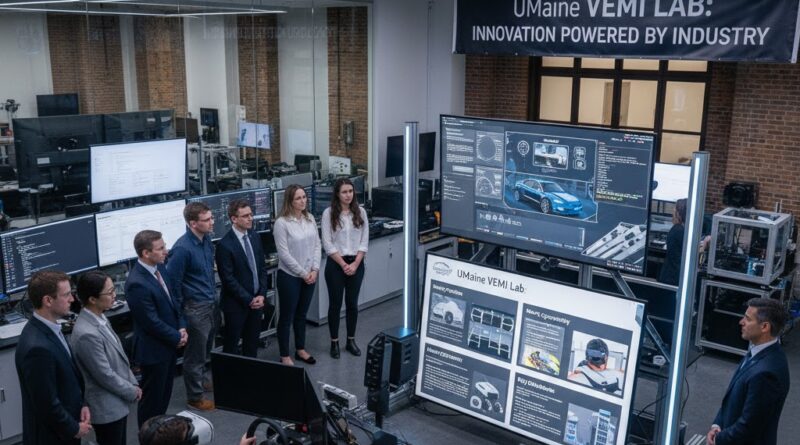
University of Maine’as VEMI Lab Makes Bold Pivot Toward Industry Funding
The Virtual Environment and Multimodal Interaction (VEMI) Lab, a prominent research hub located within Carnegie Hall at the University of Maine, is undergoing a quiet but significant transformation. As part of the University of Maine System’s broader Strategic Re-Envisioning (SRE) initiative—a wide-ranging effort designed to address mounting budget pressures across the campus—the VEMI Lab has formally restructured its operations, placing a new emphasis on securing industry-focused funding.
This realignment, while formalized by the university’s SRE progress tracker, reflects a trajectory the lab has been navigating for nearly a decade, transitioning from a reliance on traditional federal grants to a more diversified, private-sector-supported model.
A Shift in Financial Strategy
Historically, the VEMI Lab operated primarily on grant funding from major agencies such as the National Science Foundation (NSF) and the National Institutes of Health (NIH). While highly prestigious, this traditional academic funding model presented significant administrative hurdles, often requiring 15-to-20-page proposals, complex application cycles, and long lead times before resources were secured.
According to Dr. Richard Corey, Director of the VEMI Lab, the lab has now “moved more towards industry dollars and foundations and some Department of Education fundings that are not NSF and NIH related.”
From Writing to Talking
The pivot has fundamentally altered the administrative workflow within the lab. Where researchers previously dedicated significant time to lengthy, formal written proposals, they now often utilize “quad charts”—condensed, paragraph-length pitches that streamline the process while maintaining comparable funding potential. As Dr. Corey describes it, the emphasis has shifted from “writing to talking,” allowing faculty and staff to communicate more directly with partners.
Calibrating for Industry Standards
The transition to industry funding is not merely a change in the source of capital; it requires a recalibration of research objectives and deliverables. Academic research is often defined by its flexibility and pursuit of fundamental scientific discovery. In contrast, industry partners operate within tighter, milestone-based timeframes, with specific business objectives and defined outcomes in mind.
The VEMI Lab is currently calibrating its operations to meet these “industry-standard” expectations. This ensures that the lab delivers high-quality, actionable results that satisfy corporate partners, thereby sustaining long-term collaborations.
Student Impact and Professional Preparation
Despite the formal restructuring, students on the ground report high levels of stability. Undergraduate and graduate researchers—including those in the student-run ASAP Media Services group—describe their daily workflows, projects, and hours as essentially unchanged.
However, the lab’s leadership sees the shift toward industry partnerships as a major advantage for students:
- Practical Experience: Students now work directly alongside industry professionals, navigating real-world partner expectations, strict timelines, and deliverables.
- Career Readiness: This exposure offers a form of professional training that goes beyond traditional academic research, better preparing students for the demands of the modern workforce after graduation.
Context: The Strategic Re-Envisioning (SRE)
The VEMI Lab’s restructuring is a key component of the University of Maine System’s SRE initiative. As the university aims to “design the UMaine of today,” it is actively evaluating its research, academic, and administrative structures to foster financial sustainability and maximize societal impact.
The SRE effort has prompted several research centers across campus to optimize their operations. For the VEMI Lab, the formalization of its move toward industry funding is less a sudden pivot and more an official recognition of an operational path the lab has been successfully walking for years.
Would you like me to research specific examples of successful university-industry research partnerships or generate a guide on best practices for labs looking to expand their industry funding base?
