Introduction: America’s Air Travel System Under Pressure
The U.S. aviation system is facing one of its most turbulent periods in years, as a wave of flight cancellations and delays ripples across the country. From sudden staffing shortages and government funding disputes to extreme weather events and rising fuel costs tied to global conflicts, multiple crises are converging at once.
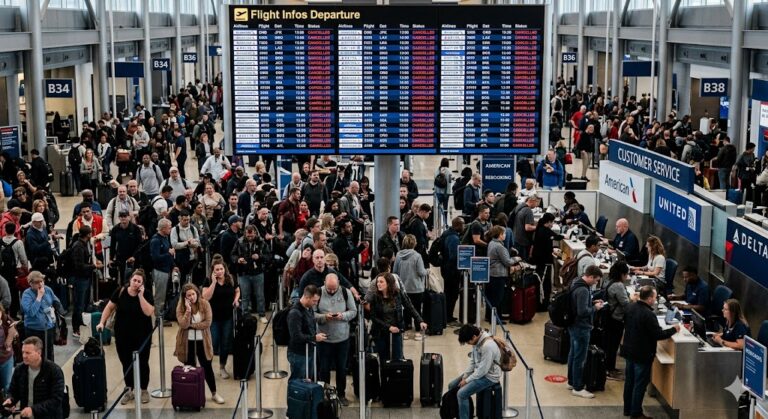
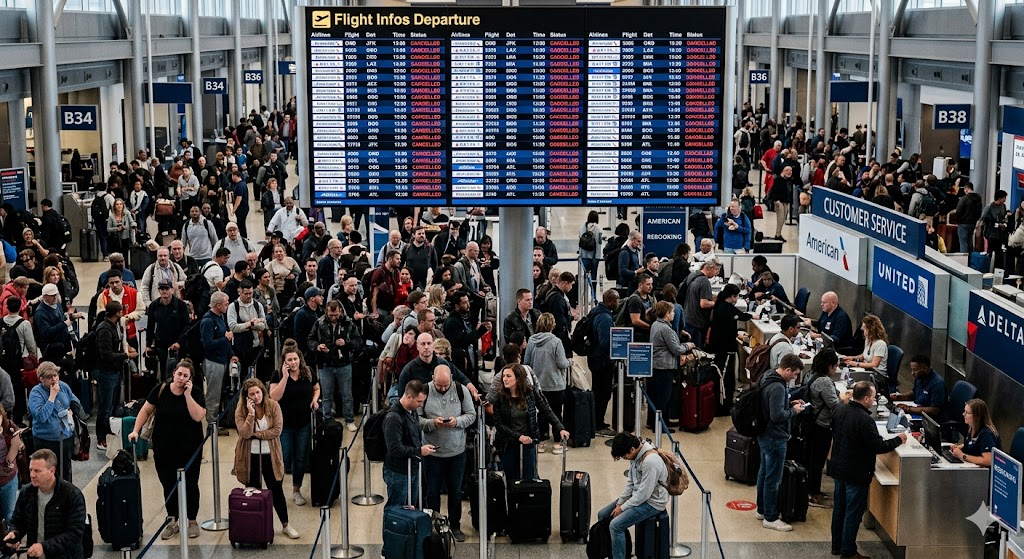
In early April 2026, thousands of passengers were stranded at major airports, with airlines cancelling hundreds of flights and delaying thousands more. What was expected to be a busy but manageable spring travel season has quickly turned into a nationwide disruption affecting millions of travellers.
This breaking news report explores the scale of cancellations, the underlying causes, the airlines most affected, and what it means for passengers and the future of U.S. air travel.
Introduction: America’s Air Travel System Under Pressure
масштаб of cancellations: Thousands of flights disrupted nationwide
The numbers paint a stark picture. Across the United States, airline disruptions have reached alarming levels in recent weeks.
- United Airlines alone canceled over 200 flights and delayed nearly 2,000 flights, leaving thousands stranded.
During severe weather events, up to 4,800 flights were canceled in a single day, with more than 12,800 delays nationwide.
On other days, nearly 900 flights were canceled and 1,800 delayed, showing sustained disruption even after storms passed.
These figures represent more than just statistics—they reflect missed connections, canceled vacations, disrupted business travel, and growing frustration among passengers.
Major hubs such as Chicago O’Hare, Atlanta’s Hartsfield-Jackson, and New York’s LaGuardia have been particularly affected, with cascading delays amplifying the chaos.
Government shutdown fallout: A hidden driver of cancellations
One of the most significant but less visible causes of flight cancellations is the ongoing partial U.S. government shutdown affecting the Department of Homeland Security.
This crisis has severely impacted the Transportation Security Administration (TSA), which plays a critical role in airport operations.
- Over 12% of TSA workers have called out or quit due to missed paychecks.
Nearly 500 TSA officers have resigned, worsening staffing shortages.
Airports have faced hours-long security lines, delaying flights before they even begin boarding.
As a result, airlines have been forced to cancel flights preemptively, knowing passengers and crews may not clear security in time.
This situation highlights how aviation depends not just on airlines, but on a broader ecosystem of government agencies and infrastructure. When one link weakens, the entire system falters.
Weather chaos: Storms trigger mass cancellations
Severe weather remains one of the most immediate and visible causes of flight cancellations.
In March and early April 2026, a series of powerful storms swept across the United States, bringing:
- Heavy snow in the Midwest
- High winds and tornado threats in the South
- Freezing temperatures in the Northeast
These conditions forced the Federal Aviation Administration (FAA) to issue ground stops and delay programs at major airports.
Airlines canceled thousands of flights as a precaution, while aircraft and crews were displaced across the network, causing ripple effects that lasted for days.
Even after storms cleared, the backlog of delayed aircraft and passengers continued to disrupt schedules nationwide.
Fuel prices and global conflict: A growing threat
Another major factor driving cancellations is the surge in jet fuel prices, fueled by geopolitical tensions—particularly the ongoing conflict involving Iran.
- Fuel prices have doubled in a matter of days, forcing airlines to cut routes.
Airline stocks have dropped, reflecting rising operational costs.
Some airlines have already begun canceling international routes or reducing capacity.
While fuel costs do not directly cancel flights overnight, they push airlines to trim schedules, especially on less profitable routes. Over time, this leads to fewer available flights and increased disruption when problems arise.
Systemic issues: A fragile aviation infrastructure
Beyond immediate triggers, the U.S. airline system is grappling with deeper structural problems.
According to industry analysis:
- Air traffic control systems rely on outdated technology from the 1980s
- Staffing shortages extend beyond TSA to air traffic controllers
- Chronic underinvestment has slowed modernization efforts
These systemic weaknesses mean that even minor disruptions—such as a storm or staffing shortage—can quickly escalate into nationwide chaos.
The aviation system lacks the resilience needed to absorb shocks, making cancellations more frequent and widespread.
Airline-specific disruptions: United, JetBlue, and more
Several airlines have been particularly affected by recent events:
United Airlines
United has faced one of the most severe operational crises, with hundreds of cancellations and thousands of delays linked to both staffing shortages and broader system disruptions.
JetBlue
In a dramatic incident, all JetBlue flights were temporarily grounded nationwide following an FAA advisory, halting departures entirely.
Delta Air Lines
While not hit as hard operationally, Delta is under pressure from rising fuel costs, which could lead to future schedule cuts.
These disruptions highlight how no airline is immune, even those with strong operational track records.
Passenger impact: Stranded, frustrated, and uncertain
For travelers, the consequences have been immediate and severe.
Passengers across the country have reported:
- Being stranded overnight at airports
- Missing connecting flights and important events
- Facing long waits for rebooking or refunds
In some extreme cases globally, passengers have even been left without luggage for days during cancellations and diversions.
Customer frustration has been compounded by poor communication from airlines, with many travelers saying they received little information during delays.
Economic ripple effects: Beyond the airports
The wave of cancellations is not just a travel issue—it has broader economic implications.
- Tourism businesses are losing revenue due to canceled trips
- Airlines are facing increased compensation costs
- Corporate travel disruptions are impacting productivity
At the same time, rising ticket prices and reduced flight availability are discouraging travel altogether.
Some reports suggest that only a fraction of travelers are proceeding with international plans due to rising costs and uncertainty.
The future outlook: More disruptions ahead?
Experts warn that the current situation may not improve anytime soon.
Several factors suggest continued instability:
- The government funding dispute remains unresolved
- Fuel prices are still rising amid global tensions
- Peak summer travel season is approaching
- Infrastructure upgrades will take years, not months
Airlines are already preparing contingency plans, including route reductions and schedule adjustments, to cope with ongoing challenges.
What travellers should do now
Given the ongoing disruptions, passengers are advised to:
- Book flexible tickets when possible
- Arrive early at airports due to long security lines
- Monitor flight status frequently
- Consider travel insurance
- Have backup plans for important trips
Being proactive can help reduce the impact of cancellations, though it cannot eliminate the risk entirely.
Conclusion: A system at a breaking point
The surge in U.S. airline cancellations in 2026 is not the result of a single issue, but rather a convergence of multiple crises.
From government shutdowns and staffing shortages to extreme weather and rising fuel costs, the aviation system is being tested on every front.
What is unfolding is more than a temporary disruption—it is a warning sign of deeper vulnerabilities within America’s air travel infrastructure.
Unless systemic reforms are implemented, travelers may continue to face uncertainty, delays, and cancellations long after the current crisis subsides.
For now, millions of passengers remain caught in the turbulence of a system struggling to stay airborne.
About the Author