







Sierra Leone Prison Reform: How the “Football for Reform” Initiative is Scoring ESG Investment Goals in 2026
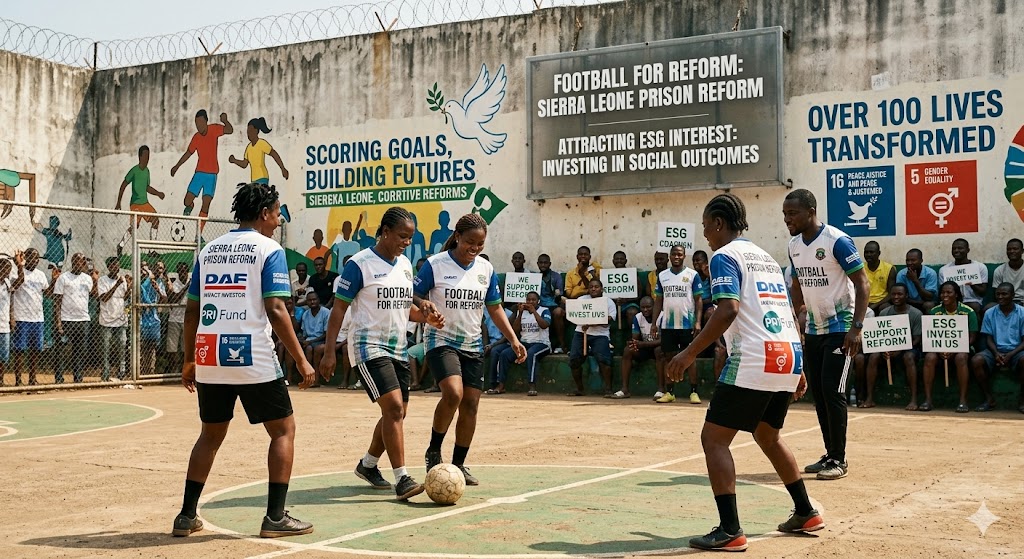
FREETOWN, SIERRA LEONE — In a landmark shift for West African social justice, the intersection of sports, legal advocacy, and high-finance ESG (Environmental, Social, and Governance) investing is creating a new blueprint for rehabilitation. The “Football for Reform” initiative, which recently facilitated the release of four women inmates, has caught the attention of U.S.-based impact investors looking for measurable social outcomes in emerging markets.
Over the past five years, this unconventional program has quietly enabled roughly 100 releases and significantly expanded vocational skills training in Sierra Leone, despite a chronic shortage of traditional rehabilitation tools. As the momentum from International Women’s Day 2026 continues to build, the world is watching how a pitch and a ball are becoming the primary catalysts for systemic legal change.
The Rise of Football for Reform: More Than a Game
Sierra Leone’s prison system has long faced challenges involving overcrowding and a lack of legal representation for indigent inmates. Enter Football for Reform. By using sport as an entry point, the program builds trust between inmates, correctional officers, and legal mediators.
The initiative doesn’t just provide recreation; it acts as a “triage” center for justice. Coaches and coordinators identify inmates who have overstayed their sentences without trial or those eligible for mediation. This “sports-for-development” model has proven that human-centered outcomes—like the recent release of four women—can be achieved when legal aid is integrated into social programs.
Why US ESG Investors are Moving In
For U.S. allocators, the Sierra Leone prison reform movement offers a rare opportunity to invest in the “S” (Social) pillar of ESG with high transparency and low “impact washing.”
The Investment Thesis:
- Gender Equality (SDG 5): Direct support for women inmates’ release and specialized vocational training.
- Peace and Justice (SDG 16): Strengthening legal aid infrastructure and court-validated mediation.
- Measurable Results: Unlike vague corporate social responsibility projects, this program provides hard data: release counts, job placement rates, and reoffending metrics.
Capital Structures: Mapping the Route for US Impact Portfolios
Investing in West African justice reform requires a disciplined approach to manage execution and country risk. Financial experts suggest three primary vehicles for US capital:
1. Grants and Program-Related Investments (PRIs)
Foundations and donor-advised funds (DAFs) are currently leading the charge. By providing grants for vocational equipment—such as sewing machines, computers, and agricultural tools—investors can seed the data systems necessary to track inmate progress.
2. Milestone-Based Disbursements
To maintain US compliance (including FCPA and AML checks), many investors are using staged funding. Money is released only when specific targets are met, such as the completion of an accredited training module by a group of inmates.
3. Development Impact Bonds (DIBs)
The most sophisticated route involves “Pay-for-Success” contracts. In this model, private investors provide working capital to local NGOs. If the program meets verified milestones—such as a 12-month non-reoffending rate—the government or a larger philanthropic “outcome funder” pays the investors back with a small return.
Diligence and Safeguarding: Protecting the Impact
Sierra Leone prison reform presents unique risks that require robust guardrails. US investors are advised to:
- Vet Local Partners: Ensure NGOs have independent boards and transparent audits.
- Data Privacy: Establish strict consent protocols for inmates to ensure their stories are told with dignity and their data is protected.
- Third-Party Verification: Use independent auditors to verify court-validated releases so that the social impact is credible and comparable over time.
Key Performance Indicators (KPIs) to Watch:
| Metric | Target Goal |
|---|---|
| Court-Validated Releases | Direct count of individuals legally freed. |
| Case Resolution Time | Reduction in days spent awaiting trial. |
| Accredited Training | Number of inmates receiving certified skills. |
| Recidivism Rate | Non-reoffending status after 6–12 months post-release. |
FAQs: Understanding the Social Impact
What is the “Football for Reform” initiative?
It is a program in Sierra Leone that uses sports, coaching, and mediation to reduce prison tensions and connect inmates with legal aid. It has contributed to approximately 100 releases over the last five years.
How do women inmates benefit from the training?
Women in the program receive vocational skills training in areas like tailoring and entrepreneurship, designed to provide immediate livelihoods upon release and prevent re-arrest.
Can US investors verify where their money goes?
Yes. By using quarterly dashboards, third-party verification, and milestone-based funding, investors can ensure their capital is reaching frontline services and legal aid clinics.
Is it risky to invest in Sierra Leone?
While country and currency risks exist, they can be mitigated through co-funding with development partners and using local fiscal hosts to manage fund distribution.