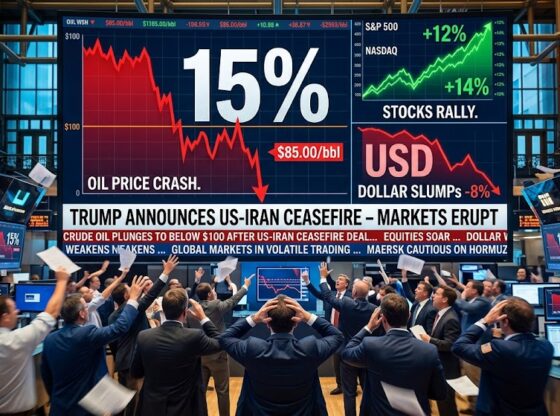

USA BREAKING: Global Markets Erupt on Surprise US-Iran Ceasefire; Oil Nosedives 15% as Strait of Hormuz Reopens
TEHRAN / LONDON (April 8, 2026) — Global financial markets are experiencing a seismic shift this morning after President Trump announced a two-week ceasefire between the United States and Iran. The landmark pause in hostilities brings a temporary reopening of the crucial Strait of Hormuz, sending shockwaves of relief across global trading floors and pulling oil prices down from their recent historic highs.
The immediate economic fallout has been staggering. Crude oil prices plunged 15% in early trading, crashing back below the $100-a-barrel threshold. Conversely, stock markets are surging as the threat of prolonged supply chain paralysis eases.
Key Market Movements:
- Oil Plummets: Crude benchmarks have dropped by 15% to sub-$100 levels as traders price in the resumption of Middle Eastern oil flows.
- Equities Surge: Major indices, including the FTSE 100, have jumped significantly in early trading. However, major energy and defense companies are sliding against the broader market trend.
- Dollar Slumps & Yields Drop: Safe-haven assets are being abandoned. The US dollar has slumped, and government bond yields have plummeted as traders rapidly cut their bets on impending interest rate hikes.
Shipping Industry Remains Cautious
Despite the diplomatic breakthrough and scenes of celebration in Tehran’s Enqelab square, major players in global logistics are taking a “wait-and-see” approach.
The temporary reopening of the Strait of Hormuz—a vital chokepoint for global oil, gas, and fertilizer shipments—does not yet guarantee safe passage. Danish shipping giant Maersk issued a statement early Wednesday confirming they are not immediately resuming regular routes through the corridor.
“Any decision to transit the strait of Hormuz will be based on continuous risk assessments, close monitoring of the security situation, and available guidance from relevant authorities and partners,” Maersk stated. “At this point, we take a cautious approach, and we are not making any changes to specific services.”
Context of the Crisis
The ceasefire brings a critical, albeit temporary, halt to a rapidly escalating conflict that began on February 28 following US-Israeli strikes on Iran. Tehran’s subsequent retaliation and effective blockade of the Strait of Hormuz had brought Gulf shipping to a near standstill, threatening to cripple global supply chains and ignite an international energy crisis.
Investors and world leaders alike are now watching closely to see if this two-week window can be leveraged into a permanent de-escalation.