Mark Rutte: NATO Secretary-General Backs Trump’s Iran Campaign, Predicts Unified European Support Despite “Cowardice” Allegations
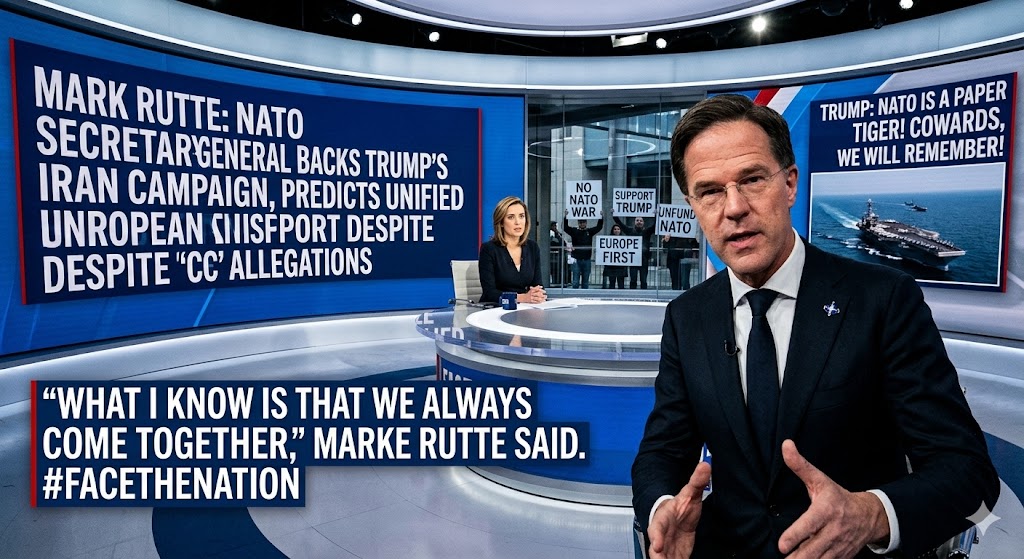
WASHINGTON, D.C. — In a high-stakes television appearance that highlighted the deepening fissures and frantic diplomacy within the Western alliance, NATO Secretary-General Mark Rutte issued a resolute endorsement of President Donald Trump’s military offensive against Iran. Speaking on CBS’s Face the Nation on Sunday, March 22, 2026, the NATO chief projected an image of eventual transatlantic unity, even as the President continues to lambaste European allies as “cowards” and a “paper tiger.”
The interview comes at a pivotal moment in the 2026 Middle East conflict. With the initial wave of American and Israeli kinetic strikes largely concluded, the focus has shifted to the stabilisation of global energy markets—specifically the reopening of the Strait of Hormuz—and the diplomatic struggle to bring a hesitant Europe into a formal “victory” coalition.
The “Paper Tiger” Paradox: Rutte Defends the Alliance
Host Margaret Brennan opened the segment by questioning Rutte on President Trump’s recent scorched-earth rhetoric on Truth Social. On Friday, the President unleashed a verbal barrage against NATO members who have hesitated to commit naval assets to the Persian Gulf, claiming that without U.S. leadership, the alliance is nothing more than a “paper tiger.”
The President’s Charge:
“They didn’t want to join the fight to stop a Nuclear Powered Iran… Now that fight is Militarily WON… they complain about the high oil prices… but don’t want to help open the Strait of Hormuz. COWARDS, and we will REMEMBER!”
Rutte, a veteran diplomat and former Prime Minister of the Netherlands known for his ability to “whisper” to the Trump administration, navigated the tension with practiced calm. While he refused to directly criticize the reluctant European heads of state, he made his personal and institutional allegiance clear.
“What I know is that we always come together,” Rutte told Brennan. “I understand the President’s frustration that it takes some time, but again I also ask for some understanding because nations had to prepare for this not knowing [the initial strike plans].”
The North Korea Comparison: Why Diplomacy Failed
One of the most striking moments of the interview was Rutte’s justification for the preemptive strikes against Iranian nuclear facilities. He argued that the world could no longer afford the “infinite loop” of failed diplomacy that characterized the North Korean nuclear crisis of previous decades.
“We have seen with North Korea if we negotiate for too long, you might pass the moment when you can still get this thing done,” Rutte explained. “North Korea now has the nuclear capability. A nuclear-armed Iran would be a clear threat to Israel, Europe, and the stability of the world.”
By framing the military campaign as a necessary preventative measure to avoid a “Middle Eastern Pyongyang,” Rutte signaled to European capitals that the time for debating the merits of the war has passed—the only remaining question is the management of its aftermath.
Securing the Strait: The Battle for Global Oil
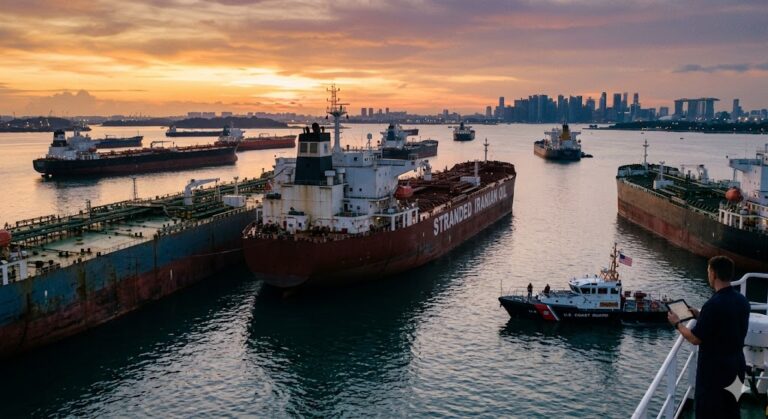
The core of the current friction lies in the Strait of Hormuz. While the U.S. maintains that the Iranian military threat has been neutralized, the waterway remains a “chokepoint of chaos,” with high insurance premiums and residual mine threats driving global oil prices to record highs.
President Trump has demanded that NATO nations—the primary beneficiaries of stable oil prices—take over the “simple military maneuver” of patrolling the Strait. Rutte expressed confidence that Europe would soon deploy the necessary frigates and minesweepers, explaining that the initial delay was due to the extreme secrecy surrounding the American-Israeli attack. Because European powers were left out of the loop to ensure the “element of surprise,” their domestic parliaments and military structures are only now catching up to the new reality.
Frequently Asked Questions (FAQs)
What is NATO’s official role in the Iran conflict?
As of March 2026, NATO as an organization has not invoked Article 5. However, Secretary-General Rutte is pushing for a “coalition of the willing” within the alliance to support U.S. maritime goals. He maintains that keeping the Strait of Hormuz open is essential for European economic security.
Why are European leaders reluctant to join?
Leading powers like France and Germany have historically viewed NATO as a defensive alliance for the North Atlantic. They have expressed concern that joining an offensive campaign in Iran exceeds NATO’s mandate and could lead to long-term regional instability.
What does Trump mean by “Paper Tiger”?
The President is referring to the idea that NATO has the appearance of strength (large militaries and budgets) but lacks the “will” to use that power in support of U.S. interests outside of Europe. He has repeatedly threatened to reduce U.S. involvement if allies do not “pay their fair share” in blood and treasure.
Has the military campaign against Iran ended?
According to President Trump’s latest statements, the “Nuclear Power” threat has been militarily won. However, “mopping up” operations, mine clearing in the Gulf, and the suppression of proxy insurgencies are ongoing.
The Bottom Line: Rutte’s Mission
Mark Rutte’s performance on Face the Nation was more than just an interview; it was a desperate bridge-building exercise. By validating Trump’s “frustration” while simultaneously defending European “unpreparedness,” Rutte is attempting to prevent the total fracture of the most successful military alliance in history.
Whether Europe will actually “come together” as he predicts—or if the Strait of Hormuz will remain a graveyard for transatlantic relations—will be determined in the coming days as naval deployments are finalized.
Reference & Live Updates: Follow the NATO-Iran Crisis and Oil Price Tracking