




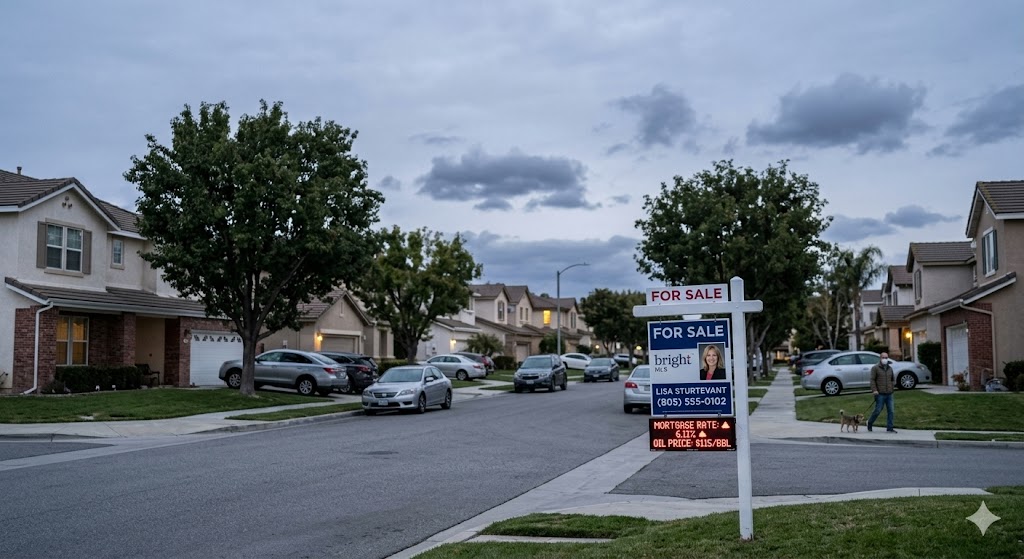


Asteroid Approaching Earth: Bridging the Gap Between Scientific “No Risk” and Public Trust
Asteroid Approaching Earth News USA: The vastness of space is far from empty. On March 13, 2026, the cosmos reminded us of this reality when a newly discovered asteroid, roughly the size of a city bus, hurtled past Earth. While the event ended as a “non-event”—a silent streak across the blackness of the vacuum—it triggered a loud conversation on the ground. CHECK OUT THE LIST OF ASTEROIDS CLOSE TO EARTH
The discovery of the asteroid, labelled by its rapid approach and late detection, has reignited a fierce debate: When space agencies say there is “no risk,” why does the public still feel uneasy?
To understand this friction, we must look beyond the math of orbital mechanics and into the heart of human psychology, the limitations of our current technology, and the future of how we protect our “pale blue dot.”
The Anatomy of a Flyby: What Actually Happened?
The asteroid in question was a cosmic lightweight, measuring between 10 and 20 meters in width. To put that in perspective, it was roughly the size of a standard transit bus. Despite its modest size, its speed was staggering—clocks put it at approximately 34,621 kilometers per hour.
Key Observations of the March 2026 Event
- Late Detection: Astronomers identified the object only hours before its closest approach.
- Trajectory: It passed well within the moon’s orbit but maintained a “zero collision probability.”
- Composition: Initial data suggests a rocky makeup, typical of Near-Earth Objects (NEOs) found in the inner solar system.
- Atmospheric Shielding: Even if the asteroid had entered our atmosphere, physics dictates it would likely have disintegrated into a brilliant fireball (bolide) rather than reaching the surface as a solid mass.
Why “No Risk” Doesn’t Always Mean “No Concern”
For a scientist, “no risk” is a binary conclusion derived from data. If the orbital path $(x, y, z)$ does not intersect with Earth’s radius at time $t$, the risk is zero. However, for the general public, the “zero risk” claim feels fragile when paired with the phrase “just discovered.”
The Transparency Paradox
The late discovery of this bus-sized asteroid highlights a vulnerability. If we didn’t see a 15-meter rock until it was “on our doorstep,” how can we be certain a 100-meter rock isn’t lurking in the sun’s glare?
This gap in detection is not a failure of effort, but a challenge of physics. Small asteroids reflect very little sunlight (low albedo). Detecting one is akin to spotting a charcoal briquette against a black velvet curtain in a dimly lit room.
The Shadow of Chelyabinsk
Public skepticism is often rooted in recent history. In 2013, a 20-meter meteor exploded over Chelyabinsk, Russia. It wasn’t detected beforehand because it approached from the direction of the sun. The resulting shockwave shattered windows and injured over 1,500 people. When a similar-sized object passes by in 2026, the memory of Chelyabinsk colors the narrative, making “no risk” claims feel dismissive to those who remember the 2013 blast.
How We Monitor the Heavens: The Science of Tracking
Modern planetary defense is a global, 24/7 operation. It relies on a “system of systems” that spans continents and even reaches into orbit.
1. Ground-Based Surveys
Projects like Pan-STARRS and the Catalina Sky Survey scan the skies nightly. These telescopes take multiple images of the same patch of sky to look for “stars” that move. If a point of light shifts relative to the background stars, it’s flagged as a potential asteroid.
2. The Role of Artificial Intelligence
The volume of data generated by modern telescopes is too vast for human eyes alone. Today, we use AI algorithms—similar to those found in high-frequency trading or AI stock research—to filter out noise. These neural networks can identify the faint, fast-moving streaks of a small asteroid that a human analyst might overlook.
3. Calculating the “Impact Corridor”
Once an object is spotted, its coordinates are sent to the Minor Planet Center (MPC). Scientists then calculate its orbit using Kepler’s laws of planetary motion.
$$F = G \frac{m_1 m_2}{r^2}$$
By measuring the gravitational pull and the object’s velocity, they can project its path years into the future. If the path is uncertain, the “error bar” or “uncertainty ellipse” is large. As more observations come in, the ellipse shrinks until scientists can definitively say “hit” or “miss.”
The Economic Frontier: Investing in the Sky
Planetary defense is no longer just a government mandate; it is becoming a burgeoning sector of the space economy. The technologies developed to track asteroids have massive crossover potential.
- Satellite Constellations: Companies building hardware to track asteroids are also providing data for space situational awareness (tracking “space junk”).
- Data Analytics: The high-speed processing required to track NEOs is being monetized by tech firms specializing in “Big Data” for environmental and financial sectors.
- Government Contracting: With the rise of “Space Force” initiatives globally, funding for early warning systems has stabilized, creating a predictable market for aerospace contractors.
Communication: The Missing Link
The March 2026 flyby proved that we are better at tracking asteroids than we are at talking about them. To bridge the trust gap, space agencies are moving toward more “human-centric” communication.
| Traditional Scientific Claim | Public-Friendly Explanation |
|---|---|
| “Zero impact probability.” | “We have mapped its path; it will miss us by 20,000 miles.” |
| “Object discovered 6 hours ago.” | “Our ‘neighborhood watch’ spotted this small rock as soon as it left the sun’s glare.” |
| “Atmospheric ablation likely.” | “The air will act as a shield, breaking the rock apart before it hits.” |
By shifting the language from clinical certainty to relatable context, agencies can reduce the “panic clicks” often seen on social media platforms.
Future Tech: Can We Push Back?
We are moving from a passive era of observation to an active era of deflection. The success of missions like NASA’s DART (Double Asteroid Redirection Test) proved that we can “nudge” a space rock.
Upcoming missions aim to:
- NEO Surveyor: A space-based infrared telescope that will find asteroids by their heat signatures, bypassing the “low light” problem.
- Gravity Tractors: Theoretical spacecraft that would fly alongside an asteroid, using their own tiny gravitational pull to slowly tow it off a collision course.
- Kinetic Impactors: “Hitting” an asteroid years in advance so that a tiny change in its speed results in a miss by thousands of miles later on.
Conclusion: A Vigilant Future
The bus-sized visitor of March 13, 2026, was never going to end the world. But it did its job as a cosmic wake-up call. It reminded us that while our atmosphere is a sturdy shield and our math is precise, our detection net still has holes—and our public communication still has room to grow.
As we look to the stars, the goal is clear: to ensure that the next time a “no risk” claim is made, it is met not with skepticism, but with the quiet confidence of a planet that truly knows its surroundings.
Frequently Asked Questions (FAQ)
Q: Could a bus-sized asteroid destroy a city?
A: No. An object of that size (10-20 meters) almost always breaks apart in the atmosphere. While it can cause a loud “sonic boom” and break windows (like in Chelyabinsk), it would not cause a “extinction-level” or “city-killer” event.
Q: Why do we keep finding them so late?
A: Small asteroids are dark and move fast. Ground-based telescopes can only see them when they are relatively close and reflecting enough sunlight. Space-based telescopes currently in development will fix this.
Q: Is there any asteroid currently on a collision course with Earth?
A: According to NASA and ESA, there are no known significant asteroid threats to Earth for at least the next 100 years.
Q: How can I track asteroid flybys myself?
A: You can visit the NASA “Eyes on Asteroids” website or the JPL Small-Body Database to see real-time 3D visualizations of every known NEO.
TOP STORIES
PCE Inflation Report Today: Fed’s Preferred Gauge Climbs to Highest Since 2024
WASHINGTON — The Federal Reserve’s battle against stubborn price pressures hit a significant roadblock on Friday morning. The Bureau of Economic Analysis (BEA) released the January Personal Consumption Expenditures (PCE) … Read More
Global Energy Crisis: Brent Crude Breaches $100 Barrier as Persian Gulf Standoff Paralyzes Markets
LONDON/WASHINGTON — The global economy entered uncharted territory on Friday as Brent crude, the international benchmark for oil prices, settled above $100 a barrel for the first time in nearly … Read More
Asteroid Approaching Earth: Bridging the Gap Between Scientific “No Risk” and Public Trust
Asteroid Approaching Earth News USA: The vastness of space is far from empty. On March 13, 2026, the cosmos reminded us of this reality when a newly discovered asteroid, roughly … Read More