
Air Conditioning and Asthma: Why Medical Professionals Are Raising New Concerns
California: As temperatures continue to climb across many parts of the world, air conditioning has become less of a luxury and more of a necessity. Homes, offices, schools, shopping centres, and even public transportation rely on cooling systems to help people stay comfortable and reduce the risk of heat-related illnesses.
For people living with asthma, however, the relationship with air conditioning is more complicated than many realise.
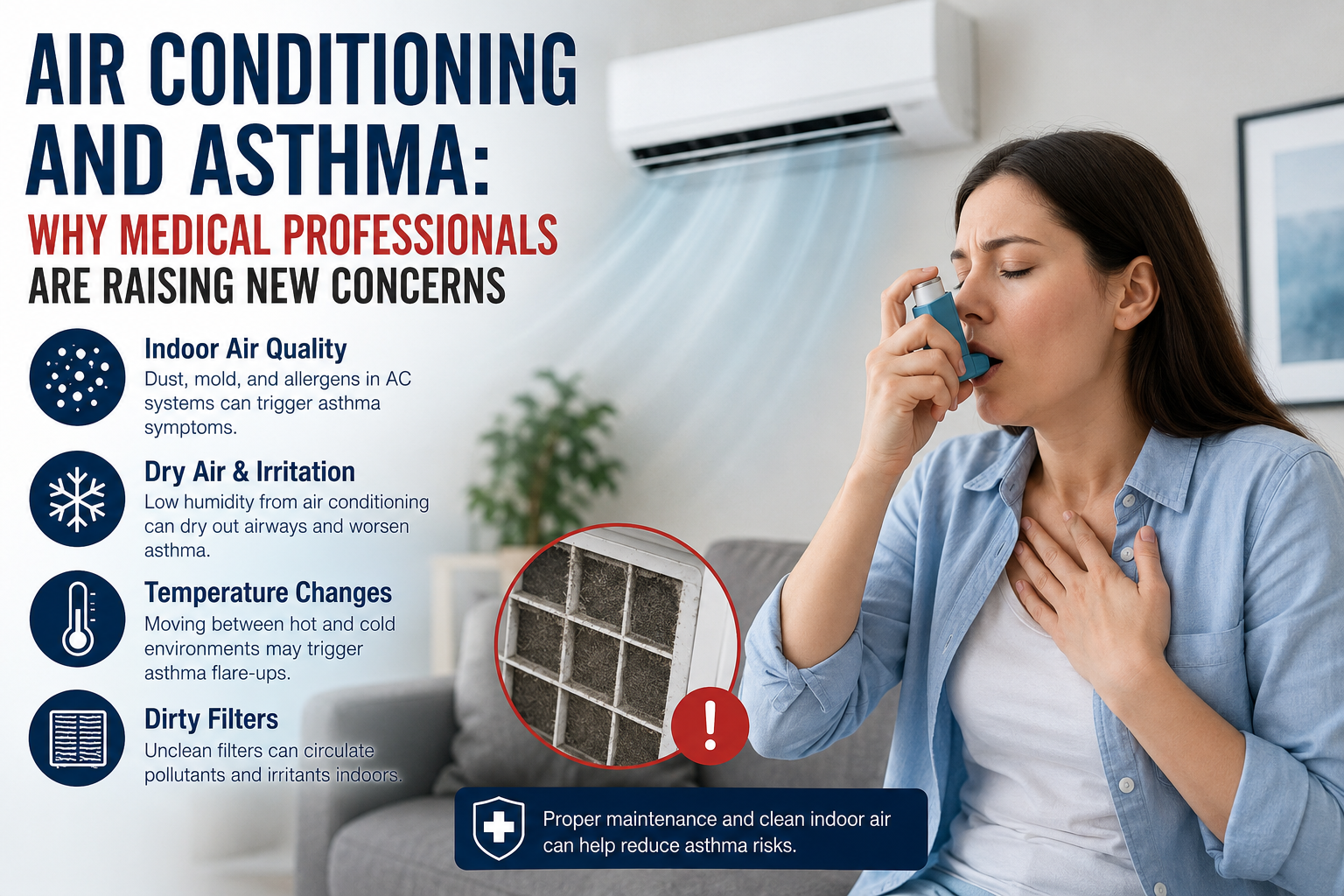
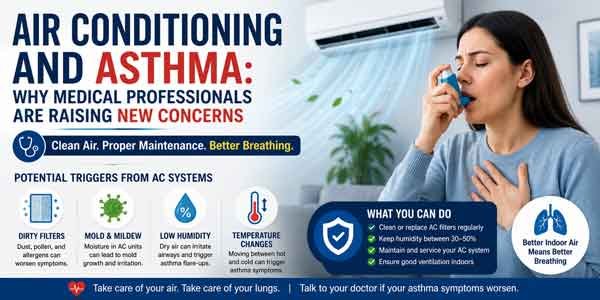
Medical professionals are increasingly reminding patients that while air conditioning can protect against extreme heat and reduce exposure to outdoor pollutants, poorly maintained systems or incorrect use may contribute to asthma symptoms in some individuals. Importantly, doctors are not saying that air conditioning causes asthma. Instead, they warn that certain conditions associated with cooling systems—such as dirty filters, mould growth, low indoor humidity, or sudden temperature changes—can trigger asthma flare-ups in susceptible people.
Understanding how air conditioning affects respiratory health can help families make informed decisions while continuing to enjoy its benefits safely.
Can Air Conditioning Cause Asthma?
The short answer is no.
According to leading health organisations, there is no strong scientific evidence that air conditioning directly causes asthma.
However, healthcare professionals explain that air conditioning systems can sometimes worsen asthma symptoms if they circulate allergens, mould spores, dust particles, or excessively dry air.
For people who already have asthma or allergies, these environmental factors may irritate the airways and increase the likelihood of symptoms.
This distinction is important because the cooling system itself is rarely the problem. Poor maintenance and indoor air quality usually play a much bigger role.
Why Medical Professionals Are Raising New Concerns
Doctors have become increasingly focused on indoor air quality because modern lifestyles mean people spend nearly 90% of their time indoors.
Air conditioning improves comfort, but neglected systems can gradually accumulate pollutants that circulate throughout homes and workplaces.
Respiratory specialists commonly point to several concerns.
Dirty Air Filters
Air filters trap dust, pollen, pet dander, and airborne particles.
If homeowners fail to replace or clean filters regularly, these particles may build up and continue circulating indoors. For someone with asthma, breathing these irritants can increase coughing, wheezing, and shortness of breath.
Mold Growth
Moisture inside air conditioning units can encourage mould growth when systems are not cleaned properly.
Mould releases microscopic spores into the air.
Exposure to mould spores is a well-known asthma trigger for many people and can also worsen allergy symptoms.
Bathrooms, basements, poorly ventilated rooms, and HVAC systems require regular inspection to reduce mold risks.
Dry Indoor Air
Air conditioning naturally removes humidity from indoor air.
Although lower humidity often improves comfort, air that becomes excessively dry may irritate sensitive airways.
Some asthma patients notice increased throat irritation, coughing, or airway discomfort after prolonged exposure to very dry environments.
Maintaining balanced indoor humidity helps reduce this problem.
Sudden Temperature Changes
Walking from intense outdoor heat into an extremely cold building may affect some individuals with asthma.
Rapid temperature shifts can trigger airway narrowing in susceptible people.
Doctors often recommend setting indoor temperatures at comfortable—not excessively cold—levels to reduce unnecessary respiratory stress.
The Surprising Benefits of Air Conditioning for Asthma
Despite these concerns, air conditioning also provides important health benefits. Many respiratory specialists encourage its use during allergy season and periods of poor outdoor air quality.
Properly maintained air conditioning systems can actually improve indoor environments.
Decrease Pollen Exposure
Keeping windows closed while using air conditioning limits the amount of pollen entering a home.
During spring and summer, pollen remains one of the most common asthma and allergy triggers.
A quality HVAC filter can remove many airborne particles before they circulate indoors.
Better atmospheric Air Quality During Wildfire Smoke
Wildfire smoke has become an increasing concern in many regions.
During smoke events, public health agencies recommend staying indoors with windows closed whenever possible.
Air conditioning systems equipped with effective filtration can help reduce indoor smoke particles when operated correctly.
Protection During Heat Waves
Extreme heat can worsen asthma symptoms for some individuals.
High temperatures may increase air pollution levels and ground-level ozone, both of which can irritate the lungs.
Air conditioning helps maintain safer indoor temperatures during dangerous heat waves.
For older adults, children, and individuals with chronic respiratory conditions, staying cool can reduce overall health risks.
Common Asthma Triggers Found Indoors
Air conditioning is only one part of indoor air quality.
Medical experts identify several additional asthma triggers inside homes.
These include:
- Dust mites
- Pet dander
- Mold spores
- Cockroach allergens
- Tobacco smoke
- Strong cleaning chemicals
- Scented candles
- Air fresheners
- Indoor fireplaces
- Poor ventilation
Reducing these triggers often improves asthma control more than changing air conditioning systems alone.
How to Use Air Conditioning Safely
Doctors recommend several simple maintenance practices.
Replace Air Filters Regularly
Most manufacturers recommend changing HVAC filters every one to three months, depending on household conditions.
Homes with pets or high dust levels may require more frequent replacement.
Schedule Professional Maintenance
Annual inspections help identify:
- Mold growth
- Water leaks
- Dirty evaporator coils
- Damaged ductwork
- Mechanical issues
Routine servicing keeps cooling systems operating efficiently while improving indoor air quality.
Keep Humidity Between 30% and 50%
The U.S. Environmental Protection Agency (EPA) recommends maintaining indoor humidity between 30% and 50%.
This range helps discourage mould growth while preventing overly dry indoor air.
A hygrometer can measure indoor humidity levels.
Clean Air Vents
Dust can accumulate around supply and return vents.
Regular vacuuming helps prevent particles from re-entering indoor air.
Furniture should also remain clear of vents to improve airflow.
Avoid Extremely Cold Settings
Lower temperatures do not cool homes significantly faster.
Instead, extremely cold indoor environments may create uncomfortable temperature differences when entering or leaving buildings.
Moderate thermostat settings improve comfort while reducing energy use.
Children With Asthma Need Extra Attention
Children often spend long hours indoors at school and home.
Parents should ensure that both household and school HVAC systems receive proper maintenance.
Signs that poor indoor air quality may be affecting children include:
- Persistent coughing
- Nighttime asthma symptoms
- Frequent wheezing
- Increased inhaler use
- Difficulty participating in physical activities
Parents should consult healthcare providers if asthma symptoms become more frequent.
What Current Research Says
Researchers continue studying how indoor environments influence asthma.
Current evidence suggests that several environmental conditions associated with poorly maintained air conditioning systems may aggravate respiratory symptoms.
However, scientists emphasise that air conditioning itself is not considered a direct cause of asthma.
Health outcomes depend on multiple factors, including:
- Indoor air quality
- Ventilation
- Filter maintenance
- Humidity control
- Individual sensitivity
- Existing allergies
This balanced understanding helps explain why some people experience symptom relief while others notice worsening respiratory irritation.
Tips for People Living With Asthma
People with asthma can often use air conditioning safely by following practical recommendations.
Consider these habits:
- Follow your asthma action plan.
- Take prescribed medications consistently.
- Monitor indoor humidity.
- Replace HVAC filters on schedule.
- Clean visible mold immediately.
- Vacuum using HEPA-filter vacuums when possible.
- Reduce indoor dust accumulation.
- Keep windows closed during high pollen days.
- Stay informed about outdoor air quality alerts.
These steps support healthier indoor environments year-round.
When Should You See a Doctor?
Seek medical advice if asthma symptoms become more frequent or severe.
Contact a healthcare provider if you notice:
- Persistent wheezing
- Increased coughing
- Difficulty breathing
- More frequent rescue inhaler use
- Nighttime asthma attacks
- Symptoms that interfere with daily activities
Emergency medical care is necessary if breathing becomes severely difficult or prescribed rescue medication fails to improve symptoms.
Frequently Asked Questions: Is air conditioning bad for asthma?
Not necessarily. Properly maintained air conditioning often improves indoor air quality by reducing pollen, outdoor pollution, and heat exposure. Problems usually arise when systems contain dust, mould, or dirty filters.
Can dirty air conditioners trigger asthma?
Yes. Dust, mold spores, and allergens circulating through poorly maintained systems may trigger asthma symptoms in sensitive individuals.
Should people with asthma avoid air conditioning?
No. Most medical professionals recommend using properly maintained air conditioning, especially during heat waves, poor air quality events, or high pollen seasons.
Does cold air trigger asthma?
Cold air can trigger symptoms in some people with asthma, particularly when temperature changes occur suddenly. Moderate indoor temperatures are generally more comfortable.
Final Thoughts
Air conditioning remains an important tool for protecting people from dangerous heat, improving comfort, and reducing exposure to outdoor pollutants. For many individuals with asthma, it can actually create a healthier indoor environment when used correctly.
The concerns raised by medical professionals focus less on the cooling itself and more on maintenance, cleanliness, humidity, and indoor air quality. Dirty filters, mould growth, excessive dryness, and neglected HVAC systems may contribute to asthma flare-ups, but regular maintenance can greatly reduce these risks.
Rather than avoiding air conditioning, homeowners should treat it as part of a broader indoor air quality strategy. Replacing filters, scheduling routine servicing, controlling humidity, and keeping living spaces clean can help people with asthma breathe easier while staying safe during increasingly frequent periods of extreme heat.
Sources: This article is based on guidance and publicly available information from the U.S. Environmental Protection Agency (EPA), the Centres for Disease Control and Prevention (CDC), the American Lung Association, and the Asthma and Allergy Foundation of America (AAFA).