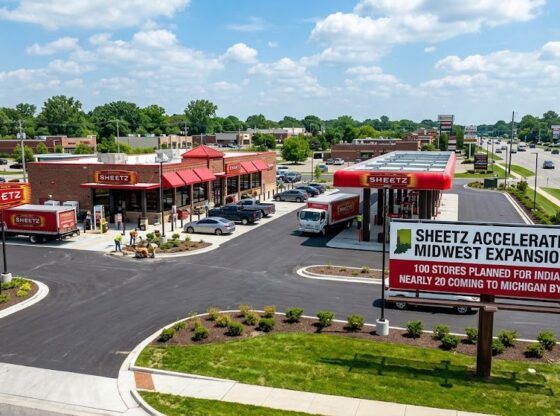

Sheetz Michigan Latest Business updates: The convenience store landscape in the American Midwest is undergoing a massive transformation. Sheetz, the beloved Altoona, Pennsylvania-based convenience store, restaurant, and gas station chain, has officially announced aggressive expansion plans that will reshape the region’s retail footprint. According to an April 8 news release, the family-owned company is preparing to branch out into the Hoosier State with a monumental plan to open 100 locations across Indiana over the next 10 years. Simultaneously, Sheetz continues to solidify its base in Michigan, targeting nearly 20 operational stores in the state by the end of 2026.
This strategic manoeuvre signals a clear challenge to established Midwestern competitors and promises consumers a new level of convenience, culinary options, and robust customer loyalty benefits. As inflation impacts consumer spending, the integration of competitive fuel pricing and reward ecosystems—such as the highly utilized sheetz rewards program—will play a critical role in the company’s regional success.
The Michigan Campaign: Building a Detroit-Area Stronghold
Sheetz is not entirely new to the concept of expanding outside its traditional mid-Atlantic stronghold. However, the company’s push into Michigan represents one of its most calculated geographical leaps. Currently, the company plans to continue building its Michigan base outward from metro Detroit. By focusing initially on the densely populated automotive capital and its surrounding suburbs, Sheetz establishes a highly visible anchor point.
The company expects to open nearly 20 stores in Michigan by the end of 2026. This timeline demonstrates a rapid deployment strategy. Building a new convenience store and fueling station from the ground up requires significant capital, navigating local zoning laws, and executing complex logistics. By aiming for 20 locations within a few short years, Sheetz showcases its operational efficiency and financial commitment to the Great Lakes State.
Detroit-area consumers demand high-quality, fast, and reliable service. Sheetz answers this demand with its famous Made-To-Order (MTO) food menu, which allows customers to customise everything from sandwiches and wraps to smoothies and speciality coffee via touch-screen terminals. Furthermore, the modern consumer heavily relies on digital integration. Shoppers who download the My Sheetz app can order their food ahead of time, ensuring zero wait time when they arrive. This digital convenience directly competes with traditional fast-food drive-thrus, pulling market share away from established quick-service restaurants in the Michigan area.
The Indiana Invasion: A Ten-Year Vision
While the Michigan expansion represents a rapid, targeted strike, the Indiana strategy is a long-term territorial acquisition. Sheetz announced it will open its first Indiana locations next year, serving as the vanguard for a 100-store rollout over the following decade. Opening 100 stores translates to roughly 10 new locations per year, an aggressive cadence that will create thousands of jobs, drive local construction, and inject substantial tax revenue into Indiana municipalities.
Indiana presents a prime demographic target for Sheetz. Known as the “Crossroads of America,” the state boasts massive interstate traffic, making it a lucrative market for high-volume fueling stations. Interstate travellers and local commuters alike represent the ideal customer base for the Sheetz model: people who need quality fuel, clean facilities, and fresh food in a single stop.
Entering Indiana means Sheetz will go head-to-head with entrenched regional giants. However, Sheetz brings unique weapons to this battle. Aside from its extensive food offerings, the company wields a highly competitive pricing strategy for gasoline and everyday items. Customers who maximise their savings often utilise the Sheetz discount card, which provides immediate cents-off-per-gallon benefits at the pump. When expanding into a new state like Indiana, establishing immediate brand loyalty is paramount, and these direct consumer savings act as a powerful magnet.
Maximising Value: The Power of Loyalty Programs and Financial Products
The modern convenience store industry thrives on recurring customer visits. To ensure customers choose Sheetz over a competitor located across the street, the company has developed one of the most comprehensive retail financial ecosystems in the sector.
Consumers actively look for ways to combat high gas prices and grocery costs. Sheetz tackles this head-on through its multi-tiered rewards architecture. The foundation of this system is the Sheetz rewards card. Customers swipe this card or scan their mobile device during every transaction to accumulate points. These points seamlessly convert into food, beverages, or further fuel discounts. Users frequently check their My Sheetz rewards balance on their smartphones, gamifying the convenience store experience and incentivising repeat business.
For the everyday commuter, having a My Sheetz card attached to their keychain is a staple. But the company pushes the envelope further by offering co-branded financial products. For instance, the Sheetz credit card allows regular patrons to maximise their cash back and fuel savings. When customers pay with a dedicated Sheetz personal credit card, they compound the benefits of the standard loyalty program, resulting in significant annual savings.
Financial flexibility remains a core pillar of the Sheetz customer acquisition strategy. The company offers the Sheetz Visa card, a universally accepted credit card that allows users to earn Sheetz reward points on everyday purchases outside of the store. Whether buying groceries at a local supermarket or booking travel, Sheetz Visa credit card holders accumulate points that they can redeem for free MTO food or heavily discounted fuel. This ecosystem essentially turns every consumer purchase into a reason to return to Sheetz.
By leveraging sheetz credit, the company builds a financial moat around its customer base. When an Indiana or Michigan commuter holds a sheetz visa card in their wallet, their primary choice for morning coffee or evening refueling is practically pre-determined. They are actively engaged in the brand’s economy.
Adapting to the Delivery Era
The pandemic forever altered consumer behaviour, accelerating the adoption of delivery services for nearly all consumer goods. The convenience store sector had to pivot rapidly to meet this new expectation. Sheetz responded aggressively by integrating third-party delivery logistics into its operational model.
Today, a customer does not even need to set foot inside a Michigan or Indiana location to enjoy the brand’s offerings. Through partnerships like Sheetz DoorDash, customers can order late-night snacks, custom-built subs, and essential convenience items directly to their doorstep. This Sheetz DoorDash integration expands the physical footprint of each individual store, transforming them into micro-fulfilment centres for their surrounding neighbourhoods.
If a college student in Indiana needs a late-night study snack or a busy family in metro Detroit wants a quick dinner without cooking, they simply open an app. This omnichannel approach ensures that Sheetz captures revenue even when customers choose to stay home.
Economic Impact and Job Creation
We must look beyond the food and fuel to understand the true impact of this Midwest expansion. The introduction of nearly 120 combined stores in Indiana and Michigan generates massive economic ripples.
First, the construction phase requires local contractors, electricians, plumbers, and labourers. Building a modern Sheetz location is a multi-million dollar project featuring expansive fueling canopies, high-tech kitchen installations, and sophisticated point-of-sale systems.
Second, once operational, each store requires a dedicated staff. Unlike traditional gas stations that might operate with a single cashier, a Sheetz location functions as a high-volume restaurant. Each store employs food service managers, kitchen staff, inventory specialists, and customer service representatives. The company famously offers competitive wages, comprehensive benefits, and strong internal promotion pathways. Therefore, the 100 planned Indiana stores will likely create over 3,000 permanent, well-paying local jobs. The nearly 20 Michigan stores will add another 600 jobs to the Detroit metropolitan economy.
The Competitive Landscape: The Convenience Store Wars
The Midwest is not an empty playing field. Sheetz’s aggressive push puts it in direct competition with formidable opponents. Brands like Speedway, Wawa (which is also pushing westward), Casey’s General Store, and Meijer’s standalone convenience centres dominate the region.
To win this war, Sheetz relies on differentiation. While a traditional gas station focuses purely on fuel, using stale snacks as an afterthought, Sheetz flips the model. Sheetz operates a restaurant that happens to sell gas. The brightly lit, exceptionally clean, and modern aesthetic of a Sheetz location immediately signals to the consumer that this is a premium experience.
Furthermore, Sheetz leverages aggressive promotional campaigns. During summer travel months or major holidays, the company frequently drops its fuel prices dramatically, sometimes offering a fillup4less promotion that undercuts the regional average by a significant margin. These flash sales generate viral attention, cause lines to stretch down the block, and introduce thousands of new customers to the brand. Once these new customers enter the store to pay or buy a snack, the staff introduces them to the My Sheetz Rewards program, hooking them for future visits.
Sustainability and the Future of Fueling
As Sheetz builds its 100 new stores in Indiana and 20 in Michigan, it also faces the reality of the evolving automotive industry. The transition toward electric vehicles (EVs) requires convenience stores to rethink their infrastructure.
A standard gasoline fill-up takes three to five minutes. An EV fast-charge takes twenty to forty minutes. This extended dwell time presents a massive opportunity for Sheetz. While an EV driver waits for their battery to charge, they become a captive audience. The Sheetz model perfectly accommodates this shift. EV drivers can comfortably sit inside the dining area, use the free Wi-Fi, and eat a freshly prepared meal while their vehicle charges.
By designing its new Michigan and Indiana locations with EV charging infrastructure in mind, Sheetz future-proofs its real estate. The company actively installs fast chargers across its network, recognising that the future of convenience involves providing the right type of energy—whether that is gasoline, electricity, or high-quality coffee—to keep the consumer moving.
Community Integration and Corporate Responsibility
Successful retail expansion requires more than just pouring concrete and erecting signs; it requires community buy-in. Sheetz maintains a strong track record of philanthropic engagement in its operating regions. The company frequently supports local youth sports, food banks, and educational initiatives.
When Sheetz enters a new Indiana town or a Michigan suburb, it actively sponsors local events. This localised marketing strategy softens the arrival of a massive corporate entity and builds genuine goodwill. Customers prefer to spend their money at businesses that invest back into their immediate community. This community-first approach, combined with the consumer-centric benefits of the Sheetz rewards card, creates a powerful emotional and financial bond with the local population.
Streamlining the Checkout Experience
Operational speed dictates success in the convenience industry. The term “convenience” implies a frictionless transaction. Sheetz heavily invests in retail technology to ensure its stores process customers as quickly as possible, even during peak morning rush hours.
Self-checkout kiosks now feature prominently in new store designs. Customers can bypass the traditional register, scan their items, swipe their sheetz credit card, and exit the store in seconds. The integration of the My Sheetz app further eliminates friction. A customer can order food from their driveway, arrive at the store, grab their bagged order from a dedicated pick-up shelf, and walk out without ever speaking to an employee if they choose. This technological efficiency reduces labor bottlenecks and vastly improves the customer experience.
Furthermore, integrating the sheetz visa card into mobile wallets allows for seamless tap-to-pay functionality at both the pump and the register. By removing the physical barriers to purchase, Sheetz increases its transaction volume and customer satisfaction metrics.
Analysing the Midwest Supply Chain
Supporting over 100 new stores across two new states requires a colossal logistical effort. Sheetz must establish efficient supply chains to ensure every location receives daily deliveries of fresh produce, bakery items, and dairy. The company operates its own massive distribution centres, utilising a fleet of proprietary trucks to maintain absolute control over product quality.
As the company expands into Indiana and Michigan, it will inevitably need to build new regional distribution hubs to service these stores. These logistical centres will create hundreds of additional supply chain and transportation jobs, further compounding the economic benefits of the expansion. Control over the supply chain allows Sheetz to guarantee that a sandwich purchased in a brand-new Indianapolis location tastes exactly the same as one purchased at the original Altoona store. Consistency drives brand trust.
The Financial Outlook
From a corporate finance perspective, this expansion represents a massive capital expenditure. However, the projected return on investment remains incredibly strong. The convenience retail sector demonstrates remarkable resilience during economic downturns. Consumers might delay buying a new car or skip a luxury vacation, but they still need to commute to work and buy food.
By offering premium products at competitive prices and sweetening the deal with the sheetz discount card, the company captures consumer spending regardless of the macroeconomic environment. Furthermore, the robust data collected through the My Sheetz Rewards program provides the company with invaluable insights into consumer behaviour. Sheetz analysts monitor what items customers purchase together, what times of day they shop, and how they respond to specific promotions. This data-driven approach allows Sheetz to optimize its inventory, tailor its marketing campaigns, and maximise profitability per square foot.
The integration of branded financial tools like the sheetz personal credit card also generates secondary revenue streams. Retailers profit from the interest and transaction fees associated with their proprietary credit products. This financial diversification strengthens the company’s balance sheet and funds future expansion efforts.
Conclusion: A New Era for Midwest Convenience
The announcement that Sheetz will open 100 locations in Indiana and nearly 20 in Michigan by 2026 serves as a wake-up call to the entire Midwest retail sector. The convenience store landscape is no longer about dirty bathrooms and overpriced soda. It is a highly competitive, technologically advanced industry focused on culinary quality, speedy service, and deep customer loyalty.
Sheetz brings a proven, heavily refined operational model to these new territories. By offering high-quality food, embracing delivery via platforms like Sheetz DoorDash, and locking in consumers through compelling financial tools like the Sheetz credit card and the Sheetz Visa credit card, the company establishes a dominant presence the moment it cuts the ribbon on a new store.
For the residents of Michigan and Indiana, the arrival of Sheetz promises more choices, lower prices through the fillup4less mentality, and a vastly superior roadside experience. Over the next decade, as these 120 new stores take root, Sheetz will undoubtedly become an integral part of the daily routine for millions of Midwesterners. The convenience store wars are heating up, and Sheetz has just deployed its most ambitious strategy yet.