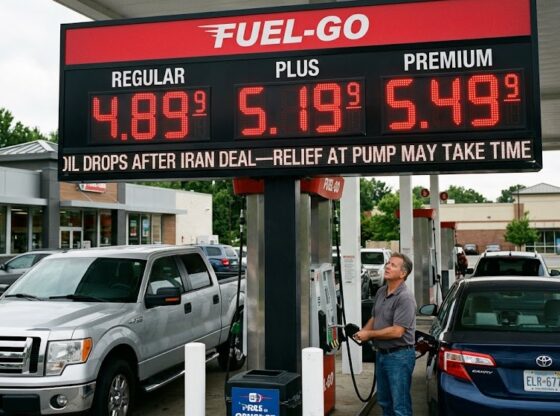

What’s Happening Right Now
Oil prices moved lower after a ceasefire announcement involving Iran eased fears of supply disruption. The decision, announced by Donald Trump, helped reopen the Strait of Hormuz, a key route for global oil shipments.
Crude prices fell quickly from around $112.95 per barrel to the mid-$90 range. Markets reacted fast, but drivers across the United States are still paying high prices for gasoline.
Why Oil Prices Fell


The Strait of Hormuz carries about 20% of global oil supply. Any tension there pushes prices up. When tensions ease, prices drop just as quickly.
After the ceasefire:
- Supply fears reduced
- Traders lowered risk premiums
- Energy markets stabilized
This shift explains the sudden fall in oil prices, but it does not instantly impact fuel costs for consumers.
Why Gas Prices Are Still High
Gas prices do not follow oil prices immediately. There is always a delay.
Fuel sold today was refined from oil bought earlier at higher prices. Retailers must sell that inventory first. This creates a lag between falling crude prices and cheaper gasoline.
Other factors also matter:
- Transportation and distribution costs
- State taxes and local pricing
- Seasonal demand changes
Because of these, pump prices remain elevated even after oil declines.
Current Price Snapshot
Data from AAA shows:
- New Jersey average: $4.091 per gallon (April 8)
- U.S. average: $4.164 per gallon
- Last week in New Jersey: $4.022
- One year ago: $3.062
Prices are slightly higher than last week and much higher than a year ago. The recent oil drop has not yet reached consumers.
How Soon Prices Could Fall
Drivers may need to wait before seeing relief.
Typical timeline:
- First week: little or no change
- Two weeks: small declines begin
- Three to four weeks: clearer price drops
This depends on oil staying lower. If prices rise again, gas could remain expensive.
What Could Change Next
Several developments will shape gas prices:
- Stability in the Middle East
- Continued flow through the Strait of Hormuz
- U.S. refinery production levels
- Summer driving demand
If tensions stay low and supply remains steady, prices may gradually decline.
What It Means for Consumers
For now, Americans will continue paying higher prices. The drop in oil is positive, but it takes time to reach gas stations.
Consumers may notice:
- Stable prices in the short term
- Gradual declines later in April
- Possible volatility if tensions return
Bottom Line
Oil prices are falling due to easing geopolitical tensions, but gas prices have not caught up yet. Relief is expected, but it will be slow.
If current trends continue, drivers in the United States could begin seeing noticeable savings at the pump within the next few weeks rather than immediately.