

A Morning That Changed Everything
Before sunrise in a quiet neighborhood in Donna, 22-year-old Andrea García begins her day not as a typical young adult, but as the head of a household.
She moves from room to room, waking her younger siblings for church and school. Her voice carries a mix of urgency and care, switching between English and Spanish as she gently pushes them out of bed.
“Levántense… it’s time,” she says, repeating herself until they stir.
Just months ago, mornings in the García household looked very different. Their parents handled routines, discipline, and decisions. Now, those responsibilities have fallen squarely on Andrea’s shoulders.
The change was sudden—and life-altering.
The Night Immigration Agents Came
In January, immigration agents from U.S. Immigration and Customs Enforcement (ICE) raided the family’s home.
The operation resulted in the arrest of Andrea’s parents. Her mother was deported to Mexico, while her father remains in custody.
For the García siblings, the moment shattered the structure of their lives.
There was no warning. No time to prepare. One day, they were children supported by their parents. The next, they were on their own.
Andrea recalls the fear, confusion, and disbelief that followed. The home, once filled with routine and stability, quickly became a place of uncertainty.
From Sister to Caregiver Overnight
Andrea had plans. Like many young adults, she dreamed of independence—her own apartment, a career, and building a future.
Instead, she became a full-time caregiver.
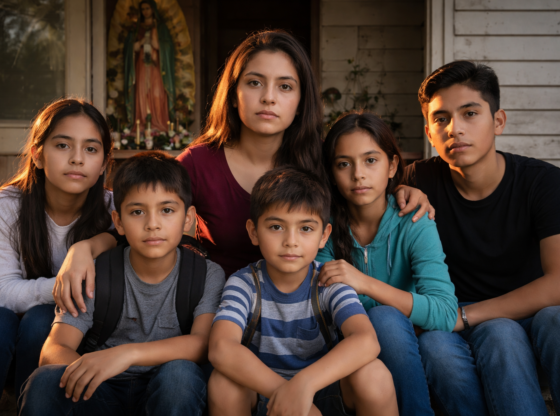
Her five younger siblings, ranging from elementary school age to teenagers, now depend on her for everything: meals, school preparation, emotional support, and guidance.
“It happened so fast,” she said. “I never thought I would have to do everything for them.”
The transition has not been easy. Her siblings still see her as their sister, not a parent. Discipline can be difficult. Emotions often run high.
Yet, Andrea persists.
She cooks, cleans, organizes schedules, and ensures her siblings attend school and church. Every decision she makes now carries the weight of responsibility once shared by two parents.
A Household Held Together by Determination
Inside the García home, signs of adaptation are everywhere.
A small statue of La Virgen de Guadalupe stands in the living room, a symbol of protection and faith. It has become a quiet source of comfort for the family.
The siblings have created their own rhythm. Older children help younger ones with homework. Chores are divided. Meals are shared.
There is laughter at times—but also silence, especially when the absence of their parents feels overwhelming.
Andrea admits that some days are harder than others.
“There are moments when I don’t know what to do,” she said. “But I have to stay strong for them.”
The Emotional Toll on Children
The psychological impact on the García siblings is profound.
Younger children struggle to understand why their parents are gone. Older ones grapple with anxiety, anger, and uncertainty about the future.
School has become both a refuge and a challenge. While it offers normalcy, concentration is difficult. Thoughts often drift back to their parents.
Family roles have shifted dramatically. Siblings now act as guardians, mentors, and emotional anchors for one another.
Experts say such situations can lead to long-term emotional stress, especially when children are forced into adult responsibilities prematurely.
A Story Shared by Many Families
While the García family’s story is deeply personal, it reflects a broader reality affecting many families across the United States.
Immigration enforcement actions often have ripple effects that extend beyond those directly detained or deported.
In households where parents are undocumented but children are U.S. citizens, families can be suddenly divided.
Children are left behind—not just physically, but emotionally and financially.
These cases highlight the complex human impact of immigration policies.
Legal Status and Uncertain Futures
Despite their parents’ immigration status, Andrea and her siblings are U.S. citizens.
This means they have the legal right to remain in the country. However, their situation remains fragile.
Without their parents, they face financial challenges, potential legal hurdles, and the constant fear of further disruption.
The family must navigate systems that are often difficult to understand, especially without adult guidance.
Community support has helped, but it cannot fully replace parental presence.
# The Broader National Debate
The García family’s story comes at a time when immigration policies and enforcement practices are under intense scrutiny.
The administration of Donald Trump has emphasized stricter immigration enforcement, leading to increased deportations and raids.
At the same time, legal debates surrounding birthright citizenship and immigration reform continue to unfold.
Cases like the García family’s highlight the human dimension of these policies—one that is often overshadowed by political arguments.
Community Response and Support
In Donna and nearby communities like Weslaco, neighbors and local organizations have stepped in to offer support.
Church groups, schools, and community members have provided food, clothing, and emotional assistance.
These acts of kindness have helped the family maintain stability, even in the face of overwhelming challenges.
Still, the road ahead remains uncertain.
Holding On to Hope
Despite everything, Andrea and her siblings continue to move forward.
They attend church together, maintain routines, and support one another through difficult moments.
Andrea remains focused on keeping her family together.
“We are still here,” she said. “We are doing our best.”
Her words reflect resilience—a determination to survive and adapt, even when circumstances feel impossible.
# A Childhood Redefined
For the García siblings, childhood has been reshaped by responsibility.
They have learned lessons about resilience, sacrifice, and family at an age when they should be focused on school, friendships, and dreams.
Their story is not just about loss—it is about endurance.
It is about a young woman stepping into a role she never expected, and a group of siblings finding strength in each other.
Final Reflection
The story of Andrea García and her siblings is a powerful reminder of the human impact behind immigration enforcement.
Policies may be debated in courtrooms and political arenas, but their consequences are lived in homes like this one.
In Donna, Texas, a family continues to navigate life without parents—leaning on each other, holding onto hope, and redefining what it means to be a family.
Their journey is ongoing. Their resilience is undeniable.