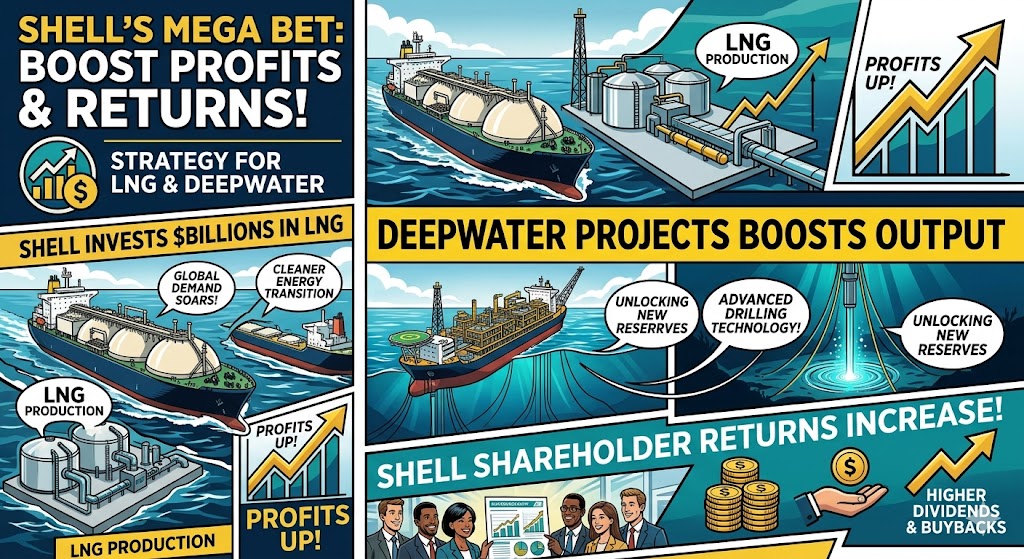
Global energy giant Shell plc is sharpening its strategy by prioritising high-return investments in liquefied natural gas (LNG) and deepwater oil projects. This move reflects a clear focus on maximising cash flow, strengthening dividends, and supporting large-scale share buybacks.
In a rapidly evolving energy landscape, where companies face pressure to balance sustainability with profitability, Shell has chosen a pragmatic path. Instead of pulling back from oil and gas, the company is doubling down on segments that generate immediate financial returns.
Strategic Shift: Why Shell plc Is Focusing on High-Return Energy Assets
This strategic pivot comes at a time when global energy demand remains strong, especially for cleaner-burning fuels like LNG. Investors have responded positively, pushing Shell’s stock higher as confidence grows in its profit-driven roadmap.
LNG Expansion: Egypt Becomes a Key Growth Hub
One of the most important pillars of Shell’s current strategy is the expansion of LNG infrastructure in Egypt. The company has been actively engaging with Egyptian authorities to enhance operations at the Idku LNG facility.
The Idku plant plays a critical role in processing and exporting natural gas from the region. By increasing throughput and improving efficiency, Shell aims to unlock higher output while maintaining cost control.
For Egypt, this partnership offers major economic benefits. Increased LNG exports can strengthen foreign exchange reserves, reduce reliance on imports, and improve the country’s overall energy security. For Shell, it ensures access to a strategic location that connects Middle Eastern gas supplies to global markets.
LNG remains one of the fastest-growing segments in the global energy mix. Compared to coal, it produces fewer emissions, making it a preferred transitional fuel in many countries moving toward cleaner energy systems.
Deepwater Investments: Expanding in the Gulf of Mexico
Beyond LNG, Shell is also actively exploring new opportunities in deepwater oil production. Reports suggest that the company is considering a bid for a stake in the Shenandoah offshore field located in the Gulf of Mexico.
Deepwater projects like Shenandoah are known for their high production capacity and long-term profitability. While they require significant upfront investment, they often deliver strong returns once operational.
Shell has decades of experience in deepwater drilling, giving it a competitive advantage in managing complex offshore projects. By expanding its footprint in the Gulf of Mexico, the company aims to secure stable, high-margin production for years to come.
This approach reflects a broader industry trend, where major oil companies focus on fewer but more profitable assets rather than spreading investments across multiple low-yield projects.
Financial Strategy: Boosting Cash Flow and Shareholder Value
At the core of Shell’s strategy is a strong emphasis on financial performance. The company plans to invest between $20 billion and $22 billion in 2026, with a clear preference for projects that generate immediate and reliable cash flow.
This cash flow supports:
- Consistent dividend payouts
- Share buyback programs
- Debt reduction and balance sheet strength
Investors increasingly favor companies that return capital efficiently. By focusing on high-return LNG and deepwater assets, Shell positions itself as a reliable performer in the energy sector.
Market analysts have noted that Shell’s disciplined capital allocation sets it apart from competitors who are still balancing aggressive energy transition goals with profitability concerns.
Balancing Energy Transition and Traditional Fuels
While Shell continues to invest in renewable energy and low-carbon technologies, its current strategy highlights the importance of traditional energy sources in the near term.
The company recognizes that global demand for oil and gas will not disappear overnight. Instead, it aims to use profits from LNG and deepwater projects to fund its gradual transition toward cleaner energy.
This balanced approach allows Shell to:
- Maintain strong earnings
- Invest in future technologies
- Meet global energy needs during the transition period
Critics argue that continued investment in fossil fuels could slow climate progress. However, Shell maintains that a stable energy supply is essential for economic growth and global stability.
Market Reaction: Investors Welcome the Strategy
The financial markets have responded positively to Shell’s renewed focus on profitability. The company’s share price has shown upward momentum, reflecting investor confidence in its long-term strategy.
Key reasons behind this positive reaction include:
- Clear focus on high-return projects
- Strong dividend outlook
- Reduced uncertainty in capital allocation
Analysts believe that Shell’s disciplined approach could serve as a model for other energy companies navigating the complex balance between sustainability and profitability.
Global Energy Outlook: Why LNG and Deepwater Matter
The global energy market is undergoing a major transformation, but LNG and deepwater oil remain critical components of the energy mix.
LNG demand continues to grow due to:
- Increasing energy needs in Asia and Europe
- Efforts to reduce coal usage
- Expansion of global gas infrastructure
At the same time, deepwater oil projects provide:
- Large-scale production capacity
- Long-term supply stability
- High profit margins once operational
By focusing on these segments, Shell aligns itself with both current demand and future growth opportunities.
Conclusion: A Profit-Driven Path Forward
Shell plc is making a bold statement with its renewed focus on LNG and deepwater investments. The company is prioritizing profitability, cash flow, and shareholder returns while maintaining a gradual approach to energy transition.
From expanding LNG operations in Egypt to exploring deepwater opportunities in the Gulf of Mexico, Shell is positioning itself as a leader in high-return energy investments.
As global energy demand continues to evolve, Shell’s strategy highlights a key reality: balancing financial strength with long-term sustainability will define the future of the energy industry.
About the Author