

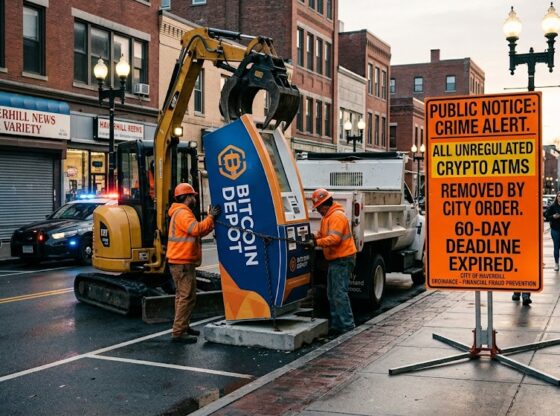

While cryptocurrency ATMs (BTMs) were originally designed to simplify the purchase of digital assets for the average person, they have rapidly transformed into a primary “gateway” for financial exploitation. The recent 60-day removal order in Haverhill, Massachusetts, is the latest in a growing trend of municipal and state-level bans across the U.S.
Here is why these machines are being reclassified from “financial tools” to “public risks.”
1. The “Irreversibility” Trap
The greatest strength of blockchain—its permanent, immutable ledger—is its greatest weakness in a retail scam environment.
- No “Chargebacks”: Unlike credit cards or traditional bank transfers, once a user deposits cash into a BTM and sends the crypto to a wallet, the transaction cannot be reversed.
- Speed: Scammers coach victims to stay on the phone while they stand at the machine. By the time a victim realizes they’ve been defraled, the funds have already been moved through international exchanges beyond the reach of U.S. law enforcement.
2. Targeting the Vulnerable (The “Silver Tsunami” of Fraud)
Data from the FBI and consumer advocacy groups like AARP highlight a disturbing demographic trend:
- Senior Victims: In 2024, individuals aged 60 and older accounted for 86% of reported losses from crypto ATM fraud.
- Sophisticated Social Engineering: Scammers use “tech support” or “government impersonation” scripts, convincing seniors that their bank accounts are compromised and that “safe-guarding” their money requires moving it into a “secure” crypto locker via a local ATM.
3. Regulatory “Gray Zones” and Enforcement Gaps
For years, BTMs operated with far less oversight than traditional banks.
- KYC Loopholes: Many machines allowed for relatively high-value transactions with minimal “Know Your Customer” (KYC) verification, making them attractive for money laundering.
- Lack of Federal Protection: Because these kiosks aren’t traditional financial institutions, they often fall outside the scope of federal consumer protection laws that mandate fraud monitoring.
The National Crackdown: 2026 Status
Haverhill is not an isolated case. In early 2026, Indiana became the first state to implement a total statewide ban on crypto ATMs. Other cities and states are following suit with aggressive restrictions:
| Location | Action Taken |
|---|---|
| Indiana | Full statewide ban enacted March 2026. |
| Haverhill, MA | 60-day removal order; $300/day fine for non-compliance. |
| Vermont | Extended moratorium on new kiosks through July 2026. |
| Connecticut | Temporary cease-and-desist against Bitcoin Depot (March 2026). |
| South Hadley, MA | Complete ban following a $11,000 employee impersonation scam. |
The Fate of Market Leaders
Bitcoin Depot, the largest operator in the space, has become the primary target for regulators. In February 2026, the Massachusetts Attorney General sued the company, alleging it failed to protect residents from known scam patterns. Despite appointing a new CEO (Alex Holmes, formerly of MoneyGram) and attempting to pivot toward “enhanced compliance,” the company’s stock has plummeted over 90% in the last six months as revenue outlooks for the core BTM business continue to darken.
Bottom Line: The “convenience” of crypto ATMs has been overshadowed by their utility to criminals. For residents, the shift suggests that regulated, online exchanges—which offer better identity verification and fraud monitoring—are becoming the only legally “safe” way to interact with digital assets.
Do you think these bans are a necessary protection for seniors, or do they unfairly limit access for legitimate crypto users who prefer using cash?