

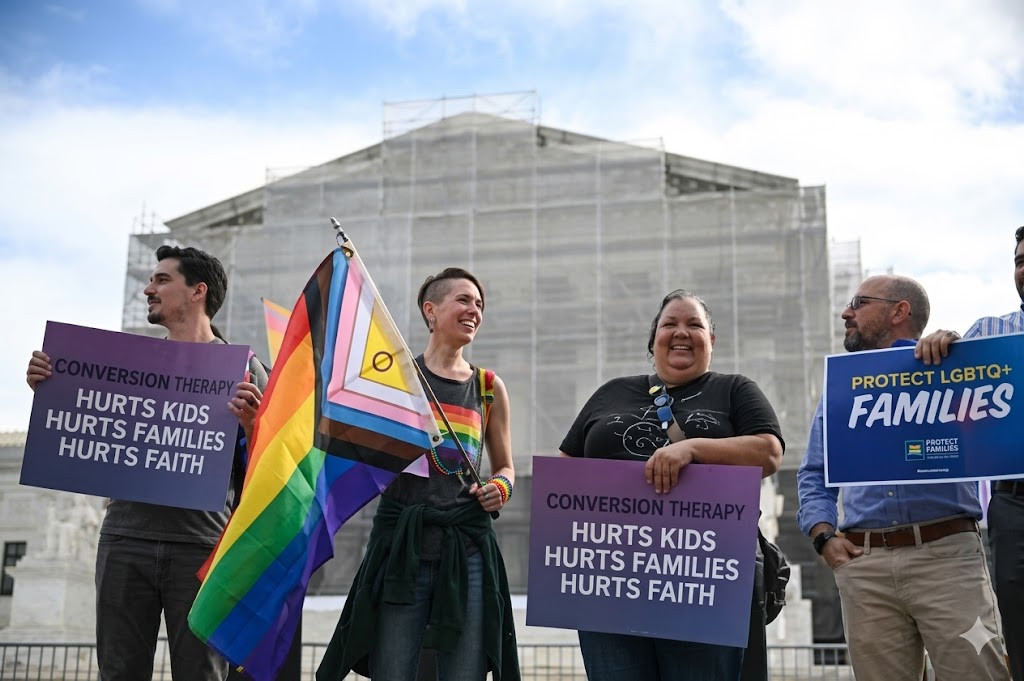

Law and attorney News USA: In a move that has sent shockwaves through both the legal and medical communities, the Supreme Court ruled on Tuesday that Colorado’s 2019 law banning “conversion therapy” for minors is unconstitutional. The decision, led by an 8-1 majority, represents a massive victory for First Amendment advocates and a significant setback for LGBTQ+ rights organisations.
🛡️ The Verdict: Speech as a Shield
While Colorado argued the law was a necessary measure to protect children from “discredited and harmful” medical practices, the Court’s majority saw it differently. Writing for the Court, Justice Neil Gorsuch emphasized that the government cannot dictate what licensed professionals say behind closed doors.
- The “Egregious Assault”: The Court labeled the ban a violation of free speech, stating the First Amendment protects against the enforcement of “orthodoxy in thought or speech.”
- Talk Therapy vs. Medical Conduct: The justices rejected the idea that “talk therapy” is merely a regulated medical procedure, viewing it instead as pure speech.
- Bi-Partisan Agreement: In a rare alignment, liberal Justices Elena Kagan and Sonia Sotomayor joined the conservative majority, arguing the law unfairly silenced one side of an ideological debate.
🚨 The Lone Dissent: A “Catastrophic” Precedent?
Justice Ketanji Brown Jackson stood alone in her dissent, issuing a stark warning from the bench. She argued that by stripping states of the power to regulate “practitioner speech,” the Court has opened the door to a “unregulatable” wild west of medical treatments.
“This decision might make speech-only therapies and other medical treatments involving practitioner speech effectively unregulatable.” — Justice Ketanji Brown Jackson
🌍 What Happens Next?
The ripple effects of this ruling are expected to be felt immediately across the United States:
- 20+ State Laws in Jeopardy: More than 20 other states with similar bans—including California, New York, and Illinois—now face likely legal challenges.
- Professional Regulation: State attorneys general warn this could make it harder to sue professionals (doctors, lawyers, etc.) for providing “substandard” or “bad” advice.
- Religious Freedom: The ruling reinforces a recent trend of SCOTUS favoring religious practitioners in First Amendment disputes.
📝 Key Players in the Case
| Party | Argument |
|---|---|
| Kaley Chiles (Counselor) | Claimed the law prevented her from helping clients live a life “consistent with their faith.” |
| State of Colorado | Argued they must regulate “substandard care” to protect the mental health of L.G.B.T.Q. youth. |
| Alliance Defending Freedom | Hailed the win as a victory for “voluntary conversations” and common sense. |
| Human Rights Campaign | Called the ruling “devastating” for the mental health outcomes of vulnerable children. |
As the legal landscape shifts, many are asking: where does the line between “professional regulation” and “free speech” truly sit?
What do you think this ruling means for the future of state-regulated medical care?