The Paving of Prosperity: How a Single Street in Yutz Signals a European Infrastructure Surge for Australian Investors
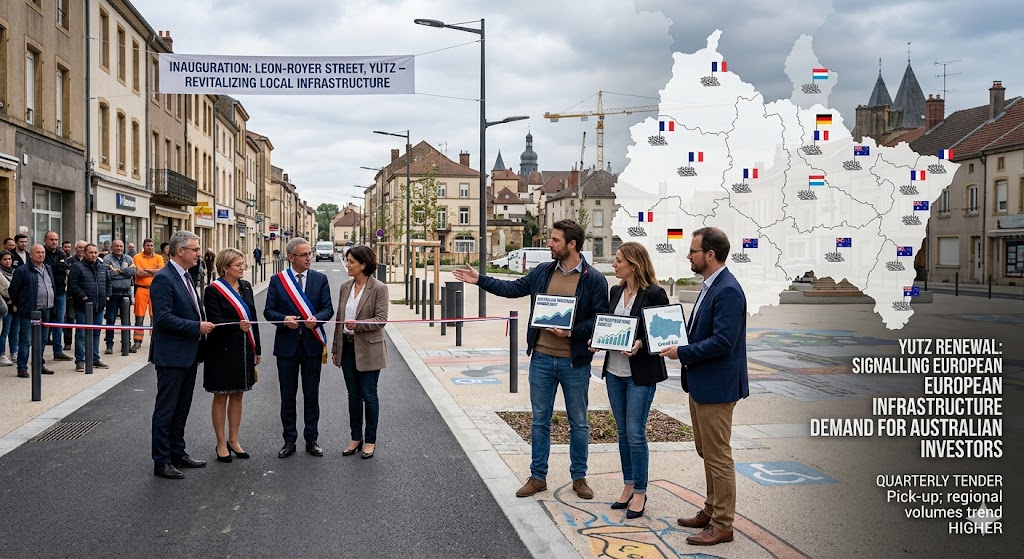
The rhythmic thrum of a steamroller and the sharp, acrid scent of fresh bitumen are perhaps not the first things an Australian investor thinks of when diversifying a global portfolio. However, in the quiet commune of Yutz, nestled in the Grand Est region of northeastern France, the completion of the Leon-Royer Street renovation has provided a signal that is far louder than the machinery used to build it.
For those tracking capital expenditure (Capex) and the health of the European civil construction sector, this modest project is a “canary in the coal mine”—or more accurately, a “paver on the path”—to understanding how municipal spending is shifting from planning phases into active execution as we enter the second quarter of 2026.
The Yutz Signal: Beyond the Bitumen
Leon-Royer Street is, by any traditional financial metric, a minor asset. Yet, the successful renovation of its paving, drainage systems, lighting, and accessibility features serves as a vital proof of concept. It confirms that local government budgets in France are being liquidated as planned, signaling a robust start to the spring construction season.
The Anatomy of Local Capex
When a municipality like Yutz executes a street upgrade, it triggers a localized economic multiplier. The project scope includes:
- Resurfacing and Paving: Driving demand for bitumen and asphalt.
- Drainage and Curbs: Requiring concrete and specialized masonry.
- Lighting and Signage: Benefiting electrical component manufacturers and safety equipment providers.
- Accessibility Upgrades: Ensuring long-term utility and compliance with modern urban standards.
For investors, the takeaway isn’t just that one street is smoother. It’s that the procurement cycle is running on time. In the world of infrastructure, timing is everything. Execution following the winter thaw suggests that the logistical bottlenecks of previous years are easing, allowing contractors to move into high-gear productivity.
The Macro-Effect of Micro-Projects
While a “mega-project” like a new high-speed rail line captures headlines, it is the flow of “small-and-steady” municipal works that often provides the most reliable earnings quality for civil contractors.
The “Mosaic” Theory of Construction Demand
A single street in Yutz does not shift a national GDP outlook. However, a pipeline of a thousand such projects across the Grand Est region creates a formidable base of demand.
- Labor Utilization: Contractors rely on these repeatable, lower-risk jobs to keep crews “taskable” and prevent idle time.
- Fleet Utilization: Heavy machinery, from excavators to pavers, represents a massive sunk cost. Constant work ensures a higher return on those assets.
- Materials Flow: Unlike lumpy mega-projects that might require a massive surge followed by a drought, municipal renewals create a steady “heartbeat” for quarries and asphalt plants.
Supply Chain Dynamics: The Geography of Profit
In civil construction, distance is the enemy of margin. Materials like aggregates (crushed stone) and hot-mix asphalt are incredibly freight-sensitive. If a quarry is more than 50 kilometers from the job site, the transport costs can quickly eat the contractor’s profit.
Winners in the Local Loop
- Civil Contractors: Firms that specialize in “bread and butter” civic works gain the most from regional ramp-ups.
- Plant Hire Companies: Smaller, nimble firms that lease specialized equipment for urban environments see improved booking rates.
- Materials Suppliers: Companies with high “quarry density” near growing urban hubs like Yutz possess a natural moat against competitors.
- Traffic Management: As urban renewals increase, the demand for safety barriers, signage, and personnel to manage public flow becomes a high-margin service.
Seasonality, Pricing, and the Q2 Ramp
Construction is an inherently seasonal beast. France typically experiences a surge from early spring through autumn. The timing of the Yutz completion—late March—is strategically significant. It suggests that local councils are pushing “shovel-ready” works early to maximize the window of fair weather.
The Margin Equation
Investors must watch the spread between tender pricing and input costs.
- The Bitumen Link: Bitumen prices track closely with global oil benchmarks. If oil spikes after a contract is signed, the contractor suffers.
- Logistics Inflation: Fuel costs affect the haulage of every ton of gravel.
- Labor Scarcity: A busy season is good for volume, but a shortage of skilled operators can lead to wage inflation that compresses margins.
As regional volumes trend higher through Q2, the most successful firms will be those with escalation clauses in their contracts or highly efficient sequencing that reduces the fuel-burn of their fleet.
The Australian Connection: Why Should We Care?
It may seem a world away, but Australian investors are often more exposed to the streets of Yutz than they realize.
How Australia Holds Europe
Many Australian superannuation funds and private portfolios access European infrastructure through:
- Global Infrastructure Funds: These often hold equity in the large parent companies that own local French or German contractors.
- Active Small-Cap Strategies: Targeting the “hidden gems” of the European industrial sector.
- Broad ETFs: Capturing the recovery of the Eurozone’s industrial base.
The Mirror Image
The Australian market functions similarly. Just as the Yutz renovation signals health in the Grand Est, a flurry of council works in Western Sydney or Brisbane’s suburbs signals a healthy environment for firms like Downer, Cimic, or Boral. By observing the Yutz signal, Australian investors can refine their “look-through” analysis to see if their European holdings are positioned for repeatable, cash-generative work rather than just volatile, lumpy contracts.
Tracking the Signal: A Checklist for Investors
To turn this local news into an investment edge, look for the following indicators:
- Tender Volumes: Are local council bulletins showing an uptick in “Requests for Quote”?
- Backlog Growth: Are firms reporting a healthy “book-to-bill” ratio?
- Utilization Rates: Is the small plant hire sector seeing “sold out” signs?
- Unit Pricing: Is the price per square meter of paving trending above the rate of materials inflation?
Managing Risk in a Shifting Landscape
While the outlook is positive, construction is never without risk.
- Budget Reallocation: High inflation or energy costs can force councils to divert funds from “nice-to-have” streetscapes to “must-have” social services.
- Political Cycles: Election years in Europe can lead to “pre-election spending” followed by a post-election lull.
- Currency Volatility: For Australians, a weakening Euro can erode the gains made in local construction stocks. Using hedged share classes (EUR/AUD) is a common strategy to mitigate this.
Final Thoughts: The Power of the Small Project
The renovation of Leon-Royer Street in Yutz is a humble event, but it serves as a masterclass in reading the economic pulse. It proves that despite global volatility, the foundational work of civilization—paving the roads we walk on—remains a vibrant and active sector.
For the Australian investor, Yutz is a reminder to look past the “mega-project” hype and appreciate the earnings quality of the mundane. In a world of uncertainty, there is great value in a well-paved street and a busy local contractor. As we move further into 2026, keep your eyes on the council bulletins; the next big investment signal might just be a humble street renewal in a town you’ve never visited.
Frequently Asked Questions (FAQs)
1. Why is a single street in France relevant to an Australian portfolio?
It serves as a real-time data point for municipal Capex execution. It validates that regional budgets are flowing into the pockets of contractors and suppliers, many of whom are held within global infrastructure or small-cap funds accessible to Australians.
2. What are the “logistics-sensitive” materials mentioned?
Primarily asphalt and aggregates. Because these materials are heavy and low-value per ton, the cost of transporting them is a huge portion of the total price. Suppliers located close to the job (like those serving Yutz) have a significant competitive advantage.
3. Is the construction ramp-up in France purely seasonal?
While weather is the primary driver (spring thaw), it is also driven by budget cycles. Seeing works completed in late March suggests that councils are efficient in their planning and that there is enough labor and material availability to meet demand.
4. What should I look for in a construction stock to capture this trend?
Look for “Pricing Discipline.” The best companies don’t just win a lot of work; they win work at prices that protect them from spikes in oil (bitumen) and fuel (freight) costs.
Would you like me to analyze the latest quarterly reports from major European civil materials suppliers to see if their “order book” data matches this local signal from Yutz?