National Savings Crisis: Complaints Against NS\&I Double as Families Accuse Government Bank of Withholding Millions
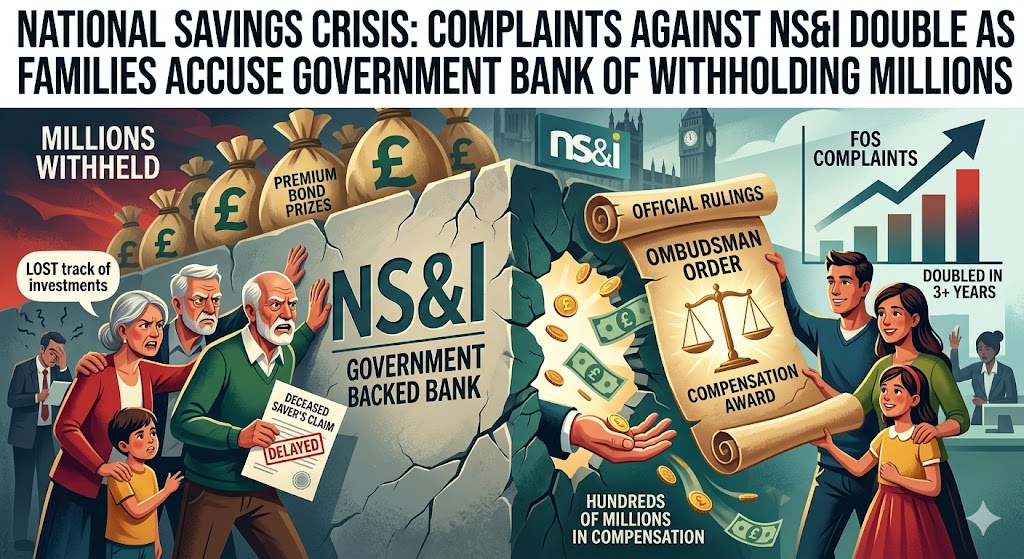
LONDON — A growing scandal at National Savings and Investments (NS\&I) has reached a breaking point, with the state-owned institution facing a potential compensation bill in the hundreds of millions of pounds. New data reveals that formal complaints against the “nation’s savings bank” have more than doubled in just over three years, as bereaved families, retirees, and long-term savers accuse the organisation of “short-changing” the public through a series of systemic administrative failures.
Once considered the safest place for British households to store their wealth, NS\&I is now under intense fire for losing track of investments, withholding Premium Bond prizes from the estates of the deceased, and providing “unacceptable” customer service that has left some families thousands of pounds out of pocket in legal fees and tax fines.
The Data: A Surge in Dissatisfaction
According to the latest figures from the Financial Ombudsman Service (FOS), the collapse in customer trust is quantifiable. Complaints against NS\&I have surged from 73,000 in the second half of 2021 to nearly 160,000 in the first half of last year.
This 120% increase in grievances highlights a significant breakdown in the bank’s ability to manage its massive portfolio. As a pillar of the UK’s financial system, NS\&I looks after approximately £100 billion for more than 26 million customers. However, critics argue that the bank’s “botched digital transformation” has turned simple savings products into a bureaucratic nightmare.
The Human Cost: Bereaved Families in the Crosshairs
Perhaps the most damaging allegations involve the treatment of the deceased and their beneficiaries. Families already struggling with grief report being forced to endure “prolonged and unhappy experiences” while trying to settle estates.
- Withheld Prizes: NS\&I policy dictates that Premium Bonds can remain in a prize draw for up to one year after the holder’s death. However, families claim the bank has failed to record death notifications, resulting in prize wins being “swallowed” by the bank.
- Insensitive Errors: Documents seen by The Telegraph reveal that NS\&I continued to send marketing and account letters addressed directly to deceased individuals, months after the bank had been officially notified of their passing.
- Legal Fees: Delays in releasing funds have forced some executors to retain solicitors for longer than necessary, racking up thousands of pounds in additional expenses that diminish the value of the inheritance.
A “Botched” Digital Transformation
Shadow Business Secretary Andrew Griffith has led the political charge against NS\&I’s leadership, specifically targeting Chief Executive Dax Harkins. Griffith described the bank’s recent history as a saga of “poor performance and a botched digital transformation.”
“Delivering a simple set of government-backed savings products should not be this hard,” Griffith stated. “The private sector does that every day. The failures we are seeing are a direct result of mismanagement and a lack of accountability to the taxpayers who fund this institution.”
The Outsourcing Blame Game
Internal rulings from the Ombudsman show that NS\&I has frequently attempted to deflect blame. The bank has cited the lingering effects of the Covid-19 pandemic and the “complexities” of outsourcing customer service to overseas staff as reasons for the delays.
However, the Ombudsman has been increasingly unsympathetic. In several high-profile rulings, the bank was ordered not only to release withheld funds but also to pay interest on the delayed amounts and compensation for the “distress and inconvenience” caused to customers.
The Financial Impact: Payouts and Piles of Fines
The crisis at National Savings is now hitting customers in their wallets in unexpected ways.
| Issue | Reported Consequence |
|---|---|
| Incorrect Advice | Savers have received wrong information from call handlers, leading to underpayment of tax and subsequent HMRC fines. |
| Delayed Withdrawals | Multiple customers report missing out on property purchases because NS\&I could not release their deposit funds in time for exchange. |
| Lost Interest | Families have lost thousands in potential interest because money was held in non-interest-bearing “holding accounts” during administrative delays. |
The Compensation Timebomb
While individual compensation awards from the Ombudsman are typically limited to a few hundred pounds, the sheer volume of complaints suggests a total liability in the hundreds of millions. Because NS\&I is state-owned, these payouts are ultimately funded by the British taxpayer—meaning the public is effectively paying for the bank’s failure to manage their own money.
Are Your Savings Safe?
For many, the primary draw of NS\&I has always been the 100% Treasury guarantee. Unlike private banks, where the FSCS only protects up to £85,000, every penny in NS\&I is backed by the government.
However, experts are warning that “safety” is about more than just the balance sheet. “If you cannot access your money when you need it, or if your family has to fight for a year to claim an inheritance, that isn’t ‘safe’ in any practical sense,” said one independent financial advisor.
Frequently Asked Questions (FAQs)
What should I do if NS\&I loses track of my investment?
You should first file a formal complaint through the NS\&I website. If you do not receive a satisfactory response within eight weeks, you can escalate the matter to the Financial Ombudsman Service.
How long does it take to settle a Premium Bond estate?
Under normal circumstances, it should take a few weeks. However, given current delays, families should prepare for a process that could take several months and should keep meticulous records of all phone calls and letters sent to the bank.
Is my money at risk?
Your capital remains 100% secure and backed by HM Treasury. The “risk” currently associated with NS\&I is administrative and operational—relating to delays and poor customer service—rather than a risk of the bank failing.
Official Reference Links
- NS\&I Official Complaints Page: To start the formal grievance process.
- Financial Ombudsman Service: To escalate an unresolved dispute.
- HMRC: Reporting a Death: For official guidance on tax obligations when managing an estate.