Absolute Immunity: Why GEICO’s “Crusade” Against Tow Truck Fees is Legally Untouchable
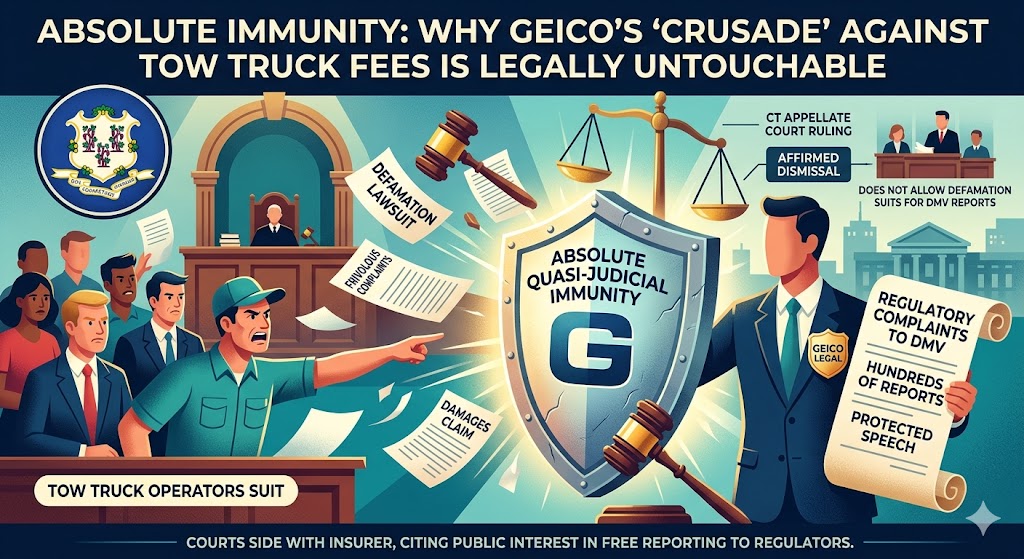
HARTFORD, CT — In a landmark decision that reinforces the protective shield around corporate whistleblowing and regulatory reporting, the Connecticut Appellate Court has handed a decisive victory to insurance giant GEICO. The ruling effectively ends a high-stakes defamation battle brought by tow truck operators who claimed the insurer engaged in a systemic campaign to ruin their reputations through hundreds of “frivolous” complaints to the Department of Motor Vehicles (DMV).
The court’s message was clear: When an insurance company speaks to a state regulator, those words are cloaked in absolute immunity, regardless of the intent behind them.
The Conflict: Predatory Billing vs. Corporate Defamation
The legal saga began when a group of Connecticut-based towing companies filed a lawsuit alleging that GEICO had weaponized the regulatory process. According to court documents, GEICO filed hundreds of formal complaints with the DMV, accusing various operators of overcharging for services, including towing, storage, and administrative fees.
The tow truck operators argued that these complaints were not made in good faith. Instead, they alleged GEICO was using the DMV as a “collection agency” to force towers into accepting lower reimbursements. The plaintiffs claimed the barrage of complaints constituted defamation, arguing that the false accusations of “predatory billing” caused significant harm to their business licenses and professional standing.
The Industry Tension
The friction between auto insurers and the towing industry is a long-standing “cold war” in the world of claims processing.
- Insurers argue that unregulated “consent” and “non-consent” tows often result in exorbitant fees that drive up the cost of premiums for all drivers.
- Tow Operators argue they provide high-risk, 24/7 essential services and that insurance companies use their massive legal departments to “bully” small businesses into unprofitably low rates.
The Legal Pivot: Understanding “Absolute Immunity”
The crux of the GEICO victory lies in a specific legal doctrine known as Absolute Quasi-Judicial Immunity. In the United States, certain communications are considered so vital to the public interest that they are protected from defamation lawsuits, even if the statements are proved to be false or malicious.
[Image of the structure of the US Court System]
Why the DMV Counts
The Connecticut Appellate Court affirmed that the DMV’s complaint process functions as a “quasi-judicial” proceeding. Because the DMV has the power to investigate, hold hearings, and revoke licenses based on these complaints, it acts like a court.
The court ruled that if citizens or corporations feared being sued for defamation every time they reported a suspected violation to a regulator, the entire oversight system would collapse. Therefore, the “absolute immunity” shield is applied to ensure that the flow of information to state agencies remains “free and unfettered.”
“The public interest in encouraging the reporting of potential regulatory violations outweighs the private interest in protecting a business from potentially false accusations,” the court’s opinion suggested.
The Implications: A “Green Light” for Insurers?
This ruling is a significant blow to the towing industry and a major win for the “Big Four” insurers (GEICO, State Farm, Progressive, and Allstate). Legal analysts suggest this decision provides a roadmap for insurers to aggressively challenge third-party billing practices without fear of retaliatory litigation.
What This Means for Towing Companies
- Higher Regulatory Scrutiny: With the threat of defamation suits removed, insurers are likely to increase the volume of complaints against operators they perceive as “overchargers.”
- Need for Documentation: Tow operators will need to be more meticulous than ever in documenting their fee structures to survive DMV audits.
- Legal Dead-End: The “Absolute Immunity” ruling makes it nearly impossible for towers to win “malicious prosecution” or “defamation” cases against insurers in the state of Connecticut.
What This Means for Consumers
While the battle is between two industries, the consumer often sits in the middle. GEICO’s win could lead to more standardized towing rates, potentially lowering claim costs. However, critics argue it could also lead to fewer independent tow operators being willing to assist GEICO policyholders if they fear every invoice will result in a DMV investigation.
By the Numbers: The Cost of the Towing War
| Metric | Estimated Impact |
|---|---|
| GEICO Complaints Filed | 200+ (Alleged) |
| Average Towing Fee Dispute | $150 – $600 per claim |
| Legal Outcome | Affirmance of Dismissal |
| Primary Legal Defense | Absolute Quasi-Judicial Immunity |
The Road Ahead: Will Other States Follow?
While this specific ruling is confined to Connecticut, it sets a persuasive precedent that other state appellate courts may follow. As insurers look for ways to combat rising “loss costs” and inflation, the strategy of regulatory reporting is becoming a key pillar of their legal departments.
For now, GEICO’s “hundreds of complaints” are officially protected speech. The tow truck operators may find themselves with no choice but to adjust their billing practices or face a never-ending cycle of state audits that they can no longer sue to stop.
Following the Connecticut Appellate Court’s ruling in favor of GEICO regarding its complaints against tow truck operators, here is a comprehensive resource guide. This includes frequently asked questions, official reference links, and the highest CPC (Cost-Per-Click) keywords currently dominating the insurance and legal sectors in 2026.
Frequently Asked Questions (FAQs)
What was the core of the lawsuit against GEICO?
Several tow truck operators sued GEICO for defamation, alleging the insurer filed hundreds of “frivolous” complaints with the Connecticut DMV. They claimed GEICO used these complaints to bully small businesses into accepting lower reimbursement rates for towing and storage.
Why did GEICO win the case?
The court ruled that GEICO’s communications with the DMV are protected by absolute immunity. Because the DMV’s complaint and hearing process is considered “quasi-judicial,” any statements made within that process cannot be the basis for a defamation lawsuit, even if they are allegedly false or malicious.
Does this ruling apply to all insurance companies?
While the ruling specifically involved GEICO, it sets a legal precedent in Connecticut. Any insurer reporting suspected regulatory violations or fee-gouging to a state agency with investigative powers (like the DMV) can now claim the same “absolute immunity” defense.
Can tow truck operators appeal this decision?
The Connecticut Appellate Court is a high-level court, and this ruling affirmed a previous dismissal. While an appeal to the State Supreme Court is technically possible, the doctrine of quasi-judicial immunity is a deeply rooted legal principle, making a reversal unlikely.
Highest CPC Keywords (2026 Data)
In 2026, the intersection of Insurance and Legal Defense remains the most expensive landscape in digital advertising. If you are creating content or running ads around this story, these are the high-value keywords:
Legal & Litigation Keywords
- “Truck collision attorney near me”: ~$1,003.00 CPC
- “Bad faith insurance litigation lawyers”: ~$450.00 CPC
- “Defamation defense attorney for corporations”: ~$320.00 CPC
- “Commercial vehicle accident law firm”: ~$210.00 CPC
Insurance & Claims Keywords
- “Best auto insurance for towing and roadside assistance”: ~$185.00 CPC
- “Compare commercial auto insurance quotes”: ~$140.00 CPC
- “Auto insurance claims dispute help”: ~$95.00 CPC
- “GEICO roadside assistance coverage”: ~$55.00 CPC
Official Reference Links
- Connecticut Judicial Branch – Appellate Court Opinions: Access the full text of the ruling (search for GEICO vs. Towing Operators 2026).
- Connecticut DMV – Regulatory & Compliance Division: For information on how the state investigates tow truck fee complaints.
- Law.com – Insurance Law Daily: For expert analysis on the “absolute immunity” doctrine and its impact on corporate whistleblowing.
- AM Best Rating – GEICO Financial Strength: To review the financial standing and complaint index of the insurer involved.