
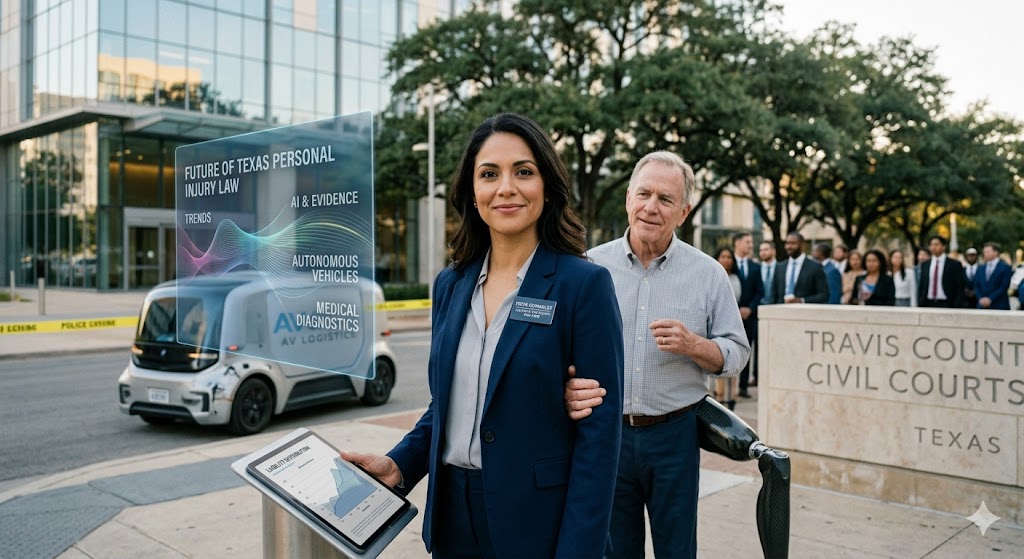
Personal Injury Lawyer Insights: The Future of Personal Injury Law in Texas — Trends and Anticipated Changes
The landscape of justice in the Lone Star State is shifting. For decades, the foundational principles of negligence and liability have remained steady, but the world around them has moved into a high-tech, fast-paced era. From the bustling highways of Houston to the tech hubs of Austin and the oil fields of West Texas, the way “harm” is defined and compensated is undergoing a radical transformation.
According to Texas personal injury lawyer Felix Gonzalez of the Felix Gonzalez Accident and Injury Law Firm, “Anticipating where personal injury law is heading helps you make sense of, and prepare for, a system that will affect real people facing real harm.” As we navigate 2026, several key trends—driven by artificial intelligence, autonomous transportation, and evolving medical diagnostics—are redefining the future of legal claims in Texas.
1. Why the Texas Legal Landscape Keeps Evolving
Personal injury law is designed to address negligence, but the definition of “reasonable care” is a moving target. Twenty years ago, a driver’s negligence was determined by witness statements and skid marks. Today, it involves analyzing lane-keeping systems, automatic braking logs, and distracted driving data from smartphones.
In Texas, this evolution is further complicated by a perpetual “tug-of-war” in the state legislature. Lawmakers face the dual challenge of:
- Protecting Injured Citizens: Ensuring that those harmed by the recklessness of others have a clear path to financial recovery for medical bills and lost wages.
- Balancing Economic Interests: Controlling insurance premiums and preventing what some lobbyists call “frivolous litigation” that could burden Texas businesses and healthcare providers.
This friction leads to frequent reforms in “tort law,” making it essential for any personal injury lawyer to stay updated on the latest statutes of limitations and damage caps.
2. Technology: The New Frontier of Evidence
The “he-said, she-said” era of car accident litigation is rapidly coming to a close. Technology is now the primary witness in Texas courtrooms.
The Rise of Digital Black Boxes
Modern vehicles—especially commercial trucks—are essentially computers on wheels. Event Data Recorders (EDRs) capture precise telemetry in the seconds before a crash:
- Exact speed at impact.
- The moment the brakes were applied (if at all).
- Steering angles and seatbelt usage.
Smartphone Forensics and Privacy
Smartphones provide a digital breadcrumb trail. Location data can prove a driver was speeding or traveling through a known high-accident zone. Time-stamped photos and social media activity can clarify the facts of a fall or a workplace accident with remarkable precision. However, as personal injury lawyer experts note, this data is a “double-edged sword.” While it can provide indisputable proof of negligence, it also raises significant disputes regarding privacy and data admissibility in Texas courts.
3. Medical Science and Damage Calculations
As medical technology advances, so does the complexity of valuing an injury claim.
Improved Diagnostics vs. Rising Costs
We now have better tools for detecting Traumatic Brain Injuries (TBI) and internal nerve damage that were previously “invisible” on older scans. While this helps victims prove their injuries, the cost of these sophisticated treatments is skyrocketing.
The Battle Over Future Care
In Texas, future medical expenses are a major component of high-stakes injury cases. Insurance companies often use AI-driven algorithms to argue that modern rehabilitation techniques will reduce a victim’s long-term disability, thereby lowering the settlement offer. Conversely, a skilled personal injury lawyer must work with medical life-care planners to demonstrate that “cutting-edge” treatment requires long-term, expensive investment.
4. New Vehicles, New Liability Questions
Texas is at the forefront of the autonomous vehicle (AV) revolution. With self-driving trucks being tested on I-45 and autonomous delivery bots in suburban neighborhoods, the question of “Who is at fault?” has changed.
- Driver Error vs. Software Glitch: If a self-driving car crashes, is the “operator” liable, or is it a product liability claim against the manufacturer or software developer?
- Shared Liability: We are seeing a shift toward “comparative negligence” cases involving multiple tech entities, sensor manufacturers, and vehicle owners.
Frequently Asked Questions (FAQs)
What is the statute of limitations for personal injury in Texas?
In most cases, you have two years from the date of the accident to file a lawsuit. However, there are exceptions for claims against government entities or cases involving minors.
Can I still recover money if I was partially at fault for the accident?
Yes. Texas follows a proportionate responsibility rule. As long as you are 50% or less at fault, you can recover damages, though your payout will be reduced by your percentage of fault. If you are 51% or more at fault, you cannot recover anything.
How does AI affect my insurance claim?
Many insurance companies now use AI to “read” medical records and estimate settlement values. These algorithms often miss the “human element” of pain and suffering, which is why having an experienced personal injury lawyer to challenge these automated evaluations is critical.
What should I do with my digital data after an accident?
Do not delete social media posts or clear your phone’s location history. This data can be considered evidence. A lawyer will often send a “spoliation letter” to the other party to ensure they do not delete their digital records (like dashcam footage or truck logs).
Reference Links & Resources
- Texas Department of Insurance: Rules and Regulations
- State Bar of Texas: Finding a Board Certified Personal Injury Lawyer
- Felix Gonzalez Accident and Injury Law Firm: Texas Injury Trends 2026
- Texas Office of Court Administration: Recent Tort Reform Legislation
Next Step: Would you like me to create a summary checklist of the digital evidence you should preserve immediately after a Texas car accident?