
The Undoing of Stephen McCullagh: YouTuber’s ‘Live Stream’ Murder Alibi
In the dark annals of true crime, there are cases where the depravity of the act is rivalled only by the chilling calculation of the cover-up. The murder of Natalie McNally in Lurgan, Northern Ireland, is one such case. It represents a modern horror story—one where a content creator attempted to weaponise the very tools of his trade to manufacture an airtight alibi. This was not a crime of passion or a sudden lapse into madness; it was a cold-blooded, scripted performance designed to bypass justice using a six-hour digital facade.
The Victim and the Vulnerability
Natalie McNally was 32 years old, 15 weeks pregnant, and by all accounts, a woman deeply loved by her family and community. On the night of December 18, 2022, she was at her home in Silverwood Green, Lurgan, likely feeling safe and secure. She was carrying a son, whom she intended to name Dean.
She was also in a relationship with Stephen McCullagh, a 33-year-old local man known in certain online circles as a YouTuber specializing in gaming and live streams. To the outside world, he was a quirky digital hobbyist; to Natalie, he was the father of her child. To the law, however, he would soon become known as a meticulous architect of murder.
The “Grand Theft Auto” Alibi
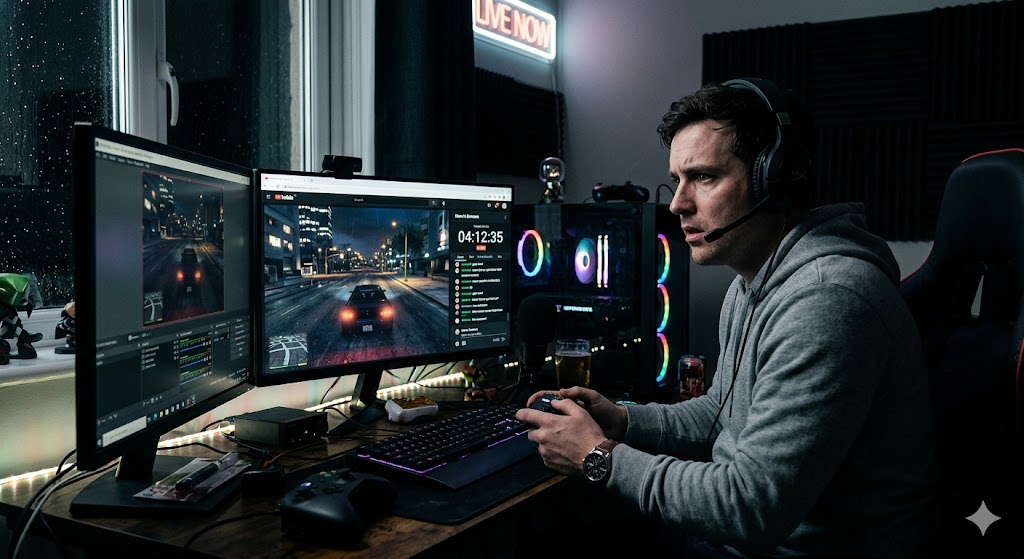
The core of McCullagh’s plan rested on the manipulation of time and digital presence. On the evening of the murder, McCullagh’s YouTube channel went live with a six-hour broadcast of Grand Theft Auto. For the authorities, or anyone checking his whereabouts, the evidence seemed indisputable: Stephen was at home, interacting with fans, and playing video games.
However, the “live” stream was a lie. McCullagh had pre-recorded the footage days earlier. To make the deception seamless, he had even interacted with a live chat, though investigators later discovered he had scripted his responses or used technical loopholes to simulate real-time engagement.
While the digital avatar of Stephen McCullagh was “virtually” roaming the streets of Los Santos, the physical Stephen McCullagh was traveling to Lurgan.
The Forensic Trail: Breaking the House of Cards
The plan began to unravel when detectives from the Police Service of Northern Ireland (PSNI) looked past the screen and onto the asphalt.
1. The CCTV Evidence
Despite his attempts to hide, CCTV footage captured a man—later identified as McCullagh—traveling by bus from Belfast to Lurgan on the night of the murder. He was seen wearing a distinct yellow glove and carrying a rucksack. The timing of these movements directly contradicted the “live” nature of his YouTube broadcast.
2. The Technical Breakdown
Cybercrime experts analyzed McCullagh’s computer. They found that the six-hour video had been recorded on December 13 or 14—nearly a week before the murder. He had spent hours editing the footage to make it appear as though it were happening in real-time on the night of the 18th.
3. The Behavior of a Predator
In the aftermath of the murder, McCullagh’s behavior was described by prosecutors as “calculated and manipulative.” He didn’t just hide; he embedded himself within the grieving McNally family. He attended vigils, stood by Natalie’s parents, and even recorded a “tribute” video for her on his channel. Most chillingly, he was accused of leaving a hidden recording device in the McNally home to spy on their private conversations and monitor what they were telling the police.
The Fatal Flaws in the Plot
If this were a movie, McCullagh would be the villain who thought he was smarter than everyone in the room. His “flaws” were born of arrogance:
- The Physical Shadow: He accounted for his digital presence but underestimated the ubiquity of physical surveillance (CCTV).
- The Digital Fingerprint: He failed to realize that every file on a computer has a “Date Created” and “Date Modified” metadata tag that can rarely be scrubbed perfectly from a forensic sweep.
- The Psychological Mask: His “tears” and his attempts to frame Natalie’s former partner were seen through by investigators who noted the inconsistencies in his emotional timeline.
The Conclusion of a Tragedy
Stephen McCullagh eventually pleaded guilty to the murder of Natalie McNally. His confession brought an end to a trial that had gripped Northern Ireland, but it could not undo the damage. He was sentenced to life in prison, with a minimum term of 20 years.
This case serves as a grim reminder of how technology can be twisted to facilitate ancient evils. McCullagh tried to use the “virtual” to erase the “real,” but in the end, the truth proved more durable than his digital illusions.
Reference Links & Further Reading
- BBC News: Natalie McNally murder: Stephen McCullagh’s YouTube alibi
- PSNI Official Statements: [Updates on the Lurgan Investigation 2023-2024]
- The Guardian: [The chilling case of the YouTuber who faked a live stream to cover a murder]
Would you like me to analyze the specific digital forensic techniques used by the PSNI to debunk his YouTube alibi?