
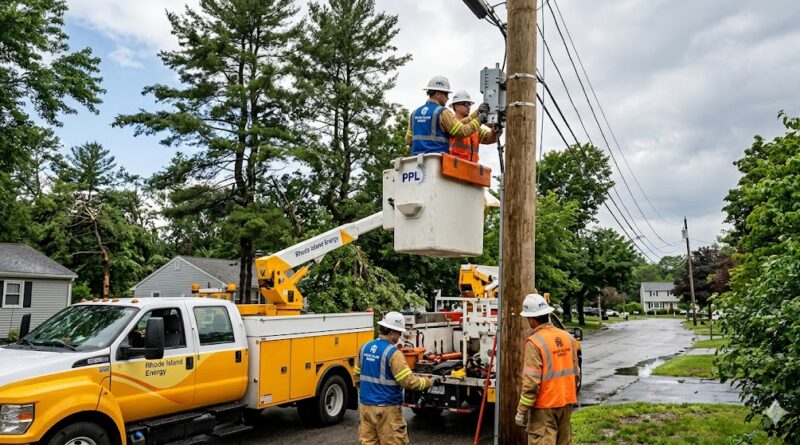
Patch PPL Stock Today: March 18 – RI Outages Test Grid, Lift Storm Costs
PPL Corporation (PPL) is currently navigating a high-wire act between record-breaking market performance and the raw physical challenges of utility management. As of today, PPL stock is hovering near its 52-week high, even as a series of aggressive storm outages in Rhode Island puts the company’s infrastructure—and its balance sheet—to the test.
Shares last traded at $38.43, down slightly by 0.80%. Despite this minor dip, the stock remains a top performer in the utility sector with a year-to-date gain of 9.47%. Investors are now weighing the immediate “patch” of storm restoration costs against the long-term potential of a massive grid-hardening capital expansion.
Market Snapshot: PPL Trading Near Resistance
PPL’s technical setup shows a stock with strong momentum but facing immediate resistance.
- Price Range: Trading between a low of $38.38 and a high of $39.00.
- Resistance Levels: The 52-week high sits at $39.09, with the upper Bollinger Band at $39.29.
- Sentiment: The “Street” remains bullish, with 13 Buy ratings and a serviceable 2.87% dividend yield.
The Rhode Island Challenge: Outages and Restoration
Winds exceeding 60 mph have battered Rhode Island Energy’s network, knocking out power to tens of thousands. This event is more than a service interruption; it is a financial event for PPL shareholders.
Restoration vs. Recovery
Storm restoration costs immediately spike Operations & Maintenance (O&M) expenses. For PPL, the financial “patch” involves:
- Immediate Spend: Mobilizing repair crews and replacing damaged hardware.
- Regulatory Deferral: Seeking PUC approval to track these costs for future recovery from ratepayers.
- Reliability Metrics: Maintaining SAIDI and SAIFI indices to avoid regulatory penalties.
The Strategic “Patch”: Grid Resilience and Capex
While storms cause short-term pain, they often justify long-term capital investments. PPL is expected to pivot toward “grid-hardening” to prevent future failures.
- Vegetation Management: Aggressive tree-trimming to reduce branch-related line interference.
- Hardened Infrastructure: Upgrading to stronger poles and automated reclosers that can “patch” or isolate circuit failures automatically.
- Undergrounding: Selective pilots to move vulnerable coastal lines beneath the surface.
Financial Health: Balancing the Books
PPL maintains a typical utility leverage profile with a Debt-to-Equity of 1.30 and Net Debt to EBITDA of 4.96. While operating cash flow grew 33% last year, the company’s free cash flow remains negative due to heavy capital investment—a sign that PPL is aggressively building its future rate base.
| Metric | Value | Significance |
|---|---|---|
| Dividend Yield | 2.87% | Attractive for income-seeking investors. |
| Payout Ratio | 67% | Healthy, leaving room for storm-cost absorption. |
| YTD Gain | 9.47% | Outperforming many sector peers in 2026. |
Conclusion: Eyes on April 30 Earnings
The true test for PPL stock comes on April 30, 2026, when management releases quarterly earnings. Investors will be looking for:
- Clear accounting of Rhode Island storm restoration costs.
- Updates on the pace of regulatory “patch” approvals for cost recovery.
- Confirmation of the 2026 capital priorities and reliability targets.
Trading Plan: For income buyers, the current yield remains a solid entry point near support at $38.10. For momentum traders, a high-volume break above the $39.29 resistance level would confirm a new bullish leg.
Frequently Asked Questions (FAQs)
1. Why is PPL stock trading near a 52-week high despite the outages?
Investors are looking past the short-term storm costs ($38.43) and focusing on PPL’s long-term growth. Major outages often lead to “constructive regulation,” where the state allows the utility to increase investment in “grid-hardening.” This expands the company’s rate base, which typically leads to higher guaranteed earnings in the future.
2. How do 60 mph winds in Rhode Island impact the company’s bottom line?
In the near term, high winds cause physical damage that spikes Operations & Maintenance (O\&M) expenses (repair crews, overtime, and equipment). While PPL seeks to “patch” these costs through regulatory deferrals, there is a risk of “regulatory lag,” where the company pays for repairs now but doesn’t recover the cash from customers for several months or even years.
3. What are SAIDI and SAIFI, and why should I care?
- SAIDI: System Average Interruption Duration Index (How long the power is out).
- SAIFI: System Average Interruption Frequency Index (How often the power goes out).
Regulators use these metrics to grade PPL. If these numbers spike too high due to poor maintenance, the company could face fines or lower allowed returns on equity (ROE).
4. Is the 2.87% dividend safe?
Yes, currently. With a 67% payout ratio and EPS growth of 20% in the previous year, PPL has a healthy cushion. However, investors watch the “cash flow” closely; since PPL is spending heavily on capital projects (Free Cash Flow of -1.89), they rely on steady regulatory approvals to keep the dividend growing.
Reference Links
PPL & Rhode Island Energy
- PPL Corporation Investor Relations – Official site for the April 30 earnings call and 2026 capital plan.
- Rhode Island Energy Outage Map & News – Real-time updates on restoration progress and 60 mph wind damage reports.
- Rhode Island Public Utilities Commission (PUC) – Filings regarding storm cost recovery and grid resilience dockets.
Financial & Technical Data
- Yahoo Finance: PPL Quote & Technicals – Live tracking of the $39.09 resistance level and RSI indicators.
- Seeking Alpha: PPL Stock Analysis – Professional commentary on PPL’s B+ Buy grade vs. C+ Sell models.
- MarketWatch: Utility Sector Performance – Compare PPL’s 9.47% YTD gain against the broader XLU index.
