







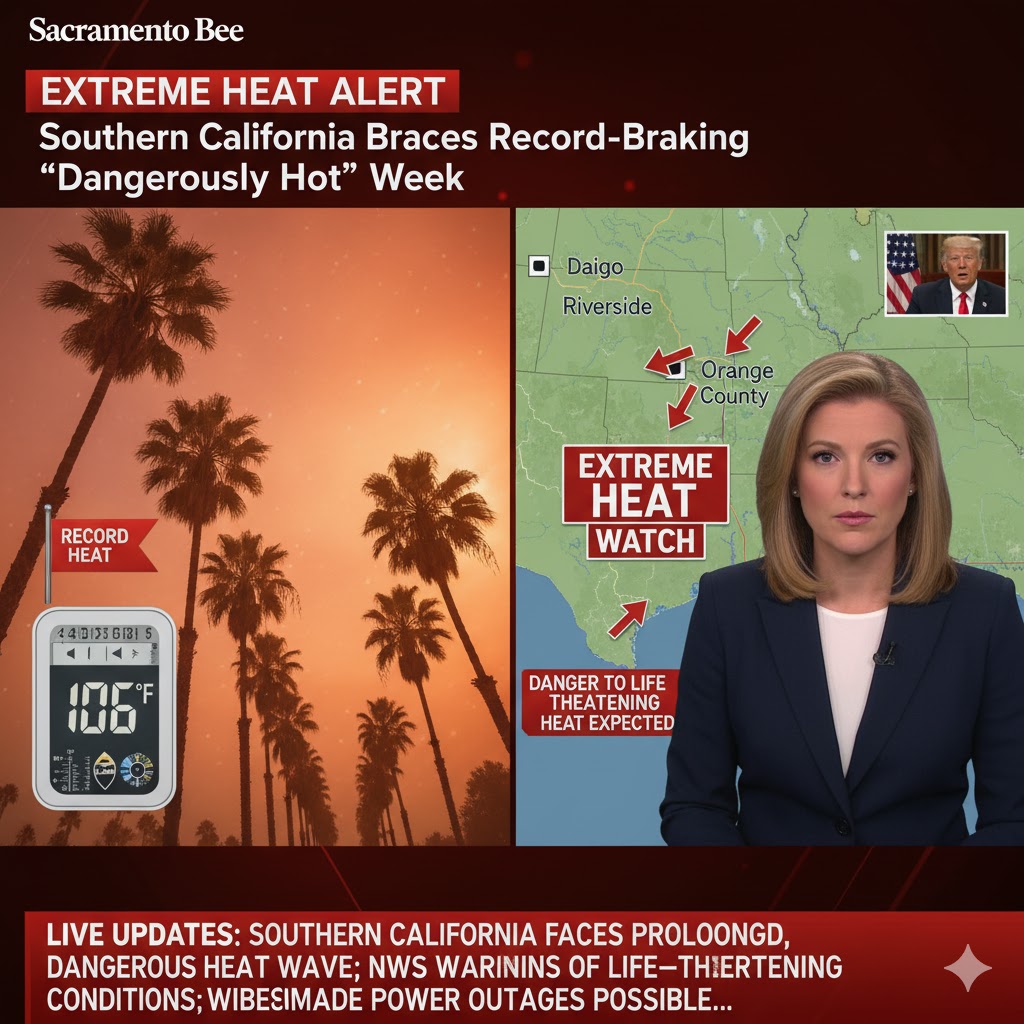
EXTREME HEAT ALERT: Southern California Braces for Record-Breaking “Dangerously Hot” Week
SACRAMENTO, CA — Residents across Southern California are being urged to prepare for a prolonged and potentially life-threatening weather event as the National Weather Service (NWS) has issued an Extreme Heat Watch effective from Monday, March 16, through Friday, March 20, 2026.
As temperatures soar to levels unseen for this time of year, meteorological experts are warning that the upcoming week will be defined by record-breaking heat, with temperatures expected to hover between 20 and 30 degrees above the seasonal average.
The Scope of the Heat Event
The National Weather Service in San Diego has confirmed that the heat watch is currently in effect for a wide swathe of the region, specifically impacting:
- San Diego County: Coastal Areas and Inland Valleys
- The Inland Empire: San Bernardino and Riverside County Valleys
- Orange County: Coastal and Inland regions
While the current weekend is expected to remain slightly cooler, providing a brief respite, the mercury will begin a sharp climb on Monday morning. By the peak of the event, coastal areas can expect temperatures in the 85 to 90-degree range, while inland valleys and the Inland Empire could face blistering highs of up to 105 degrees.
“This is an unusually early time of year for such a prolonged and intense heat event,” the NWS stated in its official advisory. “The duration of this heat, combined with the extreme deviation from normal seasonal temperatures, creates a significantly heightened risk of heat-related illnesses.”
Why This Heat Event Is Different
Meteorologists are particularly concerned about the “prolonged nature” of the coming week. Unlike a typical heat spike that lasts a single afternoon, this system is forecasted to linger for five full days.
This sustained exposure significantly increases the physiological stress on the human body. Vulnerable populations—including the elderly, young children, individuals with chronic health conditions, and those without access to reliable air conditioning—are at the highest risk for heat exhaustion and heat stroke.
Essential Safety Protocols: How to Stay Protected
The National Weather Service and local health authorities have released a comprehensive list of safety measures for Southern Californians to follow during this period of extreme risk:
1. Hydration is Non-Negotiable
Drinking fluids is the first line of defense against heat illness. Do not wait until you feel thirsty to drink water. Increase your intake of water and electrolyte-replenishing drinks throughout the day.
2. Create a “Cool Zone”
If you do not have air conditioning, identify public “cooling centers” in your municipality. If you are home, keep window coverings drawn during the hottest parts of the day to block direct sunlight and trap cooler air.
3. Protect Children and Pets
Never, under any circumstances, leave young children or pets unattended in a vehicle. During extreme heat events, the interior of a car can reach fatal temperatures in a matter of minutes, even with the windows cracked. This is one of the most common causes of heat-related fatalities in Southern California.
4. Optimize Your Daily Schedule
If your job or daily routine requires you to be outdoors, shift strenuous activities to the very early morning or late evening hours. Avoid the peak thermal radiation window between 12:00 p.m. and 6:00 p.m.
5. Know the Warning Signs
Early detection of heat stress can save a life. Be aware of the symptoms:
- Heat Exhaustion: Heavy sweating, weakness, cold/pale/clammy skin, fast or weak pulse, nausea or vomiting.
- Heat Stroke: A medical emergency. Look for high body temperature (above 103°F), hot/red/dry skin (no sweating), rapid/strong pulse, and loss of consciousness. If these symptoms appear, call 911 immediately.
6. Occupational Safety
For those working outdoors, the Occupational Safety and Health Administration (OSHA) mandates and recommends frequent, scheduled breaks in shaded or air-conditioned environments. Employers are responsible for ensuring that workers have access to cool water and adequate rest periods to prevent heat-related injuries.
Looking Ahead: A Stress Test for the Region
As the state moves into this mid-March heat wave, local infrastructure and healthcare systems are bracing for the surge in demand. Officials are asking neighbors to check on the elderly and those living alone, as social isolation is a major contributing factor to heat-related deaths.
The National Weather Service reminds residents that this is a dynamic weather situation. Stay tuned to local news outlets and the NWS official website for further updates. As the heat sets in, the priority remains clear: Stay hydrated, stay cool, and stay safe.
For more information, visit the NWS San Diego website.
TOP BREAKING STORIES USA

Meta Layoffs: 20% Workforce Reduction to Fuel $600B AI Strategy
Breaking US business News today: In a move that signals a seismic shift within the technology sector, Meta Platforms Inc. is reportedly preparing for its most aggressive organisational overhaul to … Read More
EXTREME HEAT ALERT: Southern California Braces for Record-Breaking “Dangerously Hot” Week
SACRAMENTO, CA — Residents across Southern California are being urged to prepare for a prolonged and potentially life-threatening weather event as the National Weather Service (NWS) has issued an Extreme … Read More

US Strikes Kharg Island Military Assets: Trump Warns Iran Over “Crown Jewel” Oil Hub
MARCH 14, 2026 — In a major escalation of the two-week-old conflict in West Asia, U.S. forces launched a massive aerial bombardment on Kharg Island, Iran’s most critical oil export … Read More