California on “High Alert” After FBI Reports Aspirational Iranian Drone Plot
SACRAMENTO — In a climate of escalating global tension, a leaked FBI bulletin has sent ripples of concern across the Pacific coast, suggesting a chilling, if unverified, scenario: a seaborne drone strike launched by the Islamic Republic of Iran against the state of California.
While the report paints a picture of high-tech maritime warfare reaching American shores, Governor Gavin Newsom moved quickly Wednesday to stabilize the public mood, insisting that while the state remains in a “posture of preparedness,” there is currently no imminent threat to the public.
The Intelligence: A “Surprise Attack” from the Sea
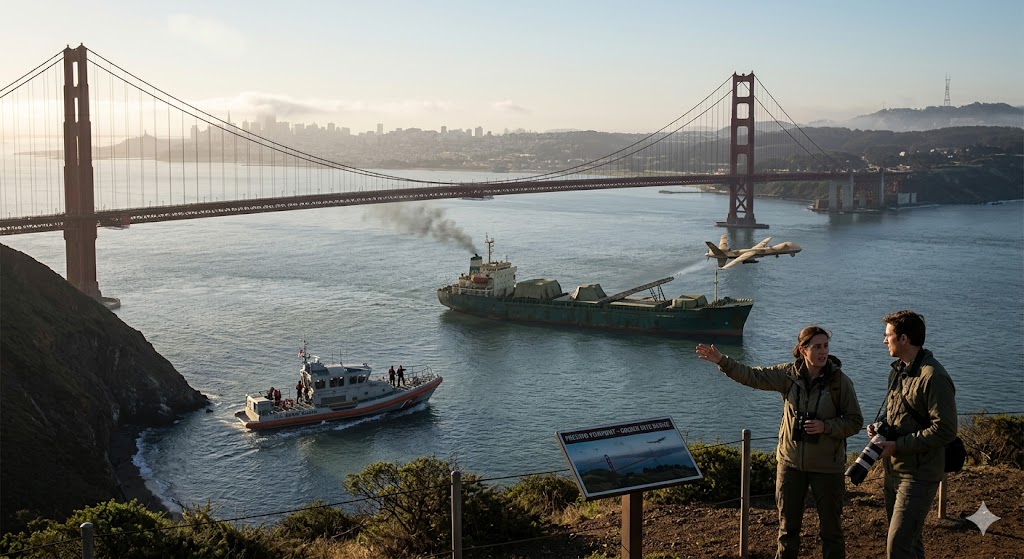
The warning, which was first brought to light by ABC News, stems from an FBI intelligence alert distributed to local law enforcement agencies in late February. According to the document, the Bureau acquired information in early February 2026 suggesting that Tehran “aspired” to launch a surprise attack using unmanned aerial vehicles (UAVs).
The logistics of such a strike are notably unconventional:
- Launch Platform: An unidentified vessel positioned in the Pacific Ocean off the U.S. coast.
- Primary Target: Unspecified locations within the state of California.
- Trigger: The strikes were reportedly envisioned as a retaliatory measure “in the event that the U.S. conducted strikes against Iran.”
Crucially, the FBI noted that the intelligence was “unverified” and “not actionable,” meaning they lack specific data on the timing, the exact method of deployment, or the specific perpetrators involved.
Newsom’s Response: Vigilance Without Panic
Speaking from Belvedere Middle School in Los Angeles, Governor Newsom struck a balance between transparency and calm. “Drone issues have always been top of mind,” Newsom said, noting that the state has established dedicated workgroups to address the evolving threat of UAVs.
“We’ve been aware of that information… It’s all about a posture of preparedness for worst-case scenarios,” Newsom stated.
The Governor’s Office of Emergency Services (Cal OES) confirmed it is in constant coordination with federal partners. In cities like San Francisco and Los Angeles, police departments have acknowledged the warning but emphasized that residents should go about their daily lives, as no specific, credible plot has been detected on the ground.
The Trump Administration: “Take ‘Em As They Come”
The alert comes at a moment of extreme volatility in U.S.-Iran relations. Following the launch of “Operation Epic Fury”—a joint U.S.-Israeli campaign targeting Iranian infrastructure—President Donald Trump addressed the drone reports from Joint Base Andrews on Wednesday night.
When asked if he was worried about Iranian retaliation reaching the U.S. mainland, the President appeared undeterred.
- On the Threat: “It’s being investigated, but you have a lot of things happening. All we can do is take ’em as they come.”
- On Domestic Security: Trump also alluded to potential “sleeper cells” within the country, pivoting to his administration’s focus on border security.
The Tactical Reality: Can Iran Reach the West Coast?
Defense analysts remain divided on the feasibility of such an attack. While Iran has a sophisticated arsenal of “kamikaze” drones—such as the Shahed-136—launching them from a commercial or “dark” vessel in the Pacific would require significant logistical coordination and the ability to bypass U.S. Coast Guard and Navy surveillance.
| Threat Factor | FBI Assessment | Military Context |
|---|---|---|
| Aspiration | High | Iran has openly threatened “proportional” retaliation. |
| Capability | Unverified | Seaborne launches of small UAVs are technically possible. |
| Imminence | None | No specific vessel or timeline has been identified. |
The Local Impact: Heightened Readiness
Despite the lack of an immediate “red alert,” California law enforcement isn’t taking chances. The Los Angeles County Sheriff’s Department and the SFPD have both reported an “elevated level of readiness.” This includes increased patrols around:
- Critical Infrastructure: Ports, bridges, and energy plants.
- Cultural Sites: Places of worship and high-density tourist areas.
- Military Bases: California remains home to one of the highest concentrations of military personnel in the country.
As the sun sets over the Pacific, the 840-mile California coastline remains a focal point of national security. For now, the “Iran-California” connection remains a theoretical shadow, but in a world of rapid-fire escalations, state officials are ensuring that if the shadow ever takes form, California will be ready.
Would you like me to look into the specific types of drones Iran has used in recent maritime conflicts to see how they might compare to this West Coast threat?