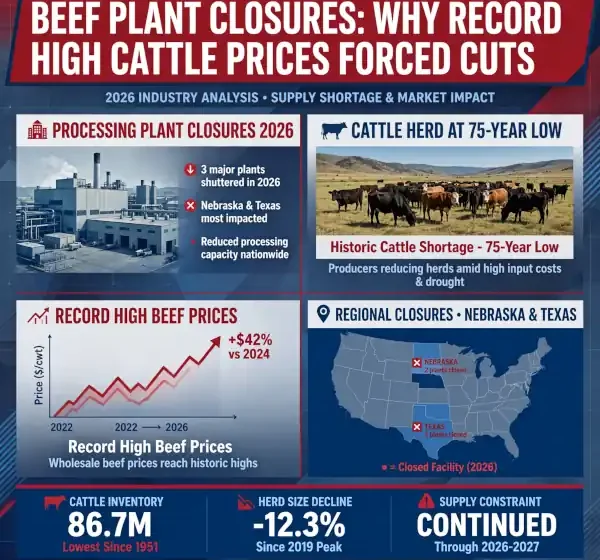

Tyson Foods Exits Beef Plants as US Cattle Supply Hits 75-Year Low. Tyson Foods has announced the shuttering and sale of major processing facilities across the United States as a historic cattle herd inventory shortage continues to cripple the meatpacking industry. This commercial meatpacking plant restructuring marks a pivotal moment in the US beef supply chain crisis, as record-high livestock acquisition costs and shrinking cattle supplies force major processors to scale back operational capacity.
The Arkansas-based protein titan will permanently end operations at its slaughter plant in Joslin, Illinois, which currently employs more than 2,000 workers and handles approximately 3,000 head of cattle per day. Simultaneously, Tyson is seeking a buyer for its Pasco, Washington facility—capable of processing 2,000 cattle daily—and winding down operations at a case-ready packaging facility in Eagle Mountain, Utah.
These strategic cutbacks highlight ongoing beef processing market trends where elevated livestock costs continuously outpace gains from retail beef prices. As feedlot supplies fall to levels not seen in three-quarters of a century, meat packing industry economics are pushing giant processors to consolidate volume around fewer, higher-efficiency hub facilities.
Structural Shift: Tyson Foods Restructures Its Commercial Beef Operations
The latest round of closures represents a significant contraction of processing capacity across the American Midwest and Pacific Northwest. Company executives confirmed that processing capacity from Joslin, Pasco, and Eagle Mountain will transfer to existing core plants in Dakota City, Nebraska; Holcomb, Kansas; and Amarillo, Texas.
This corporate pivot follows earlier restructuring decisions, including the shutdown of Tyson’s massive Lexington, Nebraska plant and shift reductions in Texas. By concentrating cattle harvest runs at mega-facilities, Tyson aims to maximise operational efficiency and stabilise profit margins amid persistent industry headwinds.
The affected facilities played vital roles in their local agricultural economies for decades. Local feedlots and regional ranching networks must now adjust to shifting logistics, longer transport distances, and altered regional cattle price basis levels.
Key elements of Tyson’s operational realignment include:
-
Joslin, Illinois Plant: Total closure of primary slaughter operations, impacting over 2,000 employees and removing 3,000 daily head capacity.
-
Pasco, Washington Plant: Active search for a third-party buyer for the 2,000 head-per-day processing facility.
-
Eagle Mountain, Utah Plant: Phased shutdown of case-ready beef portioning and packaging operations.
-
Hub Consolidation: Reallocation of remaining regional cattle supplies to mega-plants in Nebraska, Kansas, and Texas.
-
Workforce Support: Internal transfer offers and relocation options provided to qualified displaced workers.
Roots of the Crisis: Severe Droughts and a 75-Year Cattle Inventory Trough
The underlying driver of this nationwide industry contraction is an acute, multi-year contraction of the national cattle herd. Prolonged drought conditions across major grazing states in recent years severely damaged pastures, forcing ranchers to liquidate breeding cows prematurely.
Compounding the pasture damage, surging feed, fertiliser, and interest expenses discouraged cow-calf producers from expanding their herds. Because raising market-ready beef cattle requires a minimum two- to three-year biological timeline, rebuilding national herd numbers remains a slow, multi-year process.
Consequently, the total domestic cattle inventory has dropped to its lowest point in nearly 75 years. With fewer market-ready steers and heifers available, competition among meatpackers has triggered unprecedented live cattle price inflation.
The severe imbalance between cattle availability and processing infrastructure created a margin squeeze for meatpackers. Processing plants require high daily throughput to cover fixed overhead costs, making underutilised facilities financially unviable.
Economic Fallout: Plant Capacity, Labour Shifts, and Supply Chain Impact
The closure of primary processing facilities reverberates through every tier of the agricultural sector. For cattle producers, fewer regional slaughter facilities reduce marketing options and elevate live animal transportation costs.
Feedlot operators in Illinois, Washington, and surrounding states face revised freight economics as they haul cattle to distant packing plants in the Southern Plains. Meanwhile, urban retail consumers continue to encounter elevated retail ground beef and steak prices driven by sustained wholesale beef processing costs.
| Facility Location | Operation Type | Daily Capacity (Head) | Operational Status | Regional Destination for Capacity |
| Joslin, Illinois | Beef Processing / Harvest | ~3,000 | Closing | Dakota City, NE / Holcomb, KS |
| Pasco, Washington | Beef Slaughter | ~2,000 | Up for Sale | Undetermined (Pending Buyer) |
| Eagle Mountain, Utah | Case-Ready Packaging | N/A (Packaging) | Closing | Centralised Regional Facilities |
| Lexington, Nebraska | Major Harvest Plant | ~4,500-5,000 | Closed (Jan 2026) | Consolidated Midwest Operations |
| Amarillo, Texas | Processing Hub | Reduced Shift | Active Anchor Plant | Primary Anchor Facility |
Labor market dynamics present another major challenge for communities hosting these facilities. Thousands of specialised plant technicians and industrial workers must transition to new employers or relocate to remaining operational hubs.
Economists project that while the reduction in slaughter capacity aligns better with current cattle availability, overall beef production will remain constrained through the late 2020s. Restoring supply equilibrium depends on favourable weather patterns and sustained herd rebuilding by independent cattle ranchers.
Frequently Asked Questions (FAQs) About the Beef Industry Crisis
Why is Tyson Foods closing major beef plants in Illinois, Washington, and Utah?
Tyson Foods is closing or selling these facilities due to a severe national cattle shortage that has pushed live cattle prices to record highs. With the US cattle herd at a 75-year low, meatpackers face reduced slaughter runs and elevated acquisition costs, making smaller or regional processing facilities financially unviable.
How does the cattle shortage affect retail beef prices for consumers?
While meatpacker margins remain squeezed by high live cattle costs, tight beef supplies keep wholesale and retail beef prices near historic highs. Consumers will likely continue seeing elevated prices for steaks, roasts, and ground beef until national herd rebuilds increase market supply.
Where will Tyson process beef moving forward?
Tyson plans to shift its processing capacity to its primary anchor facilities located in Dakota City, Nebraska; Holcomb, Kansas; and Amarillo, Texas. Consolidating cattle harvest at these high-volume hubs allows the company to optimise plant efficiency despite lower overall cattle numbers.
What factors caused the US cattle herd to drop to a 75-year low?
The record low cattle inventory stems from multi-year droughts that ruined pastureland, combined with high feed, fuel, and operating expenses for ranchers. These financial pressures forced cattle producers to sell off breeding cows, creating a multi-year delay in herd recovery.
Strategic Outlook: The Future of American Beef Processing and Prices
Navigating the current cattle cycle requires adaptability from ranchers, meatpackers, and retail distributors alike. While plant closures present difficult short-term adjustments for local communities, consolidating processing capacity helps stabilise the broader meat industry structure during an unprecedented supply drought. Stakeholders across the supply chain must monitor regional price dynamics, track weather patterns affecting grazing lands, and leverage operational efficiencies to remain competitive.
To stay informed on broader commodity market trends and official search updates, visit the Google Search Resource Hub. Join ongoing industry analysis and community conversations on the NT Live News Forums. For comprehensive corporate background and historical context on the nation’s largest meat processor, explore the official Wikipedia Entry on Tyson Foods.