
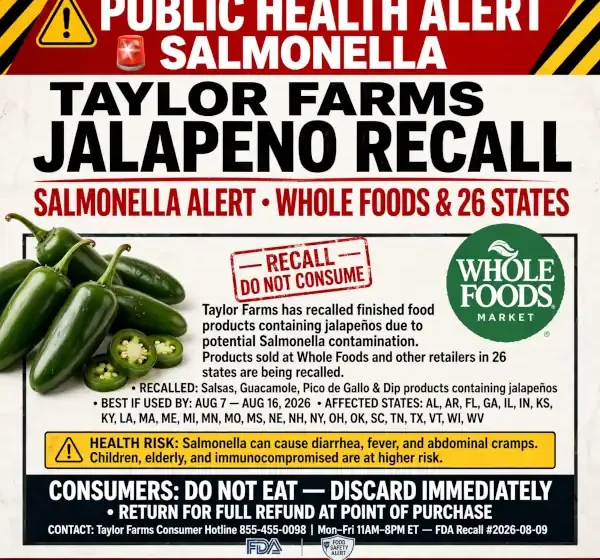
Taylor Farms Jalapeño Recall Salmonella: Whole Foods & 12 States Alert

Federal health agencies have expanded a nationwide food safety alert after fresh jalapeño peppers contaminated with Salmonella triggered major retail recalls across the United States. Whole Foods Market officially issued a voluntary recall for select salsas, guacamole, pico de gallo, and pre-packaged ready-to-eat meals sold across 12 states. This fresh produce action stems from raw jalapeño peppers distributed by Coast Citrus Distributors and processed by Taylor Fresh Foods (Taylor Farms). Federal investigators tie the contaminated peppers to an imported crop grown in Sinaloa, Mexico, which has already sickened 345 consumers and hospitalised 36 individuals across 27 states.
The affected Whole Foods and Taylor Farms products carry “Best Before” or “Best If Used By” dates ranging from August 7 through August 16, 2026. While no direct illnesses have been reported from Whole Foods store purchases so far, public health officials urge shoppers to audit their refrigerators immediately. Consumers searching for the Taylor Farms jalapeño recall salmonella list 2026 must verify lot codes, discard suspect items immediately, or return them for a complete refund.
Jalapeño Salmonella Outbreak Expands Vastly in USA
The U.S. Food and Drug Administration (FDA) and the Centres for Disease Control and Prevention (CDC) trace the origin of this multistate outbreak to farms in Sinaloa, Mexico. Coast Citrus Distributors imported the contaminated produce, subsequently supplying major food processors like Taylor Fresh Foods alongside regional grocery suppliers. Epidemiologic traceback data reveals that 93% of interviewed patients consumed fresh jalapeños at Mexican-style restaurant chains—including Chipotle and QDOBA—prior to falling ill between June 19 and July 20.
                                OUTBREAK TRACEBACK PATHWAY

  [Sinaloa, Mexico Farm] ──► [Coast Citrus Distributors] ──► [Taylor Fresh Foods / Processors]
                                                                      │
                                                ┌─────────────────────┴─────────────────────┐
                                                ▼                                           ▼
                                 [Grocery Retail Outlets]                    [Restaurant Chains]
                           (Whole Foods, Walmart, Target, H-E-B)              (Chipotle, QDOBA)
The Food Safety and Inspection Service (FSIS) within the USDA also released a public health alert covering at least 18 ready-to-eat meat and poultry prepared meals. Retail giants including Walmart, Target, Kroger, Trader Joe’s, and H-E-B pulled secondary products containing these diced peppers. High-risk products include pre-made chicken wraps, south-of-the-border rice bowls, prepared salads, and specialty deli dips.
Coast Citrus Distributors and Sinaloa Sourcing Traceback
Investigators identified the shared supply bottleneck after tracking dining records across dozens of patient clusters. Following official FDA notifications, Coast Citrus Distributors halted all produce imports from the implicated Mexican grower. Restaurant chains quickly shifted to secondary pepper suppliers, resolving ongoing commercial dining risks. However, packaged grocery products distributed right before the supplier cutoff remain on store shelves and in consumer homes.
USDA FSIS Meat and Poultry Prepared Food Alert
Secondary contamination risks expand significantly when fresh vegetables mix into ready-to-eat proteins. The USDA FSIS alert addresses pre-cooked chicken enchiladas, spicy roast beef deli sandwiches, and Cajun poultry bowls. Because Salmonella bacteria thrive in moist, fresh vegetable mixtures, cooking meat does not eliminate risk if raw peppers are added post-cooking.
Broader Economic Context and Grocery Supply Chain Relief
This outbreak arrives during intense national scrutiny regarding produce supply chain integrity and retail food pricing. U.S. Agriculture Secretary Brooke Rollins highlighted ongoing federal efforts to enforce strict agricultural oversight while providing structural cost relief for American households. Federal regulators emphasize that rigorous sanitation standards and transparent supplier verification protect public safety without inflating retail prices.
Recalled Products and Impacted Retail States Breakdown
Whole Foods Market and Taylor Farms confirmed that the recalled jalapeño products were distributed across multiple states. The table below breaks down the primary regional impact, product categories, and distributor details associated with this advisory.
| Retailer / Brand | Impacted Geographic States | Affected Product Categories | Best Before Date Window | Sourcing Distributor |
| Whole Foods Market | TX, OK, LA, WI, MI, IL, IA, MO, AR, IN, KY, OH | Salsas, Guacamole, Pico de Gallo, Prepared Foods | Aug. 7 – Aug. 16, 2026 | Coast Citrus / Taylor Fresh |
| Taylor Fresh Foods | AL, AR, FL, GA, IL, IN, KS, KY, LA, MA, ME, MI, MN, MO, MS, NE, NH, NY, OH, OK, SC, TN, TX, VT, WI, WV | Diced Jalapeños, Burritos, Spicy Dips, Salad Kits | Aug. 7 – Aug. 16, 2026 | Coast Citrus Distributors |
| Kroger / Private Selection | AL, AR, GA, LA, MS, SC, TN, TX, IL, IN, KS, KY, MI, MO, NE, OH, WV | Spicy Roast Beef Sandwiches, Jarlsberg Dip | Aug. 7 – Aug. 15, 2026 | Taylor Farms / Coast Citrus |
| Hannaford Supermarkets | ME, MA, NH, NY, VT | Diced Jalapeños (3.75 oz), Rice & Bean Burritos | Aug. 7 – Aug. 14, 2026 | Taylor Fresh Foods |
Consumers checking their pantry and refrigerator should cross-reference this information:
-
Check the Label: Look for “Best If Used By” dates spanning August 7 through August 16, 2026.
-
Identify High-Risk Items: Focus on ready-to-eat salsa, fresh guacamole, pico de gallo, and pre-packaged deli bowls containing raw diced peppers.
-
Avoid Taste-Testing: Never eat, taste, or serve food subject to an active FDA public health recall.
-
Sanitize Storage Areas: Wash refrigerator shelves, cutting boards, and food containers with warm, soapy water if recalled items touched them.
-
Seek Refund Options: Return opened or unopened packages to your local retailer for a full refund or discard them in a sealed trash container.
Frequently Asked Questions (FAQs)
What symptoms indicate a Salmonella infection after eating recalled produce?
Infection symptoms include severe diarrhea, abdominal cramps, fever, and nausea. Symptoms typically appear within 6 hours to 6 days after consuming contaminated food. Most individuals recover within 4 to 7 days without medical intervention. However, vulnerable populations—including infants, elderly adults, and immunocompromised patients—face higher risks of severe illness or hospitalization.
How do I verify if my Taylor Farms or Whole Foods salsa is part of the recall?
Inspect the printed label on the bottom or side of your container. Look for “Best Before” or “Best If Used By” dates between August 7 and August 16, 2026. If the product contains fresh jalapeños and was purchased in one of the listed states, dispose of it immediately. You can also verify specific UPC numbers directly through the FDA recall portal.
Are restaurant chains like Chipotle and QDOBA still affected by this jalapeno recall?
No, both Chipotle and QDOBA resolved their supply issues weeks ago. Chipotle switched jalapeño suppliers on July 20, while QDOBA removed suspect peppers on July 28. Federal health agencies confirm there is no ongoing exposure risk at these restaurant establishments. Current advisories apply strictly to packaged grocery items and ready-to-eat retail meals.
What should I do if I consumed recalled items and feel sick?
Contact a licensed healthcare provider immediately and report possible exposure to contaminated produce. Inform your physician about the specific product and retail purchase location. Documenting your purchase receipt and clinical diagnosis provides crucial records if you require medical monitoring or seek food contamination legal advice salmonella claims.
Expert Prevention Steps and Salmonella Exposure Guidance
Preventing foodborne infection demands vigilant kitchen hygiene whenever produce recalls occur. Always practice strict cross-contamination controls during food prep.
-
Isolate Recalled Goods: Double-bag suspect food items before placing them in exterior trash cans.
-
Disinfect Touchpoints: Use a diluted bleach solution or disinfectant wipe on refrigerator handles, counters, and drawers.
-
Wash Hands Frequently: Scrub hands thoroughly with warm water and soap for at least 20 seconds after handling packaged produce.
-
Monitor Health Windows: Watch household members for gastrointestinal illness for up to 7 days following potential exposure.
Community Resources, Official Tracking, and Important Discussion Links
Staying informed during active produce recalls protects your family and community from preventable health risks. Consumers should monitor official government alerts, review updated lot codes, and participate in regional health forums. For more background on microbial pathogens, inspect the Wikipedia overview of Salmonella bacteria. You can track additional career and government employment opportunities on USA Free Latest Job Alert or join active public safety discussions on the NT Live News Forums. Always consult medical professionals immediately if severe gastrointestinal symptoms arise following contaminated food exposure.