Mark Zuckerberg’s Yacht Launchpad Sparks Controversy After Missed Distress Call in Alaska

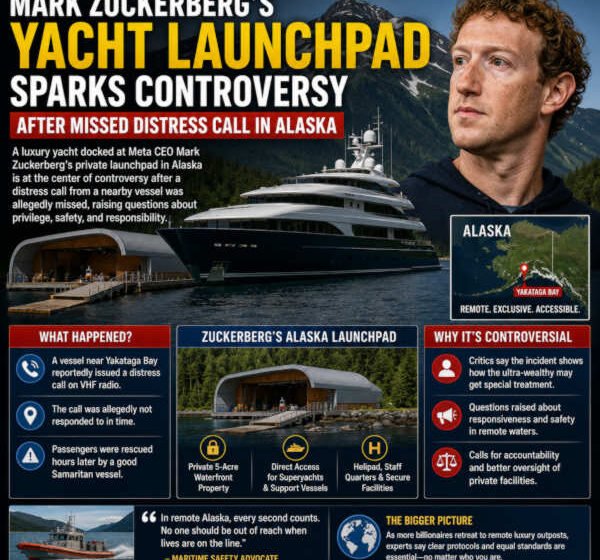
JUNEAU, Alaska — Meta CEO Mark Zuckerberg’s $300 million megayacht, Launchpad, has drawn intense public scrutiny following reports that the vessel failed to respond to a maritime assistance broadcast for a stranded boat off the coast of Alaska.
The incident occurred near Farragut Bay, located between Petersburg and Juneau, when a 21-foot skiff ran out of fuel and issued a radio call for help through the U.S. Coast Guard. While the Coast Guard assessed that the skiff was not in immediate danger, it broadcast a marine assistance request to nearby vessels.
The Alaska Incident and Public Backlash
According to reports from passengers aboard a nearby small cruise ship, the Wilderness Legacy, the cruise vessel stepped in to assist and towed the skiff safely back to shore. Passengers noted that Zuckerberg’s 387-foot superyacht was positioned significantly closer to the stranded boat but failed to acknowledge or respond to the Coast Guard’s radio calls.
When the cruise ship’s captain announced over the intercom that the larger megayacht had ignored the requests for assistance, passengers reportedly erupted into boos.
Clarification from Zuckerberg’s Representatives
A spokesperson for Mark Zuckerberg and his wife, Priscilla Chan, pushed back against claims that the crew knowingly ignored a call for aid.
-
No Family Onboard: Representatives confirmed that neither Mark Zuckerberg nor his family were aboard Launchpad at the time of the incident.
-
Radio Channel Discrepancy: The yacht’s crew was operating on a different radio frequency than the one used for the initial Coast Guard broadcast.
-
Assistance Underway: By the time the crew reviewed the broadcast message, the cruise ship had already initiated aid for the stranded skiff.
“As the Coast Guard noted, the boat was not in distress, and by the time the crew reviewed the Coast Guard contact… the assist was already underway,” the spokesperson stated, expressing gratitude that all parties remained safe.
About the Megayacht Launchpad
Delivered in 2024 by Dutch superyacht builder Feadship, Launchpad stands as one of the world’s most opulent private vessels.
| Feature | Specification |
| Length | 387 feet (118 meters) |
| Estimated Value | $300 Million – $390 Million |
| Capacity | 24–26 guests, 48–50 crew |
| Accompanying Vessel | Wingman (67-meter shadow support vessel) |
Maritime law experts note that while vessels are legally obligated to assist ships in distress under international sea safety conventions, the Coast Guard’s classification of the event as a routine non-distress fuel shortage means no formal maritime violations occurred.