Medicare Advantage vs. Standalone Part D: Why 1.3 Million New Yorkers Face Skyrocketing Prescription Drug Costs

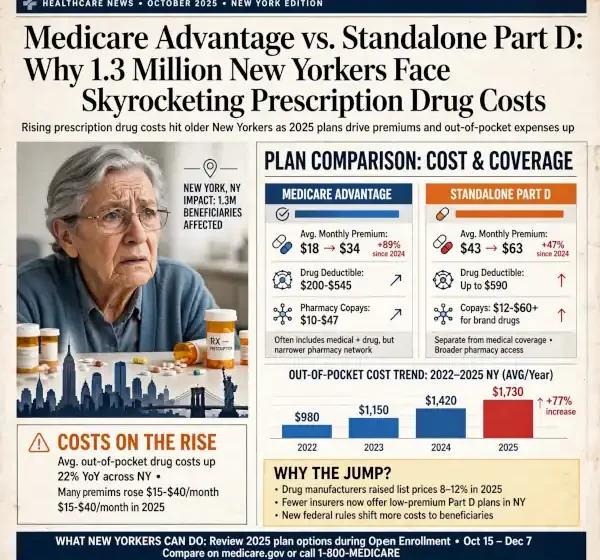
Insurance news: More than 1.3 million New York seniors relying on standalone Medicare Part D plans are bracing for a sharp increase in monthly prescription drug premiums following the federal decision to dismantle the Medicare Part D Premium Stabilisation Demonstration Program.
Originally created to cushion beneficiaries from premium hikes during federal drug benefit overhauls, the expiration of this federal subsidy program is setting up a major political and financial showdown between state leaders and federal health administrators.
Governor Kathy Hochul has openly criticised the move, warning that ending the subsidy directly threatens vulnerable seniors living on fixed incomes across the Empire State. As state and federal leaders clash over healthcare affordability, millions of retirees must now evaluate their options—weighing standalone prescription drug plans (PDPs) against integrated Medicare Advantage (MA-PD) options—to avoid crippling out-of-pocket expenses.
Why New York Medicare Costs Are Rising
The immediate driver behind the price surge is the termination of the federal Medicare Part D Premium Stabilisation Demonstration Program. Introduced as a transitional buffer, the initiative provided direct federal subsidies to prescription drug plan sponsors.
In exchange, insurers were required to hold down base beneficiary premiums and cap year-over-year rate increases.
                THE PART D STABILIZATION SUBSIDY EXPIRATION

  [ Federal Subsidy Active ] ──► Insurer Receives Direct Federal Support ──► Low Monthly Premiums
                                                                             (Artificially Capped)

  [ Subsidy Terminated ]     ──► Insurers Bear Full Market Risk          ──► Higher Monthly Premiums
                                                                             (Reflecting Full Cost)
With the Centres for Medicare & Medicaid Services (CMS) concluding that insurance carriers have gained sufficient operational experience, the federal safety net is ending.
-
Direct Monthly Premium Hikes: Policy analysts estimate that federal subsidies previously offset standalone drug plan premiums by approximately $16 to $35 per month. Without these government offsets, standalone plan sponsors are shifting baseline costs back to enrollees.
-
Disproportionate Impact on Standalone PDPs: The subsidy elimination primarily impacts standalone Part D plans rather than bundled Medicare Advantage offerings. This creates a severe financial pinch for seniors who choose Original Medicare paired with a Medigap policy.
-
Inflation Reduction Act (IRA) Realignment: While the IRA capped annual out-of-pocket drug spending for Medicare beneficiaries at $2,000, it also shifted a larger share of financial liability onto plan sponsors. Without the stabilisation program, insurers are raising monthly plan premiums to cover that expanded risk.
Standalone Part D vs. Medicare Advantage: The 2027 Comparison
As standalone Part D premiums rise, New York seniors face a choice: pay higher monthly premiums to keep Original Medicare or transition into an integrated Medicare Advantage plan.
| Feature / Metric | Standalone Part D (PDP + Original Medicare) | Medicare Advantage with Part D (MA-PD) |
| Primary Target Audience | Seniors who prefer doctor freedom and Medigap coverage. | Seniors seeking low premiums and bundled extras. |
| Impact of Subsidy End | High: Direct exposure to monthly premium increases. | Low to Moderate: Cross-subsidised by health plan funds. |
| Average Monthly Plan Cost | Higher baseline monthly plan premiums. | Frequently $0 or low monthly plan premiums. |
| Provider Network Flexibility | Open access to any doctor accepting Medicare nationwide. | Restricted HMO/PPO networks; prior authorisation required. |
| Annual Out-of-Pocket Cap | $2,000 capped for covered Part D drugs. | Combined medical + drug out-of-pocket maximums. |
| Extra Benefits | None (Rx drug coverage only). | Dental, vision, hearing, and fitness allowances. |
How New York State Policies Are Attempting to Offset Federal Cuts
To counter federal policy shifts, Governor Hochul has highlighted state-level relief programs designed to lower out-of-pocket healthcare expenses for New York seniors:
                     NEW YORK STATE HEALTHCARE SAVINGS INITIATIVES

   [ Expanded Medicare Savings Program ] ──► Covers Part B Premiums ──► Saves Qualified Seniors $7,000+/Year
   [ Complete Insulin Co-pay Ban ]       ──► $0 Out-of-Pocket Cap  ──► Saved Residents $25 Million
   [ EpiPen Cost Capping ]              ──► $100 Annual Limit     ──► Saved Residents $2.4 Million
-
Expanded Medicare Savings Program (MSP): New York raised income eligibility thresholds for the MSP. For qualifying seniors, the state absorbs the monthly Medicare Part B premium, saving eligible individuals more than $7,000 per year in total healthcare costs.
-
Elimination of Insulin Co-pays: New York enacted a complete ban on insulin cost-sharing across state-regulated plans. This policy has saved residents an estimated $25 million.
-
EpiPen Out-of-Pocket Caps: State legislation capped annual out-of-pocket costs for EpiPens at $100, delivering roughly $2.4 million in direct consumer savings.
Action Plan for New York Seniors Before Open Enrollment
With drug plan pricing restructuring nationwide, New York Medicare beneficiaries must prepare for upcoming enrollment windows:
-
Review the Annual Notice of Change (ANOC): Arriving every September, the ANOC details exact monthly premium adjustments, copay changes, and formulary updates for the coming plan year.
-
Audit Prescription Formularies: Ensure all necessary brand-name and generic medications remain on your plan’s covered formulary list. A plan with a lower monthly premium may place your specific medication on a higher pricing tier.
-
Evaluate Extra Help & EPIC Programs: Income-eligible New Yorkers should apply for federal Extra Help or New York’s Elderly Pharmaceutical Insurance Coverage (EPIC) program, which provides secondary coverage to lower Part D drug costs.
-
Compare PDP vs. MA-PD Trade-Offs: Weigh the financial savings of a $0-premium Medicare Advantage plan against potential restrictions, such as narrow provider networks and pre-authorization requirements.
The Broader Outlook for Medicare Beneficiaries
The expiration of the Medicare Part D Premium Stabilization Demonstration Program underscores a shifting landscape in federal prescription drug coverage. While out-of-pocket drug costs at the pharmacy counter remain capped, the underlying expense is shifting into baseline monthly premiums.
For 1.3 million New Yorkers, taking a passive approach to Medicare Open Enrollment could result in hundreds of dollars in unnecessary annual costs. Reviewing plan notices, shopping comparison portals, and leveraging state-level relief programs remain the most effective strategies for protecting fixed retirement incomes.